
HOME
Fusion Energy


EarthTalk®
From the Editors of E – The Environmental Magazine
Dear EarthTalk: What is fusion energy and why are environmentalists so bullish on it?
— Mickey Brent, Milwaukee, WI
Nuclear fusion may be the most promising energy source that most of us have never heard of. Scientists first discovered fusion as a potential energy source in the 1930’s and have been quietly working on it ever since. Only recently, given societal pressure to find alternatives to fossil fuels, has fusion started to capture the attention of the media and policymakers—and now researchers are hoping the process can become a key source of safe, clean, reliable energy in the near future.
Nuclear fusion is the fusing of two atoms into one. Fusion is very different from fission, in which atoms are split in half. Although both emit energy, fusion emits much more. Fusion takes an immense amount of heat and pressure and is the reaction that happens inside of stars, including our own sun. The temperature at the center of the sun is around 15 million Kelvin (27 million degrees Fahrenheit)! Scientists have achieved temperatures of around 100 million degrees inside experimental fusion devices but have yet to make the process net energy positive. The issue with doing reactions at such high heats is that the heated substance cannot touch anything or the container will melt. Therefore, fusion reactions are done in a donut of floating plasma, suspended by magnetic fields.
When compared to other energy sources, fusion energy seems like it might be our best bet in the long term. Compared to fossil fuels and renewable energy sources, fusion is wildly more efficient and no more dangerous. Fusion is three to four times more efficient even than nuclear fission, without the downsides such as the risk of nuclear meltdown or dirty bombs. While nuclear fission requires uranium to function, fusion reactors only require deuterium, which occurs naturally in seawater, and tritium, which can be produced through a reaction of deuterium and lithium. These low raw material costs cause fusion to be considered a potential source of limitless energy. Due to the low radioactivity of fusion, even in the case of an explosion, radioactivity would be contained to the reactor site. Fusion reactors’ small input and extremely high output have made them a popular idea.
So what are the drawbacks of nuclear fusion? Or is it the perfect energy source? Most critics of fusion energy point to the timeline as its greatest weakness. The majority of projections see 2050 as the first year fusion reactors could be commercially available. This is too late for fusion energy to solve our current energy crisis. Some environmentalists claim that funding for fusion energy could be better spent on renewable sources such as solar and hydro that give us clean energy now. Another concern with fusion is public opinion. People tend to be wary of anything nuclear, if only because of the incredible devastation of nuclear bombs. While nuclear fusion is far safer than fission, many activists in France, for example, are protesting all forms of nuclear energy.
The biggest fusion energy project in the world is called the ITER which means “the way” in Latin. ITER is located in Southern France and funded by the European Union, the U.S., China, India, Korea, Russia and Japan. ITER will be a fusion reactor used for research and is currently under construction. Current plans are for ITER to be ready for the first test of plasma by 2025. The main other research on fusion energy is being done at the Massachusetts Institute of Technology (MIT). Though commercial fusion reactors are far from a reality, the abundant raw materials and high safety, paired with enormous energy output, make it an outstanding possibility for the future.
CONTACT: ITER, www.iter.org.
EarthTalk® is produced by Roddy Scheer & Doug Moss and is a registered trademark of the nonprofit Earth Action Network. To donate, visit www.earthtalk.org. Send questions to: question@earthtalk.org.

This summer the plant trials have been riotous in their displays of colors in the recipe section.
One that caught my eye this year was Merry Go Round which was full of colors from the hot side of the color wheel. One featured plant was Campfire Red Ember.
Red Ember is one of the three in the Campfire series. Campfire Marshmallow, Campfire Flame and Campfire Red Ember. They are known botanically as Bidens and are native to Mexico and the Southwest.
I don’t think any of us need the government to tell us groceries are expensive. We know it when we stand in the meat aisle and lower our standards real fast from 90% lean to 80% lean hamburger meat.
Still, the numbers are interesting.
According to the latest Bureau of Labor Statistics report, grocery prices in July were 2.7% higher than they were a year ago. Beef is where things really hurt. Beef prices were up 9.4% from last July, and uncooked ground beef was up 9%.
Chicken, on the other hand, was actually down 2.7% over the same period, which makes it one of the better bargains in the meat case right now.
The BLS average-price survey puts a pound of ground chuck at $6.85 in July. Two years ago, in July 2024, that same national average was $5.47.
So maybe it is time to resurrect something our mothers and grandmothers understood very well.
Read the full On the Table feature in the Sept. 17 Bowie News.
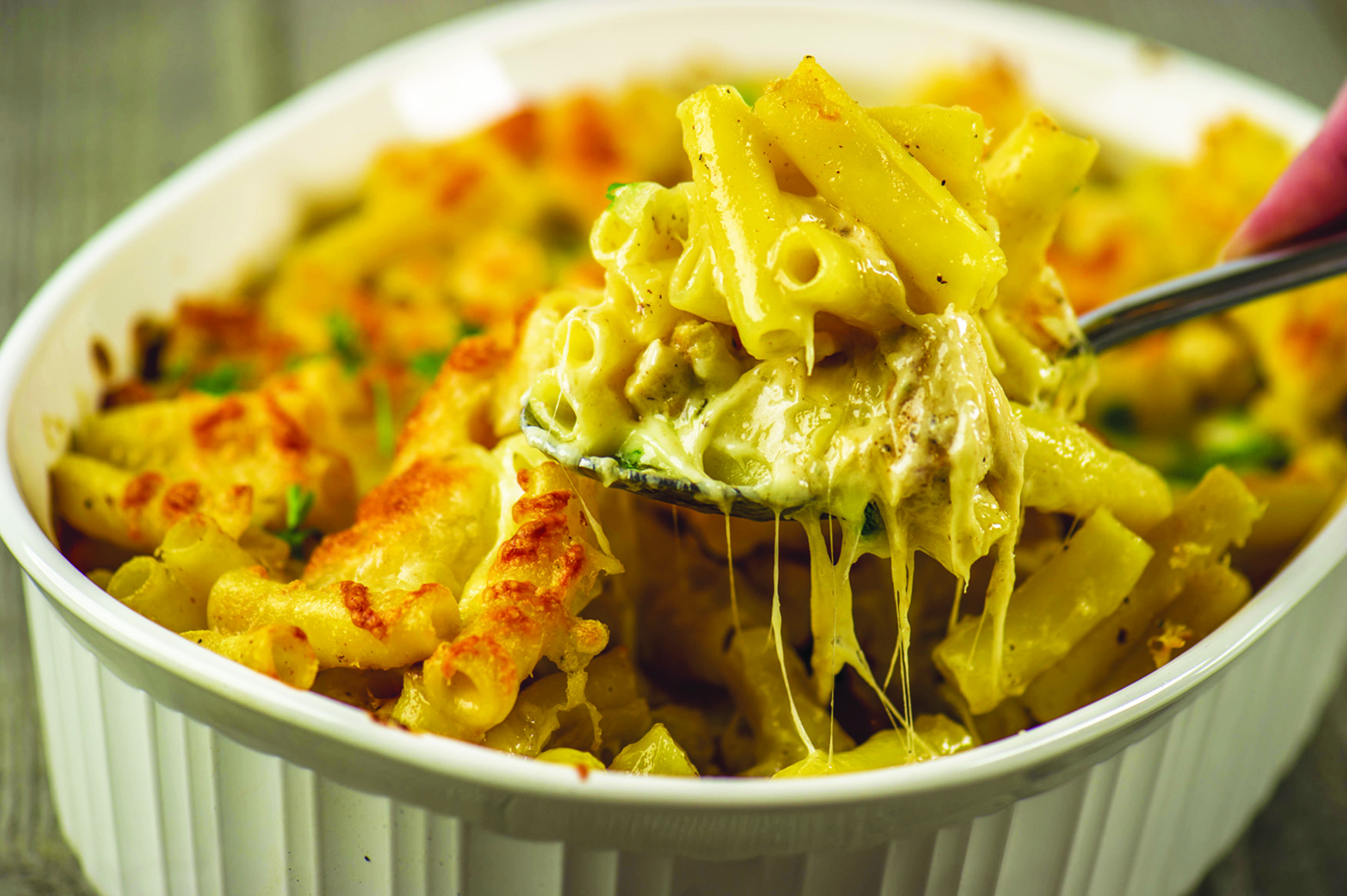
Big-Pan Chicken Spaghetti
A pound of diced chicken can disappear beautifully through an entire pan of pasta.
Ingredients
- 1 pound boneless chicken, diced
- 12 ounces spaghetti
- 1 small onion, chopped
- 1 can cream of chicken soup
- 1 can cream of mushroom soup
- 1 can Rotel-style tomatoes
- 1 cup chicken broth
- 2 cups shredded cheese, divided
- 1 teaspoon garlic powder
- Salt and pepper
Cook spaghetti just until tender and drain.
Meanwhile, sauté diced chicken and onion until chicken is cooked through.
Mix spaghetti, chicken, soups, tomatoes, broth, garlic powder and 1 cup cheese. Spread into a greased 13×9 pan.
Top with remaining cheese and bake at 350 degrees for 25 to 30 minutes.
Have half a bag of frozen peas, broccoli or mixed vegetables lingering in the freezer? Throw them in. This is a forgiving recipe.
Serves 8 to 10.

Perfect Score, Director’s Select, Best of the Best and Leader of the Pack are just a few of the awards for Superlophus. I’m also reasonably sure you are thinking: What is a Superlophus?
Superlophus Sunglow is the official name botanically known as an Oenothera commonly called Texas Primrose. That’s right: This golden yellow flower that is a non-stop bloomer and tough-as-nails is a native selection and winner of 15 awards from Canada to Mississippi.
Read the full Garden Guy feature in the Thursday Bowie News.






-

 NEWS3 years ago
Suspect indicted, jailed in Tia Hutson murder
-

 NEWS4 years ago
Wreck takes the life of BHS teen, 16
-
 NEWS4 years ago
2 hurt, 1 jailed after shooting incident north of Nocona
-
 NEWS3 years ago
SO investigating possible murder/suicide
-

 NEWS3 years ago
Murder unsolved – 1 year later Tia Hutson’s family angry, frustrated with no arrest
-
 Show us something good9 years ago
Country music star children perform in Bowie
-
 100th Birthday4 years ago
Looking back at the 1958 Centennial edition of The Bowie News
-
NEWS3 years ago
Sheriff’s office called out to infant’s death