
HEALTHY LIVING
5 steps to start planning your estate


(Family Features) Regardless of your age, it’s never too early to plan your estate and ensure last wishes are met. Estate planning isn’t just for the wealthy – it’s a process that allows you to determine how your assets are bequeathed and managed upon incapacitation or death.
Aiming to promote cultural preservation and secure funds for Jewish institutions, the Jewish Future Pledge is a global initiative empowering families to discuss the importance of estate planning, including why patriarchs and matriarchs should ensure charitable giving continues after their passing. The organization estimates $68 trillion will be transferred to the next generation over the next 25 years with around 20% of this wealth coming from Jewish donors.
Discuss these basic estate planning steps with your loved ones and consider consulting an attorney for individual guidance.
Document Wishes
Although not typically legally binding, preparing a letter of final wishes allows you to share information and requests, like funeral arrangements, which often fall outside of the will. It may also include an explanation of will provisions or suggestions for how funds you’ll leave behind should be used.
Prepare a Will
A legally binding last will and testament is often considered the most important aspect of estate planning. This involves naming guardians for minor children and pets, listing all property, designating people and organizations that should receive assets, directing funds to charities and naming an executor.
Consider Causes Important to You
As part of will creation and estate planning, consider charitable causes you’d like to support after passing. Talking with loved ones can be a way to gather input on important causes, and those conversations can act as a springboard for generations to support a particular cause or organization, based on their shared values.
The Jewish Future Pledge asks Jews and their allies to prioritize these intergenerational conversations as they can be catalysts for families to include Jewish causes and Israel in their estate planning to ensure the future of Jewish people. By signing the pledge, individuals promise that 50% or more of the funds intended for charity will be earmarked for Jewish charities or Israel.
Taking the pledge means individuals can ensure their legacy aligns with their values and clarifies their intentions after passing. For those who already donate to Jewish causes, the pledge acts as a beacon to others to make the same commitment.
“Signing the Jewish Future Pledge is more than just an act – it’s a deeply rooted, emotional declaration of my unwavering dedication to my cherished community,” said Jewish social media influencer and entrepreneur Elizabeth “Lizzy” Savetsky, who became the 15,000th person to commit to the initiative. “In taking this step, I’m fiercely determined to safeguard the rich values and time-honored traditions that have shaped my identity and the lives of countless others.”
Find more information by visiting JewishFuturePledge.org.
Assign Beneficiaries
Naming people who should inherit assets like life insurance policies or retirement accounts is something you may have completed long ago when creating those assets. However, it’s important to ensure the beneficiaries named align with your will to avoid conflict as designated beneficiaries often take precedence over a will, which could create confusion and legal headaches.
Regularly Review Your Plan
Establishing your estate plan is important for ensuring last wishes are met, but it’s also beneficial to revisit the plan regularly to update when necessary. For example, many people review their plans every couple of years or at major life events, such as the birth of a child or grandchild, marriage or divorce, purchasing a large asset, changing life insurance coverage and career changes.
SOURCE:
Jewish Future Pledge

(Sheeka Sanahori) Being an adult comes with a never-ending list of responsibilities: Cook dinner. Scrub the bathroom. File taxes. The tasks grow even longer when sharing a household with a partner, building a family, or taking care of others. No matter how you define “adulting,” getting life insurance tends to be one part of the to-do list that keeps getting set on a procrastination loop.
New survey data backs that up: there are plenty of other tasks adults would rather focus on first.
The Adulting Task Americans Keep Avoiding
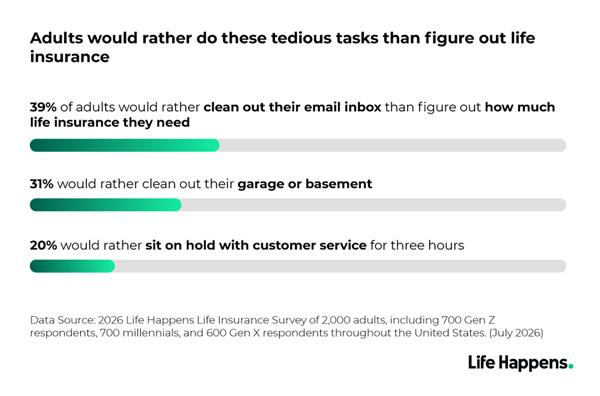
According to the 2026 Life Happens Life Insurance Survey, a financial literacy nonprofit organization, 39% of U.S. adults would rather clean out their email inbox than figure out their life insurance needs. Another 31% would rather clean out the garage or basement. One in five U.S. adults would be willing to sit on hold with customer service for three hours before life insurance planning. Even though many adults have it somewhere on their list, nearly half (46%) say they’ll either deal with it later or not at all.
They Know It Matters
Nearly a third of adults have already figured out a life insurance plan, and they feel good about their decision. Others are feeling more conflicted: 14% have a policy, but they’re not sure if they have enough. Another 12% say they either don’t know where to start or they think it’ll be too expensive.
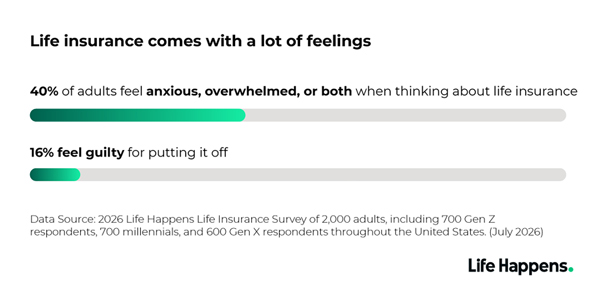
It’s no wonder people are putting it off: Navigating a new-to-them form of financial planning can come with a lot of complicated emotions. Four in 10 feel either overwhelmed, anxious, or some combination of both. Sixteen percent of U.S. adults feel guilty for putting it off, but when the outcome is more procrastination, that feeling lingers.
Why Later Keeps Winning
If you’ve ever faced an important decision without having enough information to make an informed choice, you know how stressful it can be. While the generations have different takes on making major decisions with a gut feeling or “pure vibes,” most of the time, people want to feel like they’re making an informed choice. Forty-five percent of U.S. adults say cost concerns, confusion or procrastination are the main reasons they have delayed or would delay looking into life insurance. For more than one in five, the plan is to seriously look at it when they feel more financially stable. For 12%, they say they’ll do it when they’re older.
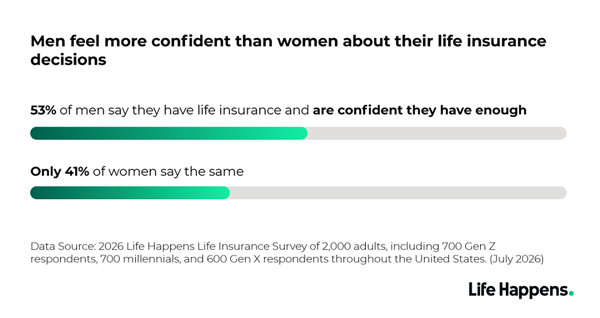
Men tend to feel more confident about their life insurance decisions to date; 53% of men vs. 41% of women feel confident their family would be financially protected.
The First Step Feels Bigger Than It Is
Learning more about life insurance, how it’s priced and how it works could help get many consumers out of their procrastination loop. A quarter of people say they’d make a decision if they learned it was easier to get than they previously thought. Thirty percent would make the purchase if they learned it was more affordable than they believed it to be. Others need an experienced professional to talk to or an online calculator tool to give them guidance.
Methodology: Life Happens commissioned Atomik Research to conduct an online survey of 2,000 adults, including 700 Gen Z respondents, 700 millennials, and 600 Gen X respondents throughout the United States. The margin of error for the overall sample is +/- 2 percentage points and +/- 4 percentage points for each generational sample, with a confidence level of 95 percent. Fieldwork took place between July 14 and July 20, 2026. Atomik Research, part of 4media group, is a creative market research agency.
Photo courtesy of Shutterstock (couple using computer)
SOURCE:

(Feature Impact) Young people face a growing number of pressures, including academic expectations, social responsibilities, complex family situations and uncertainty about their own futures. Mental health support is important for all – but in many rural areas, those pressures are even greater.
According to the Centers for Disease Control and Prevention, the suicide rate for rural youth ages 15-19 is 74% higher than their urban counterparts. Barriers like limited insurance coverage, unreliable internet for telehealth, scarce providers, long drive times and lack of public transportation make it harder to get mental healthcare when it’s needed. Plus, asking for help can feel like opening oneself up to judgment and stigmatization.
That’s why Rural Minds, the only nonprofit focused on mental health for rural communities, created the Rural Youth Mental Wellness pilot program supported by Boehringer Ingelheim. It was developed by an advisory committee made up of rural youth to provide their peers with practical, free, accessible mental health resources. Incorporating feedback on the pilot, the updated program sponsored by the Sompo Foundation is now launching its national rollout.
“A young person’s ZIP code should never determine whether they can access meaningful mental health support where and when they need it,” said Jessica L. Schleider, Ph.D., director, Lab for Scalable Mental Health, Northwestern University. “Our lab is thrilled to partner with Rural Minds as they champion evidence-based, anonymous, freely available support tools designed to overcome barriers to help-seeking faced by rural youth across the country.”
If the rural mental health crisis affects you or a loved one, consider these ways to help.
Break the Stigma Surrounding Mental Health
In communities where self-reliance is valued, asking for help can sometimes be viewed as a sign of weakness. Young people who feel unheard and unsupported often struggle with being vulnerable, so they continue carrying their increasingly heavy burdens alone.
Parents, educators, healthcare providers, community leaders and peers can work to change that culture by normalizing mental health conversations. This includes helping teenagers feel seen and accepted by educating them on mental health issues and coping strategies, listening to their experiences without judgment, sharing your own stories and reminding them it’s courageous to seek support.
 Consider Single-Session Interventions
The first step is always the hardest when it comes to seeking mental health support, and not every struggling young person is ready or able to see a therapist. With access to free, confidential, self-guided materials to begin building mental wellness skills, the first step may be less scary.
Single-Session Interventions (SSIs) are brief, structured online courses designed to teach youth practical skills for handling stress, low mood, self-image and more. The Rural Youth Mental Wellness Program offers SSIs in partnership with Project YES (Youth Empowerment and Support), a free digital resource developed with Northwestern University’s Lab for Scalable Mental Health at the Feinberg School of Medicine.
Anonymous access to SSIs through the partnership provides strategies for:
- Improving mood
- Rethinking body image
- Reframing negative thoughts
- Knowing your power to change
- Taking steps toward goals
- Protecting LGBTQ+ pride
- Handling self-harm urges
- Staying safe amid dark thoughts
Each SSI typically takes 5-10 minutes. Although SSIs are not a replacement for therapy, they provide a research-backed source of support for young people experiencing bouts of stress or low-to-moderate distress.
Know When to Seek Professional Help
Self-guided resources and supportive conversations are a valuable starting point, but sometimes young people need qualified professional help. Look for symptoms like worsening mood or behavior, substance use, self-harm or difficulty managing everyday tasks, and take teens seriously when they express dark feelings.
Doctors and counselors can provide personalized support for youth in crisis, and the 988 Suicide and Crisis Lifeline offers free, confidential 24/7 support for mental health by dialing 9-8-8.
“I grew up in a small town where mental health was almost taboo,” said committee member Asheton Medlin. “Being part of the committee that built this program let me help make sure rural youth today have the support I didn’t. I’m excited to help bring these resources to them because this generation deserves the chance to grow up and change the world.”
Find more information at RuralMinds.org.
Photos courtesy of Shutterstock
SOURCE:

(Feature Impact) When it comes to protecting your heart, supporting your kidney function and improving your metabolic health, you’ll find the advice for each one looks similar. That’s because your body’s systems are deeply interconnected: what affects one will have ripple effects across the others.
Cardiovascular-kidney-metabolic health, or CKM health, is a perfect example. When any one of these systems is compromised, it can lead to problems with the others. Therefore, it’s not uncommon for health problems like heart disease, stroke, diabetes and kidney disease to develop or worsen simultaneously – a condition collectively known as CKM syndrome.
The reverse is also true, so habits that are healthy for your heart will have a positive effect on your kidneys and metabolic system and vice versa. Consider these simple strategies that align with the American Heart Association’s Life’s Essential 8, a list of healthy steps that can improve overall health. Learn more about how these habits and health measures affect your CKM health at Heart.org.

- Choose Healthy Foods – Food is your body’s fuel, so fill your tank wisely. Certain types of foods can help your blood pressure, cholesterol, blood glucose and triglycerides stay within healthy ranges, while poor nutrition can push those numbers into more dangerous territory. Focus on vegetables, fruits, whole grains, plant-based proteins (e.g. beans, legumes and nuts) and lean animal proteins (e.g. seafood, skinless poultry and low-fat dairy). Drink plenty of water throughout the day and limit added sugar and salty or fatty foods.

- Stay Physically Active – Exercise doesn’t have to feel like a chore – in fact, some of your favorite hobbies may already count. The American Heart Association recommends aiming for 150 minutes per week of moderate physical activity like dancing, gardening or walking, moving quickly enough to elevate your heart rate and break a light sweat. Alternatively, choose 75 weekly minutes of vigorous exercise that gets you breathing hard and fast; think running, swimming, playing tennis or riding your bike on hilly terrain.

- Avoid Nicotine – Tobacco and other nicotine products can raise your blood pressure, damage blood vessels and increase your risk of heart attack and stroke, which are all bad news for your CKM health. If you’re currently trying to quit, you aren’t alone, so don’t be afraid to seek out support groups and resources to help.

- Prioritize Healthy Sleep – Sleep gives your body a chance to rest and recover from the day, but it’s often one of the first things people sacrifice when life gets busy. Poor sleep can increase your risk for heart disease, weight gain and other issues. Aim for a solid 7-9 hours a night. Keep your bedroom cool, dark and comfortable, and do your best to limit distractions like late-night smartphone scrolling.

- Watch Your Blood Pressure – When your blood pressure is high, it forces your heart to work harder to pump blood through the body, which can weaken it over time. It can also damage the delicate arteries in and around the kidneys, putting CKM health further at risk. Information is power, so check your blood pressure frequently to know whether further action is needed to keep it under control.
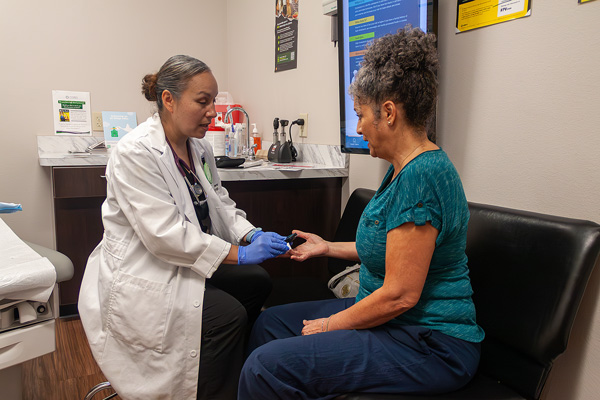
- Manage Your Blood Sugar – High blood sugar can damage the kidneys, eyes, blood vessels and more, thereby increasing your chance of developing harmful CKM conditions. Controlling blood sugar is particularly important for people with diabetes. If you don’t have diabetes and still experience frequent blood sugar spikes and crashes, talk to your doctor.
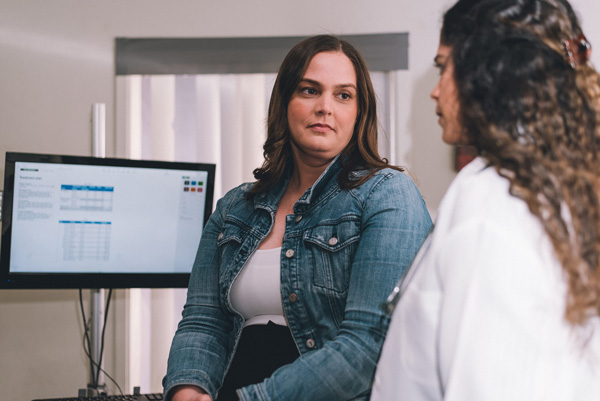
- Control Your Cholesterol – Cholesterol comes in both “bad” (LDL) and “good” (HDL) forms, requiring a balancing act to keep your levels within a healthy range. If LDL is high and HDL is low, your risk of clogged blood vessels, heart attack and stroke are higher. Healthy levels keep blood flowing to your heart and kidneys, supporting your metabolic health in the process. See your doctor for regular bloodwork so you can monitor cholesterol changes.

- Maintain a Healthy Weight – Since excess body weight puts pressure on the heart, kidneys and other organs, a healthy body weight helps lower your risk of CKM syndrome. Whether you’re hoping to maintain or reduce your weight, regular exercise, healthy eating and quality sleep are all great ways to achieve your goals.
<img src="https://ssl.google-analytics.com/collect?v=1&tid=UA-482330-7&cid=1955551e-1975-5e52-0cdb-8516071094cd&sc=start&t=pageview&dl=http%3A%2F%2Ftrack.familyfeatures.com%2F18083%2F10535&dt=8-DAILY-HABITS-TO-SUPPORT-YOUR-HEART-KIDNEY-AND-METABOLIC-HEALTH" />
<img src="https://erp.featureimpact.com/api/v1/tracking/18083/10535/track.gif" />SOURCE:






-

 NEWS3 years ago
Suspect indicted, jailed in Tia Hutson murder
-
 NEWS4 years ago
2 hurt, 1 jailed after shooting incident north of Nocona
-

 NEWS4 years ago
Wreck takes the life of BHS teen, 16
-
 NEWS3 years ago
SO investigating possible murder/suicide
-
 NEWS3 years ago
Murder unsolved – 1 year later Tia Hutson’s family angry, frustrated with no arrest
-
 Show us something good9 years ago
Country music star children perform in Bowie
-
 100th Birthday4 years ago
Looking back at the 1958 Centennial edition of The Bowie News
-
NEWS3 years ago
Sheriff’s office called out to infant’s death