
SPORTS
Aging and the Outdoors


By Luke Clayton
This week let’s discuss a subject that directly affects all of us sooner or later- how to continue to enjoy our outdoor endeavors as we grow older. In my mid-seventies I feel qualified to share some experiences that might be beneficial to some of those who are a bit long in the tooth. If you are a whipper snapper in your prime, stick with me- the good Lord willing, you will someday be a ‘senior’ hunter, fisherman or outdoor enthusiasts and take my word for it, the years will fly by much faster than you think!
In my younger days, I had a great friend that was about 20 years my senior, Dubb Wallace. Dubb was in reasonably good shape and well into his seventies, he could continue to keep up with a bird dog on a qual hunt or paddle a Jon boat into a duck blind. He was still running heavy equipment into his mid-seventies. We hunted and fished together a great deal and thoroughly enjoyed each other’s company.
I watched Dubb from year to year as he began to walk slower and avoid obstacles that never slowed him down before. The change was subtle but noticeable. I recall sometimes attempting to push him on at the speed he was accustomed to but Dubb’s body and mind dictated how fast he should walk or how much weight to carry in his hunting pack. He began looking for shallow water to wade across creeks rather than ‘hopping’ across as he did in his younger years.
I learned to slow down to match his abilities and remember him saying, “Watch me closely my friend because one day you too will have to slow down, there’s no way around it.” I’m now where he was back then and I have come to fully appreciate what he was telling me!
Of course, there are health factors that cause us to slow down more quickly, we each have our own timeline and need to be attuned to what our body tells us. I have enjoyed good health my entire life. I lived the outdoors lifestyle of a surveyor in my younger days and after retiring from surveying at age 51, remained active in the outdoors with my career as an outdoors writer, radio show host and later became involved in outdoor television.
At age sixty a buddy asked me to begin outfitting archery elk and bear hunts with him in the mountains of northern Colorado. I was a bit hesitant but after a bit of prompting, I was all in and guided hunts for the next eight years. Outfitting high country hunts is much more than guiding hunters. It requires a lot of work planning meals, packing and making sure all the
necessities are on hand at camp. I thoroughly enjoyed these few weeks each September in the mountains but after several years, my wife made the comment that I didn’t seem to be as enthusiastic about heading to Colorado as in the beginning. She was absolutely correct, but I was so engrossed in the mechanics of getting ready and all the other necessary duties I shared with my partner in the business, I had tunnel vision and was very task oriented.
The last year I guided I could tell my drive had diminished and I was having to push myself hard. Oh, I would have been fine to hunt on my own, but a guide has responsibilities to his client to give one hundred percent and the price I was having to pay to do so was getting greater each year. I hired a younger friend to take my place the last year I was involved and I became the pick up man. I drove the vehicle as near as possible to the guide/hunters after an animal was taken.
The reason I’m telling you this is that there are a lot of changes that take place from age sixty to one’s mid seventies and it’s up to each of us to listen to our bodies and adjust our activities accordingly. When I was sixty, I guided guys several years my junior that were amazed that I could still hunt in the high altitude.
I continue to hunt and fish a lot! It’s a lifestyle that I have enjoyed for many years but I’ve devised ways to enjoy each outing in a somewhat ‘easier’ fashion. Just a few years ago, I thought nothing of packing back into the woods to hunt hogs at night over a corn feeder that I also had to carry in on my back. I carried a home made drag and would drag the porkers several hundred yards back to a trail or road I could access with my truck.
These days, I seem to kill just as many hogs but now I hunt the edge of the woods, areas where I can use my truck as a stand to hunt from. I hang a feeder from a stout tree limb from a chain and back my truck under to fill it with corn. Most of my hog hunting is at night using my ATN thermal scope and I hunt from the bed of my truck, from a comfortable swivel office chain. I have a cold iced tea handy and if mosquitoes are bad, fire up the Thermocell. Parked downwind from where I expect the hogs to appear, they can’t smell me and of course they can’t detect the truck in the dark. When I shoot one, I simply drive close and with the aid of the truck’s headlights, remove the four quarters and backstraps. No more loading the entire hog into the truck. Rather than stay up half the night butchering the hog, I put the quarters directly on ice during warm weather (I carry a 120 quart cooler with ice in the bed of the truck).
I no longer stay out fishing during the heat of the day. I much prefer to begin fishing at the break of day and be off the water by mid-morning during the warm weather months.
So if you too have become a bit long in the tooth, have heart! You can still do much of the things you’ve always done, you just need to devise ways to do them a bit slower and safer.
One last tip! I now hunt from the new see through ground blinds rather than perch myself high up in a tree stand. I’ve enjoyed just as much success and don’t have to worry about a fall that could possibly end my hunting career!
Listen to Luke’s weekly radio show/podcast “Catfish Radio with Luke Clayton and Friends” just about everywhere podcasts are found.
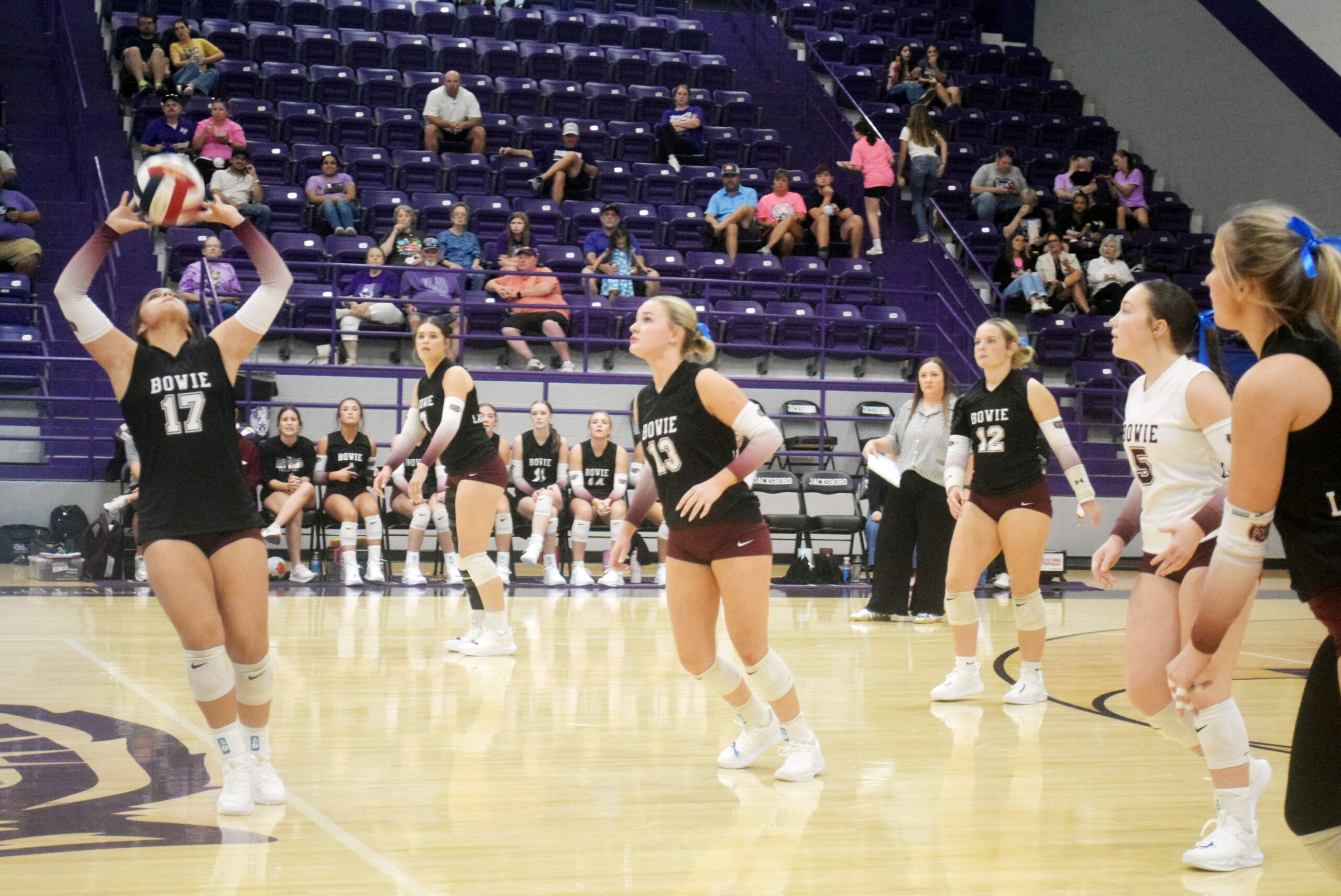
Bowie, playing on a short rest, held with host Jacksboro for most of the volleyball match Oct. 1, but the Tigerettes pulled away late and defeated the Lady Rabbits 3-1 (26-24, 12-25, 25-14, 22-25).
The match was scheduled for Oct. 2 but was moved. Both teams are now 2-2 in District 6-3A.
Jacksboro got out to a quick lead in game one before Olivia Stewart’s kill and a three-point Olivia Richey serving run put the visitors up 8-7. Junior Abby Reneau broke things open with a six-point string to give Bowie a 15-8 cushion and force Jacksboro into a timeout.
The Tigerettes came back and took an 18-16 lead. KP Rutherford’s kill broke the serve and allowed Molly Enlow to tie the game at 18.
For further details, pick up a copy of Thursday’s Bowie News.
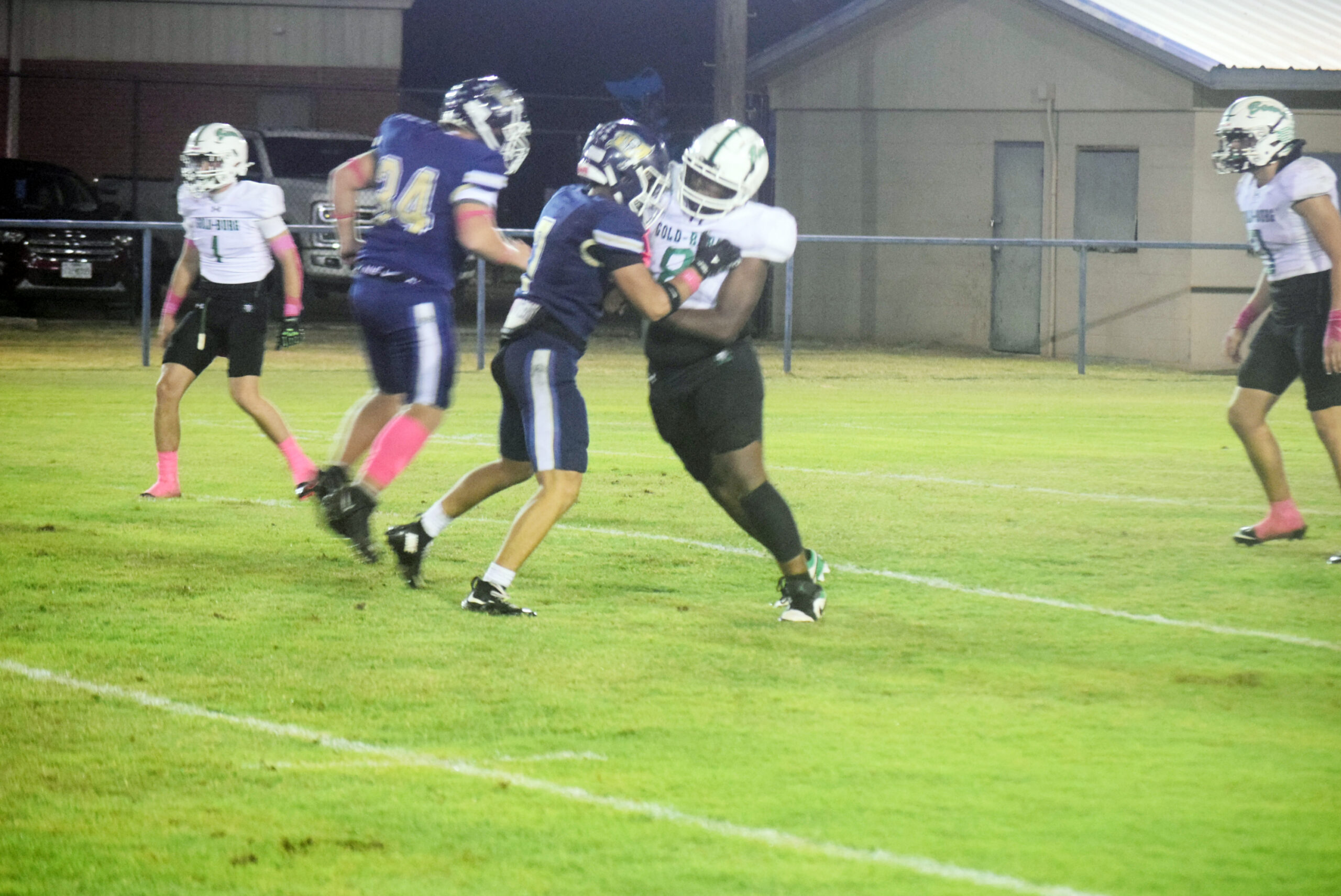
Gold-Burg Football Coach Austin Norman called his Bears’ 35-32 loss to host Perrin a “barn burner”.
It most definitely was as Gold-Burg, now 1-5 for the year gave the 5-1 Pirates everything they wanted for four quarters. Gold-Burg scored on the last play of the first half on a Peyton Epperson run with the two point conversion cutting the deficit to 20-16.
The Bears were their own worst enemy to open the third quarter with face mask and offside penalties moving the Pirates downfield setting up a first-and-goal at the Bear three. Defense by Epperson, Keelyn Case and Barrett Allen and a pair of Perrin penalties helped stop the drive and force a turnover on downs.
Gold-Burg was slapped with an intentional grounding penalty on the first play, giving Perrin a safety and extending the Pirate lead to 22-16. Defense by Epperson and JoJuan Grace after a first down run closed out the third quarter.
For further details, pick up a copy of Thursday’s Bowie News.
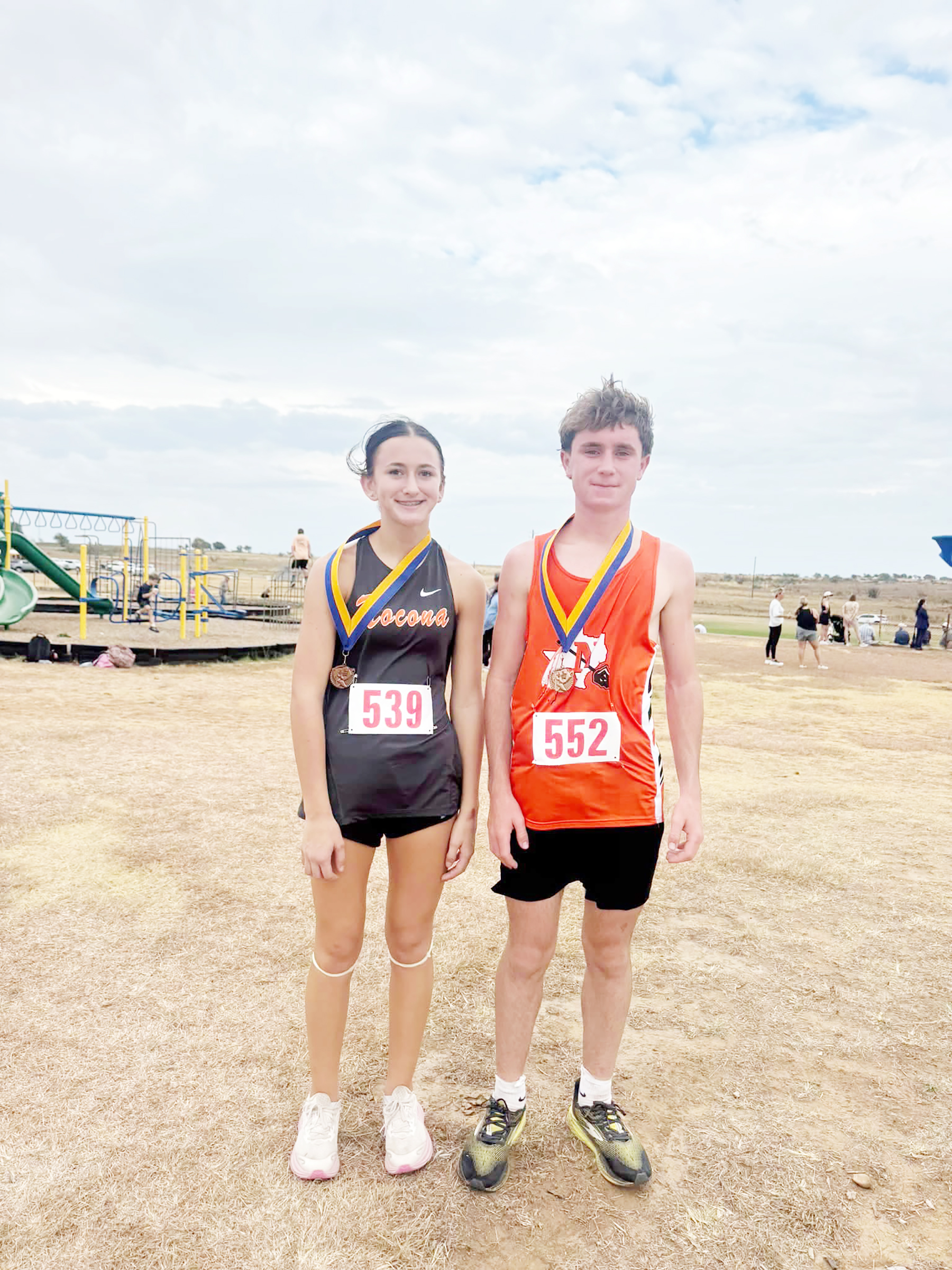
Nocona and Prairie Valley cross country teams took part in the Prairie Valley Invitational Sept. 20 while Bowie varsity runners competed in the Lubbock Invitational.
Lubbock
Leading the Rabbits was Kellen Rater who finished 10th among 162 runners with a time of 17:24.50. Finishing behind Rater was Shawn Willett with a time of 19:33.20. Hayden Sutton ran a 20:27.10 followed by Taven Melton in 20:39.20, Coleman Holloway in 20:53.80 and Jaxon Castro with a time of 21:31.60.
Laney Segura led the Lady Rabbits with a time of 14:41.30. She was followed by Kylee Waldrep in 15:56.80, Bella Lozano in 16:04.80, Angeles Alvarez with a time of 16:15.40, AnDee Miller in 16:23.70 and Isabella Caswell in 16:51 flat.
For further details, pick up a copy of Thursday’s Bowie News.






-

 NEWS3 years ago
Suspect indicted, jailed in Tia Hutson murder
-
 NEWS4 years ago
Wreck takes the life of BHS teen, 16
-
 NEWS4 years ago
2 hurt, 1 jailed after shooting incident north of Nocona
-
 NEWS3 years ago
Murder unsolved – 1 year later Tia Hutson’s family angry, frustrated with no arrest
-
 NEWS3 years ago
SO investigating possible murder/suicide
-
 Show us something good9 years ago
Country music star children perform in Bowie
-
 100th Birthday4 years ago
Looking back at the 1958 Centennial edition of The Bowie News
-
NEWS3 years ago
Sheriff’s office called out to infant’s death