
NEWS
What will allergies look like across the U.S. this spring?

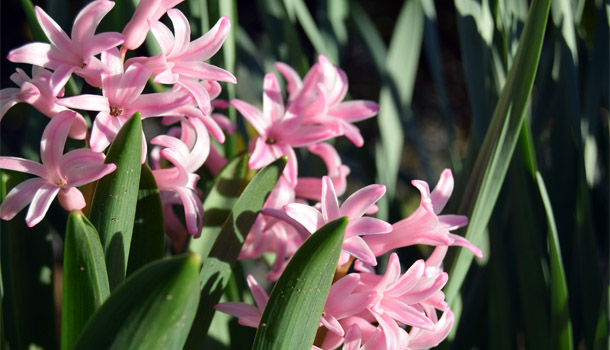
AccuWeather forecasters have you covered on where in the U.S. allergy sufferers may need to stock up on tissues — and keep the windows closed at times this upcoming season.
AccuWeather Global Weather Center – March 5, 2021 – Spring is creeping up fast in the United States, and that means warmer weather is on the horizon after a rough winter in some regions, but for those who suffer from seasonal allergies, there may only be a few weeks left in some parts of the country before allergens begin to kick into full gear. And one part of the nation is already beginning to feel the effects of the spring pollen season.
New research from Germany suggests that climate change is now causing allergy season to last longer, as rising temperatures are causing plants to bloom earlier, and pollen from early-blooming locations are traveling into later-blooming locations, UPI recently reported.
AccuWeather meteorologists, led by Senior Meteorologist Alan Reppert, released their annual spring allergy forecast this week, after digging into the data and exploring which areas of the country may experience an early or extended season as well as which areas could face higher-than-usual pollen counts.
Simply put, different allergens will begin to affect Americans at different points in the season, depending on the region and the weather conditions. AccuWeather forecasters have you covered on where in the U.S. allergy sufferers may need to stock up on tissues — and keep the windows closed at times this upcoming season.
 (Photo/mladenbalinovac/Getty Images)
“Spring by definition usually involves tree pollens … trees tend to be dominant in the spring, summer tends to be dominated by grass pollens and fall tends to be dominated by mostly weeds and some molds,” Jody Tversky, assistant professor and former clinical director of the Division of Allergy and Clinical Immunology at Johns Hopkins University, told AccuWeather.
March and April are typically when tree pollen begins to take off in the U.S. People with oak, maple, birch, elm, sycamore and hickory allergies in the mid-Atlantic region of the U.S. will begin to feel their allergies come on this month.
“By the time we reach summer, the trees are in full bloom, and you can tell this when you go to your car and you see these pollen grains on your windshield,” Tversky said. The pollen grains people see building up are too large to actually be the cause of people’s allergy symptoms, but they do signal that allergy-causing pollen is in the air.
Tree pollen forecast
The Southeast is already beginning to experience the first effects of allergy season. Trees around the Gulf Coast in particular, Reppert said, have begun releasing pollen.
Tree pollen counts for the Northeast are forecast to be around average for most of the region this year, with some above-average tree pollen forecast for the area surrounding the Great Lakes beginning in mid-March and extending through April.
This season could end up being a nasty spring season for tree-allergy sufferers in the Midwest as the weather warms up.
Midwesterners, including those who live around metropolitan areas like Chicago and Detroit, could experience some of the worst conditions for tree pollen this season.
Residents in eastern Washington, northern Idaho and eastern Oregon can also expect tree pollen to reach high levels this year.
In contrast, across the Plains, tree pollen should be on par with what is considered average for the region.
Southwest residents with tree allergies will be the only ones that will truly be able to rejoice — with an expected drought and higher-than-usual temperatures on the horizon, tree pollen counts in the region are expected to remain low throughout the season.
“Anything that does grow will be pretty quick to die off,” Reppert said. “When the grass [and] weeds dry out and have no rainfall for some time, it will actually stunt the grass and weed growth and not allow it to really grow.”

Grass and weed pollen forecasts
The mid-Atlantic and Northeast can expect above-average grass pollen counts to move into the region beginning in late May for points farther south and through June and July for points farther to the north. Several states will have some of the highest grass pollen counts in the nation this year, Reppert said.
The highest above-average pollen counts will be focused in the northernmost portion of Virginia into southern Maine. The Great Lakes region, including Michigan, northern Ohio, as well as northwestern parts of Pennsylvania and western New York, will all experience higher-than-average grass pollen counts.
Grass pollen could also spell trouble for the northernmost part of the Midwest, most prominently in Michigan, Ohio and parts of Wisconsin. The eastern half of the region can expect above-average weed pollen levels, while the western half will experience normal levels.
Above-normal levels of grass pollen are forecast to extend into the northern Plains, but the rest of the region should align with levels typically observed in the region.
Grass pollen is forecast to come in with near-normal counts for Nevada, Utah and Colorado but will be well below the average for other parts of the Southwest this year, such as across New Mexico, Arizona and western Texas.
Spring allergy sufferers in the Southeast could be facing a double whammy this year. Forecasters not only expect above-average grass pollen levels across the region, but also weed pollen counts are predicted to reach well above average during allergy season.
“There is some overlap there between grass pollen and weed pollen that’s going to be quite high, especially in parts of the Southeast along the Atlantic Ocean,” Reppert said. Virginia, the Carolinas, Maryland, Delaware and Florida will feel the weed pollen most acutely in June. In states farther north along the Eastern Seaboard, weed pollen counts will rise into August.
Much of the Plains is forecast to experience average weed pollen levels. The Texas Panhandle, Oklahoma Panhandle and the southwestern-most part of Kansas will experience below-average weed pollen.
The Southwest will be split in how it is impacted by weed pollen this year. Nevada, Utah, Colorado, most of New Mexico and western Texas will have below-average weed pollen. Most of Arizona and central New Mexico will be on par with previous years, however.
Southeastern Arizona and southwestern New Mexico will experience above-average weed pollen near the border of the U.S. and Mexico.
Another region that’s in for a long and potentially tough season ahead will be the Northeast, according to AccuWeather forecasters. Projections call for weed pollen levels to be consistently above average throughout the entire Northeast this year.
In the West, allergy sufferers may skate by with fewer problems. Weed pollen is forecast to be in the average range for the Pacific Northwest, but California’s weed pollen levels could be below average for the season.
Another layer of complexity as the pandemic persists
On top of a harsh season expected for some regions of the country with overlapping pollen seasons, COVID-19 adds another layer of complexity, Tversky said. Seasonal allergy symptoms can get complicated, especially where their symptoms appear similar to the new coronavirus.
“Some of the symptoms that are associated with COVID-19 infection include congestion, stuffy nose, feeling a little bit unwell — even loss of sense of smell for some patients,” Tversky explained. Because of the similarities between symptoms of seasonal allergies and symptoms of the coronavirus, a person experiencing allergies amid the pandemic “can be a little bit problematic,” as they may not be able to tell what is ailing them.
Despite the confusion with seasonal allergies during the pandemic, Tversky, who specializes in chronic sinus disease, said last spring he anecdotally witnessed a sharp drop in people experiencing their typical seasonal allergy symptoms because they were staying inside more than usual.
“Enough patients said this where I thought, ‘Oh, this might be a real phenomenon,” Tversky said.

(Photo/Alkimson/Getty Images)
A year into the pandemic, though, Reppert said people are looking to get outside more to enjoy nature, and this change of scenery could put them at increased exposure to allergens.
“It could be a double-edged sword because people want to go out, get away, go more into nature and go more into the woods,” Reppert said.
Avoiding allergens and managing symptoms are key, experts say
For people who want to avoid the worst of their allergens, Reppert said there are steps that can be taken to minimize exposure to pollen and symptoms.
“After it rains is normally a good time [to avoid allergens],” he said. “Before it rains, there’s a lot more pollen in the air, and it can be washed out with the rain that comes through.”
He did warn, however, that some people suffer from thunderstorm-related pollen allergies, as pollen can be lofted into the air as storm moves into an area.
Morning hours are also ideal for evading pollen, before plants have had the full opportunity to respond to the sunlight and bloom.
Tversky also noted that a common mistake people with allergies make is over-vacuuming their homes in an attempt to remove dust.
“You’ll never get rid of all the dust,” he explained, and “all you’re doing with that vacuuming is kicking up the dust that’s there.”
Keeping windows closed during allergy season is a great way to prevent bringing pollen or other allergens into your home. There are also many over-the-counter allergy medications that people can take as needed.
“You might even go as far as keeping an eye on the pollen counts through your local AccuWeather network or allergist networks that post that information,” Tversky said. “On very high pollen count days, that may not be the day that you want to spend browsing around outside very much.”
He suggested people who suffer from seasonal allergies see a doctor, so they can pinpoint the exact allergen that is the trigger.
“I wouldn’t be doing my job if I didn’t say for folks that are really suffering that it’s critical they consider seeing an allergist,” Tversky said. “It’s important to see what you’re actually allergic [to] and then you can tailor your treatment to your sensitivities.”
Montague County Judge Kevin Benton has signed an order lifting the outdoor burn ban effective Oct. 7.
Persons are still urged to be cautious when they are out working in the countryside to avoid any spark that could cause a wildfire.

Oct 2
5-8 p.m. – Fall Sip & Stroll With Me, throughout downtown Bowie. Purchase the required armbands and wineglass at 101 E. Pecan or at a participating merchant for $15. Fiddlers will be jamming and horse-drawn carriage rides
Oct. 3
8 a.m. – Pickleball Tournament at The Blade in Pelham Park.
9-10 a.m. – Fiddler registration, Bowie Fire Hall, 203 Walnut
10 a.m. – Championship fiddler’s contest begins.
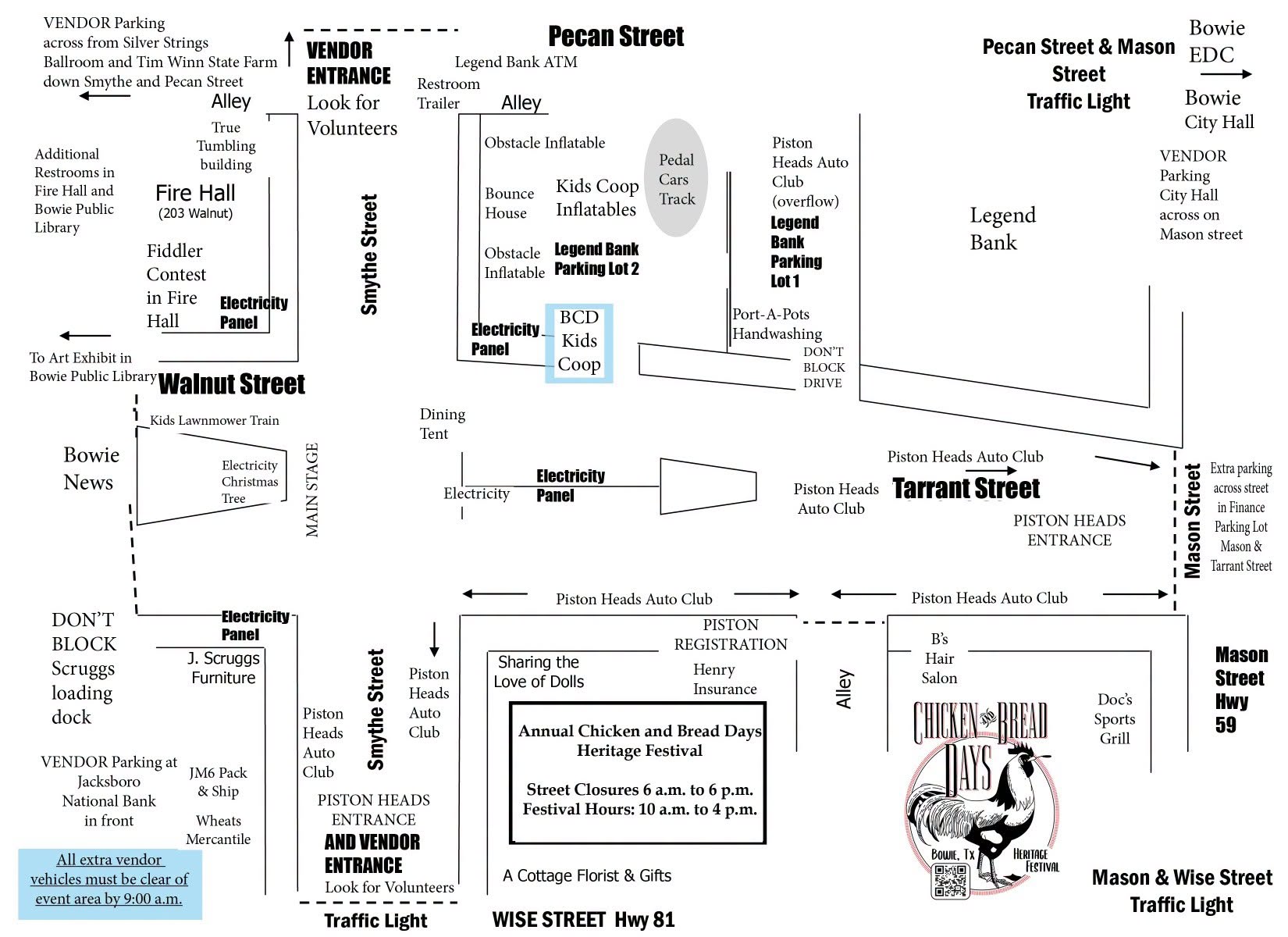
10 a.m. – 4 p.m. – Piston Heads Auto Club Antique and Classic Car Show, Tarrant Street between Mason and Smythe. Registration 9-11 a.m., awards at 3 p.m. Mason and Smythe for entrance
10 a.m.- 4 p.m. – Heritage Market with food vendors, crafts, gifts, home decor and more. Set up on the plaza area on Smythe Street. Kid’s Coop inflatables and pedal cars on the bank parking lot. Horse-drawn carriage rides will be offered.
10 a.m. – 3 p.m. Montague County Creative Arts exhibit and contest at the Bowie Library, 301 Walnut.
11:30 a.m.- Pumpkin sweep contest, egg toss and egg race games in front of the main stage on Smythe Street.
2 p.m. – Art exhibit awards reception at the library.
3 p.m. – Drawing for a bass guitar at fiddler stage in the fire hall,
3 p.m. – Piston Heads Auto Club Show awards, show registration table on Tarrant Street.
Live performances – Main Street stage on Smythe
10 a.m. – Bowie Youth Cheerleaders: Pee-Wee third and fourth graders.
10:30 a.m. – Bowie Intermediate students (third-fifth grade).
11 a.m. – Bowie youth cheerleaders: Juniors fifth and sixth graders.
11:15 a.m. – Ava Layne Bryan, 13-year-old singer from Alvord.
Noon – Bowie youth cheerleaders: Midgets first and second graders.
12:15 p.m. – Rising Stars Performing Arts Center.
Hymns for the Hungry is an event organized by Bowie First Methodist Church to benefit God’s Table, the food ministry operated out of First Freewill Baptist Church of Bowie six nights a week.
This event allows surrounding churches or organizations to share their gift of music to benefit God’s Table. This year’s Hymns for the Hungry will be 5 to 8 p.m. on Oct. 25 at the Bowie Community Center, 413 Pelham.
Admission fee is $1.00. Last year, this event raised more than $15,000 thanks to local sponsors and community’s participation. God’s Table depends on this fundraiser which is operated by volunteers from across the community.
Help by attending this event and supporting God’s Table. “Meal deals” of a hot dog, chips, and drink will be served for $5. Dessert is by donation.
Cakes will be auctioned off intermittently throughout the event, and anyone is welcome to bring one to donate. Drawings for gift cards to local establishments also will take place. All proceeds will go directly to God’s Table, which is now feeding approximately 100 people each night.
If you would like to participate or need more information call or text Jarae Scruggs @ 940-841-1212, or you may call the Bowie First Methodist Church office directly at 940-872-3384.






-

 NEWS3 years ago
Suspect indicted, jailed in Tia Hutson murder
-

 NEWS4 years ago
Wreck takes the life of BHS teen, 16
-
 NEWS4 years ago
2 hurt, 1 jailed after shooting incident north of Nocona
-
 NEWS3 years ago
SO investigating possible murder/suicide
-

 NEWS3 years ago
Murder unsolved – 1 year later Tia Hutson’s family angry, frustrated with no arrest
-
 Show us something good9 years ago
Country music star children perform in Bowie
-
 100th Birthday4 years ago
Looking back at the 1958 Centennial edition of The Bowie News
-
NEWS3 years ago
Sheriff’s office called out to infant’s death