
HOME
First canned beer goes on sale

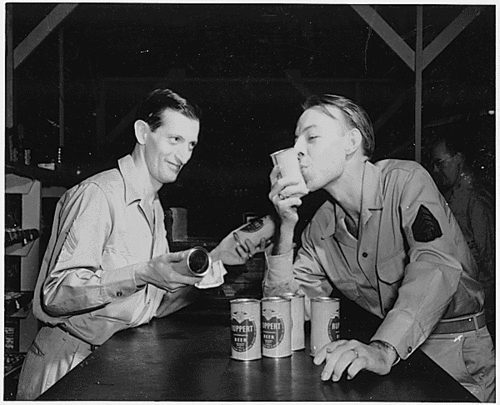
By the late 19th century, cans were instrumental in the mass distribution of foodstuffs, but it wasn’t until 1909 that the American Can Company made its first attempt to can beer. This was unsuccessful, and the American Can Company would have to wait for the end of Prohibition in the United States before it tried again. Finally in 1933, after two years of research, American Can developed a can that was pressurized and had a special coating to prevent the fizzy beer from chemically reacting with the tin.
The concept of canned beer proved to be a hard sell, but Krueger’s overcame its initial reservations and became the first brewer to sell canned beer in the United States. The response was overwhelming. Within three months, over 80 percent of distributors were handling Krueger’s canned beer, and Krueger’s was eating into the market share of the “big three” national brewers–Anheuser-Busch, Pabst and Schlitz. Competitors soon followed suit, and by the end of 1935, over 200 million cans had been produced and sold.
The purchase of cans, unlike bottles, did not require the consumer to pay a deposit. Cans were also easier to stack, more durable and took less time to chill. As a result, their popularity continued to grow throughout the 1930s, and then exploded during World War II, when U.S. brewers shipped millions of cans of beer to soldiers overseas. After the war, national brewing companies began to take advantage of the mass distribution that cans made possible, and were able to consolidate their power over the once-dominant local breweries, which could not control costs and operations as efficiently as their national counterparts.
Today, canned beer accounts for approximately half of the $20 billion U.S. beer industry. Not all of this comes from the big national brewers: Recently, there has been renewed interest in canning from microbrewers and high-end beer-sellers, who are realizing that cans guarantee purity and taste by preventing light damage and oxidation.
– History.com Staff
Click HERE for more stories like this one.

This summer the plant trials have been riotous in their displays of colors in the recipe section.
One that caught my eye this year was Merry Go Round which was full of colors from the hot side of the color wheel. One featured plant was Campfire Red Ember.
Red Ember is one of the three in the Campfire series. Campfire Marshmallow, Campfire Flame and Campfire Red Ember. They are known botanically as Bidens and are native to Mexico and the Southwest.
I don’t think any of us need the government to tell us groceries are expensive. We know it when we stand in the meat aisle and lower our standards real fast from 90% lean to 80% lean hamburger meat.
Still, the numbers are interesting.
According to the latest Bureau of Labor Statistics report, grocery prices in July were 2.7% higher than they were a year ago. Beef is where things really hurt. Beef prices were up 9.4% from last July, and uncooked ground beef was up 9%.
Chicken, on the other hand, was actually down 2.7% over the same period, which makes it one of the better bargains in the meat case right now.
The BLS average-price survey puts a pound of ground chuck at $6.85 in July. Two years ago, in July 2024, that same national average was $5.47.
So maybe it is time to resurrect something our mothers and grandmothers understood very well.
Read the full On the Table feature in the Sept. 17 Bowie News.
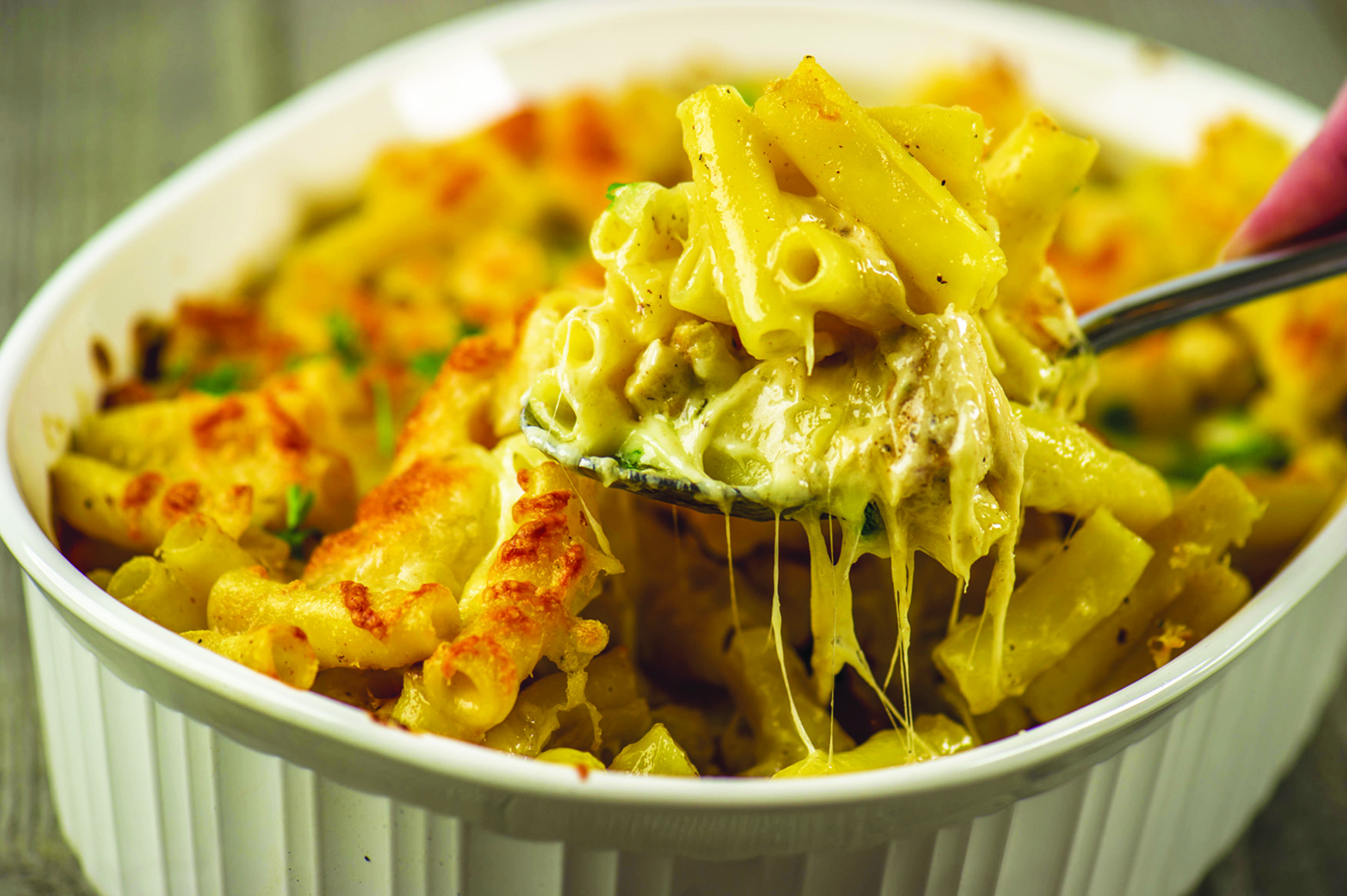
Big-Pan Chicken Spaghetti
A pound of diced chicken can disappear beautifully through an entire pan of pasta.
Ingredients
- 1 pound boneless chicken, diced
- 12 ounces spaghetti
- 1 small onion, chopped
- 1 can cream of chicken soup
- 1 can cream of mushroom soup
- 1 can Rotel-style tomatoes
- 1 cup chicken broth
- 2 cups shredded cheese, divided
- 1 teaspoon garlic powder
- Salt and pepper
Cook spaghetti just until tender and drain.
Meanwhile, sauté diced chicken and onion until chicken is cooked through.
Mix spaghetti, chicken, soups, tomatoes, broth, garlic powder and 1 cup cheese. Spread into a greased 13×9 pan.
Top with remaining cheese and bake at 350 degrees for 25 to 30 minutes.
Have half a bag of frozen peas, broccoli or mixed vegetables lingering in the freezer? Throw them in. This is a forgiving recipe.
Serves 8 to 10.
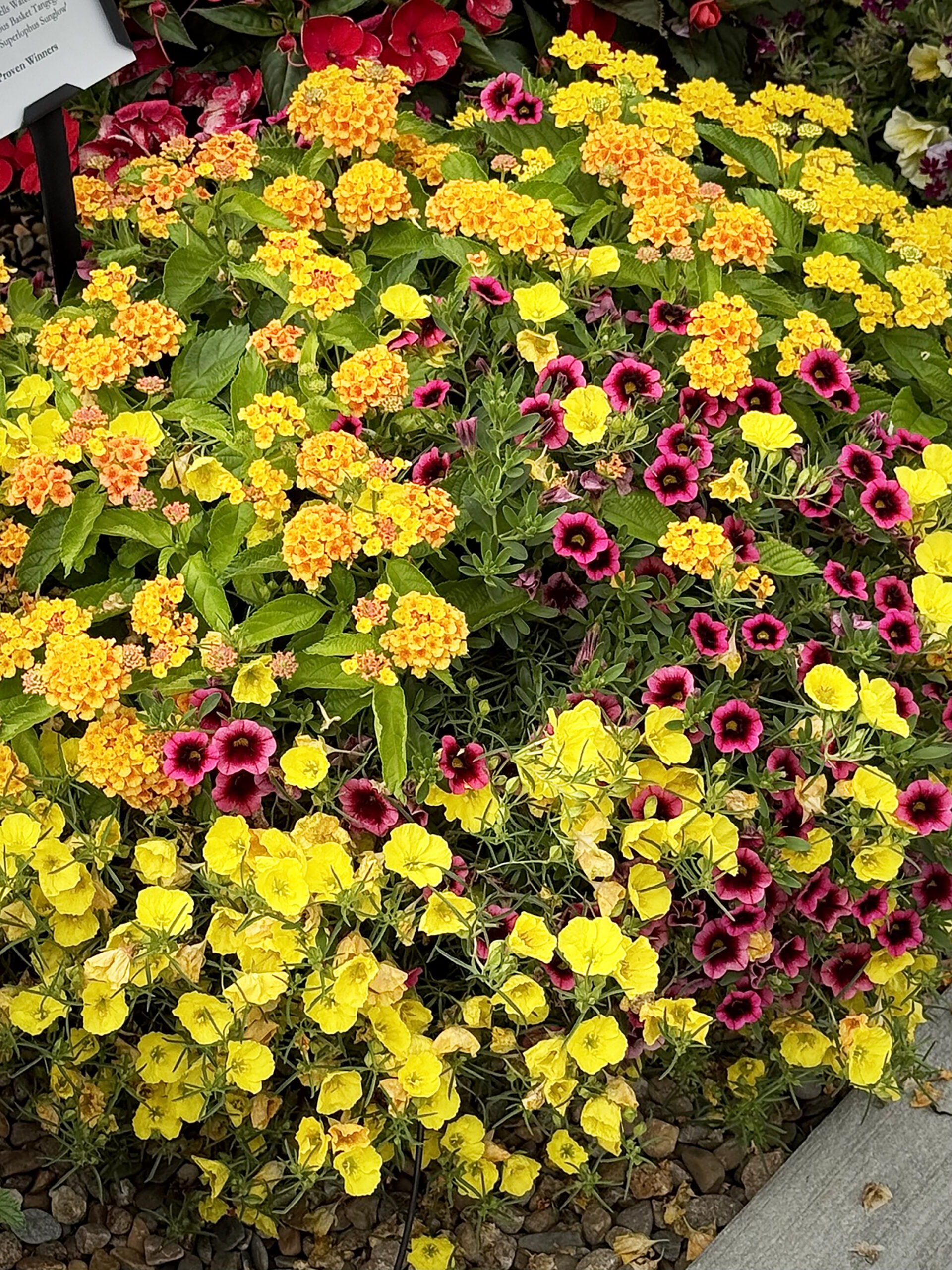
Perfect Score, Director’s Select, Best of the Best and Leader of the Pack are just a few of the awards for Superlophus. I’m also reasonably sure you are thinking: What is a Superlophus?
Superlophus Sunglow is the official name botanically known as an Oenothera commonly called Texas Primrose. That’s right: This golden yellow flower that is a non-stop bloomer and tough-as-nails is a native selection and winner of 15 awards from Canada to Mississippi.
Read the full Garden Guy feature in the Thursday Bowie News.






-

 NEWS3 years ago
Suspect indicted, jailed in Tia Hutson murder
-

 NEWS4 years ago
Wreck takes the life of BHS teen, 16
-
 NEWS4 years ago
2 hurt, 1 jailed after shooting incident north of Nocona
-
 NEWS3 years ago
SO investigating possible murder/suicide
-

 NEWS3 years ago
Murder unsolved – 1 year later Tia Hutson’s family angry, frustrated with no arrest
-
 Show us something good9 years ago
Country music star children perform in Bowie
-
 100th Birthday4 years ago
Looking back at the 1958 Centennial edition of The Bowie News
-
NEWS3 years ago
Sheriff’s office called out to infant’s death