
NEWS
National survey finds just 1 in 3 American would pass citizenship test

PRINCETON, N.J. (Oct. 3, 2018) – Only one in three Americans (36 percent) can actually pass a multiple choice test consisting of items taken from the U.S. Citizenship Test, which has a passing score of 60, according to a national survey released this week by the Woodrow Wilson National Fellowship Foundation.
Only 13 percent of those surveyed knew when the U.S. Constitution was ratified, even on a multiple-choice exam similar tothe citizenship exam, with most incorrectly thinking it occurred in 1776. More than half of respondents (60 percent) didn’t know which countries the United States fought in World War II. And despite the recent media spotlight on the U.S. Supreme Court, 57 percent of those surveyed did not know how many Justicesactually serve on the nation’s highest court.
“With voters heading to the polls next month, an informed and engaged citizenry is essential,” Woodrow Wilson Foundation President Arthur Levine said. “Unfortunately this study found the average American to be woefully uninformed regarding America’s history and incapable of passing the U.S. Citizenship Test. It would be an error to view these findings as merely an embarrassment. Knowledge of the history of our country is fundamental to maintaining a democratic society, which is imperiled today.”
Levine went on to say that knowledge of American history is not an academic exercise, and that the future demands it. “Americans need to understand the past in order to make sense of a chaotic present and an inchoate future. History is both an anchor in a time when change assails us and a laboratory for studying the changes that are occurring. It offers the promise of providing a common bond among Americans in an era in which our divisions are profound and our differences threaten to overshadow our commonalities,” Levine added.
Most Americans Don’t Know the Facts About Country’s Founding
The poll, conducted by Lincoln Park Strategies, a nationally recognized full-service analytic research firm that partners with corporate and non-profit clients, has a margin of error of ±3 percent with a random sample of 1,000 American citizens. The survey also found that:
* Seventy-two percent of respondents either incorrectly identified or were unsure of which states were part of the 13 original states;
* Only 24 percent could correctly identify one thing Benjamin Franklin was famous for, with 37 percent believing he invented the lightbulb;
* Only 24 percent knew the correct answer as to why the colonists fought the British;
* Twelve percent incorrectly thought WWII General Dwight Eisenhower led troops in the Civil War; 6 percent thought he was a Vietnam War general; and
* While most knew the cause of the Cold War, 2 percent said climate change.
Despite the enormous struggles to demonstrate a basic understanding of American history, most respondents said U.S. history was an appealing subject during their time in school, with 40 percent noting it was their favorite and another 39 percent saying it was somewhere in the middle of favored courses of study.
Age Gaps Exist
Surprisingly, the poll found stark gaps in knowledge depending on age. Those 65 years and older scored the best, with 74 percent answering at least six in 10 questions correctly. For those under the age of 45, only 19 percent passed with the exam, with 81 percent scoring a 59 percent or lower.
American History Initiative
The teaching of American history has traditionally focused on memorization, dates, names and events. This poll shows that these methods of learning history have not been effective. In early 2019, the Woodrow Wilson Foundation will announce a new program designed to change the way in which history is taught and learned.
About the Woodrow Wilson National Fellowship Foundation
Founded in 1945, the Woodrow Wilson National Fellowship Foundation (www.woodrow.org) identifies and develops the nation’s best minds to meet its most critical challenges. The Foundation supports its Fellows as the next generation of leaders shaping American society.
Montague County Judge Kevin Benton has signed an order lifting the outdoor burn ban effective Oct. 7.
Persons are still urged to be cautious when they are out working in the countryside to avoid any spark that could cause a wildfire.
Oct 2
5-8 p.m. – Fall Sip & Stroll With Me, throughout downtown Bowie. Purchase the required armbands and wineglass at 101 E. Pecan or at a participating merchant for $15. Fiddlers will be jamming and horse-drawn carriage rides
Oct. 3
8 a.m. – Pickleball Tournament at The Blade in Pelham Park.
9-10 a.m. – Fiddler registration, Bowie Fire Hall, 203 Walnut
10 a.m. – Championship fiddler’s contest begins.
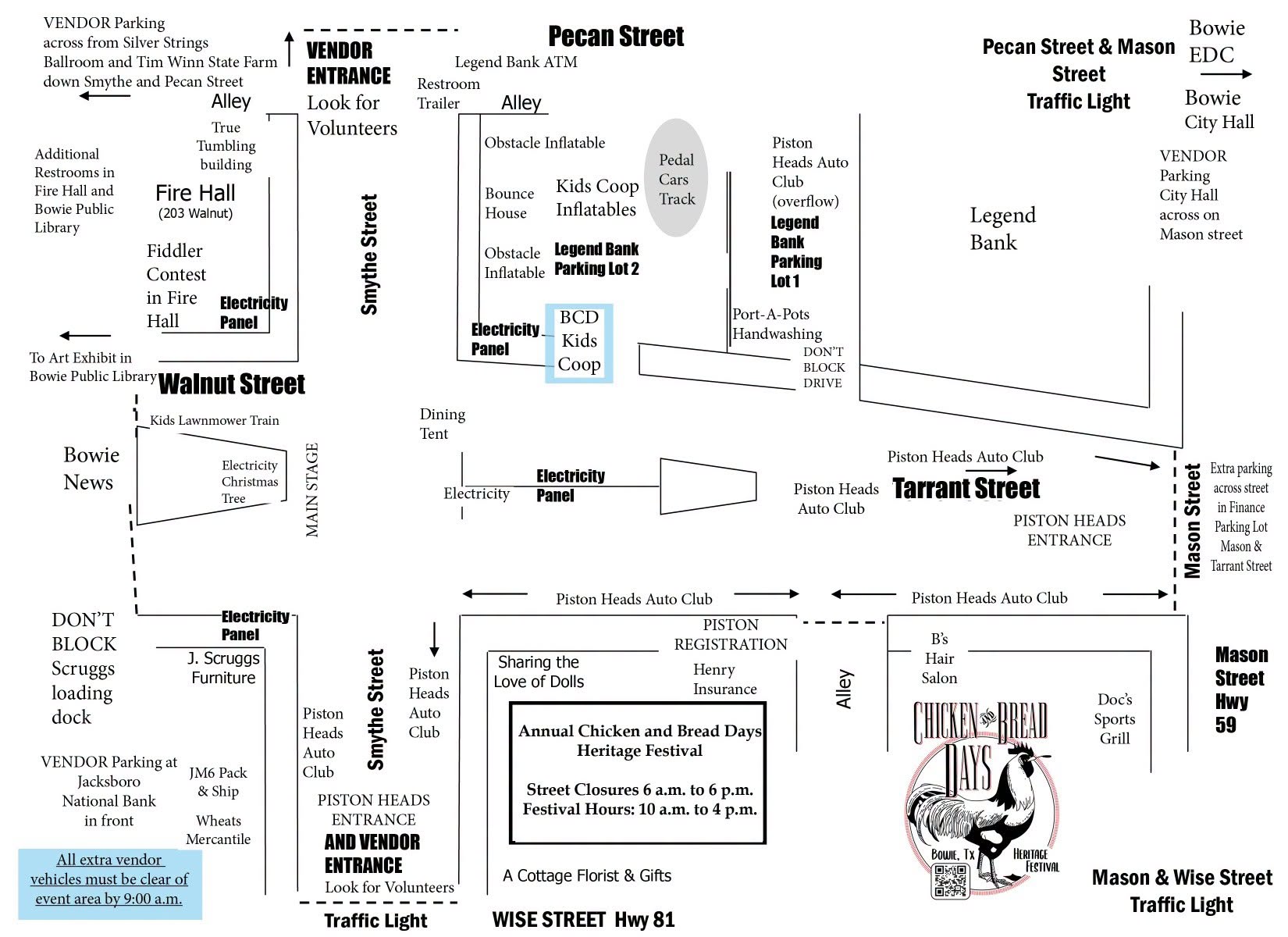
10 a.m. – 4 p.m. – Piston Heads Auto Club Antique and Classic Car Show, Tarrant Street between Mason and Smythe. Registration 9-11 a.m., awards at 3 p.m. Mason and Smythe for entrance
10 a.m.- 4 p.m. – Heritage Market with food vendors, crafts, gifts, home decor and more. Set up on the plaza area on Smythe Street. Kid’s Coop inflatables and pedal cars on the bank parking lot. Horse-drawn carriage rides will be offered.
10 a.m. – 3 p.m. Montague County Creative Arts exhibit and contest at the Bowie Library, 301 Walnut.
11:30 a.m.- Pumpkin sweep contest, egg toss and egg race games in front of the main stage on Smythe Street.
2 p.m. – Art exhibit awards reception at the library.
3 p.m. – Drawing for a bass guitar at fiddler stage in the fire hall,
3 p.m. – Piston Heads Auto Club Show awards, show registration table on Tarrant Street.
Live performances – Main Street stage on Smythe
10 a.m. – Bowie Youth Cheerleaders: Pee-Wee third and fourth graders.
10:30 a.m. – Bowie Intermediate students (third-fifth grade).
11 a.m. – Bowie youth cheerleaders: Juniors fifth and sixth graders.
11:15 a.m. – Ava Layne Bryan, 13-year-old singer from Alvord.
Noon – Bowie youth cheerleaders: Midgets first and second graders.
12:15 p.m. – Rising Stars Performing Arts Center.
Hymns for the Hungry is an event organized by Bowie First Methodist Church to benefit God’s Table, the food ministry operated out of First Freewill Baptist Church of Bowie six nights a week.
This event allows surrounding churches or organizations to share their gift of music to benefit God’s Table. This year’s Hymns for the Hungry will be 5 to 8 p.m. on Oct. 25 at the Bowie Community Center, 413 Pelham.
Admission fee is $1.00. Last year, this event raised more than $15,000 thanks to local sponsors and community’s participation. God’s Table depends on this fundraiser which is operated by volunteers from across the community.
Help by attending this event and supporting God’s Table. “Meal deals” of a hot dog, chips, and drink will be served for $5. Dessert is by donation.
Cakes will be auctioned off intermittently throughout the event, and anyone is welcome to bring one to donate. Drawings for gift cards to local establishments also will take place. All proceeds will go directly to God’s Table, which is now feeding approximately 100 people each night.
If you would like to participate or need more information call or text Jarae Scruggs @ 940-841-1212, or you may call the Bowie First Methodist Church office directly at 940-872-3384.






-

 NEWS3 years ago
Suspect indicted, jailed in Tia Hutson murder
-
 NEWS4 years ago
Wreck takes the life of BHS teen, 16
-
 NEWS4 years ago
2 hurt, 1 jailed after shooting incident north of Nocona
-
 NEWS3 years ago
SO investigating possible murder/suicide
-
 NEWS3 years ago
Murder unsolved – 1 year later Tia Hutson’s family angry, frustrated with no arrest
-
 Show us something good9 years ago
Country music star children perform in Bowie
-
 100th Birthday4 years ago
Looking back at the 1958 Centennial edition of The Bowie News
-
NEWS3 years ago
Sheriff’s office called out to infant’s death