
Live Better
Curating a memorable vacation for your family


(Family Features) Travel has a way of slowing time down, creating memories for loved ones that last long after suitcases are unpacked and regular routines return. For many Americans, their most treasured family memories took place on a vacation or trip rather than at home.
In fact, nearly 67% said they value a core memory more than a physical souvenir after a vacation, according to a survey commissioned by Holland America Line, a cruise line that has been exploring Alaska for nearly 80 years. What’s more, almost 86% of survey respondents said they have looked at photos or videos from a past trip to lift their mood, and more than 90% said positive travel memories can improve their mood during difficult times.
With Alaska on the travel bucket list of more than two-thirds of Americans, it’s a destination that is influencing experience-focused family adventures.
 Explore Curiosities
Travel is about more than seeing new places. For many Americans, it’s also a time to learn, explore new interests and slow down. Booking a cruise can encourage those behaviors.
According to the survey, 61% of Americans are more likely to try new foods while traveling on a cruise, and nearly half (48%) said they’ve discovered a new interest or hobby during their cruise, including wildlife, food, history or culture. For example, cruise guests may be able to try local specialties, like fresh Alaskan seafood, reindeer sausage, birch syrup and Alaskan berries, while on board.
Unstructured time is part of the appeal of cruises, with 28% of respondents sharing they read more during their trips.
Focus on Nature
Nature-focused destinations stand out because they offer experiences that feel rare and immersive, especially in places where wildlife and landscapes are central to the journey. More than 4 in 10 survey respondents said seeing wildlife in nature would be the most memorable family vacation experience, compared with about 12% who said meeting a character at a theme park would stand out most.
Whether spotting whales, watching glaciers calve or seeing the Northern Lights stretch across the Alaskan sky, the landscape being part of the experience helps define the journey. To help guests witness the majestic animals found in Alaska, including whales, eagles, bears, moose, otters, seals, sea lions and more, Holland America Line carries a wildlife expert on board. Plus, a wildlife spotting guide points out native animals found along the cruise route and a map with the best places to see each species is included.
“Guests tell us time and again how profoundly nature shapes the memories they carry home,” said Robert Morgenstern, senior vice president of Alaska Operations at Holland America Line. “Wildlife sightings, time outdoors and shared moments linger long after the cruise ends, especially for families exploring Alaska together.”
Reimagine Family Time
For families, travel often creates time for bonding that daily routines simply don’t allow. More than half of the survey respondents said their best family memories occurred while traveling together, and more than 4 out of 5 (82%) said some of their strongest family bonding moments happened during a vacation or family trip.
In addition to shared memories, more than 91% said travel had a positive impact on their mental and emotional well-being.
As travelers look for relief from routine and overstimulation, finding experiences rooted in nature, exploration and shared moments can help create lasting memories and emotional connection.
To learn more about Alaska travel and book your next family adventure, visit hollandamerica.com.
SOURCE:

(Feature Impact) Communities are strengthened every day by local organizations working to address challenges close to home, whether that’s helping families access food, supporting students, expanding opportunity or providing essential resources to those who need them most. Often operating with limited resources, these organizations are finding practical solutions that make a meaningful difference in neighborhoods and communities across the country.
Many of these efforts happen quietly, powered by people who volunteer their time, share their expertise, donate resources or simply help spread awareness of causes they care about.
For individuals looking to make a difference where they live, community involvement doesn’t have to start with a large commitment. Consider these five options to get involved.
Give Your Time
Giving your time is one of the most direct ways to support organizations serving your community. Whether it’s packing meals, mentoring young people or participating in neighborhood cleanups, volunteering allows people to contribute directly while gaining a deeper understanding of local needs.

Share Your Skills
Nonprofits often need specialized skills in addition to hands-on volunteer support. Communications support, technology expertise, event planning, photography, financial guidance and other professional skills can help organizations expand their reach and strengthen their operations. Contributing the skills you’ve developed can often be just as valuable as donating time or resources.
Tap Into Your Workplace
Many employers offer opportunities to support causes that matter to their employees, such as volunteer programs, community grants or other charitable opportunities.
In communities across the country, local nonprofits can receive support through programs like the PepsiCo Foundation’s Community Impact Awards, where employees can nominate nonprofit organizations in their local communities for grant funding. Since 2022, the program has invested more than $3.7 million into organizations working on issues ranging from food access to education and community development.
“Across North America, there are organizations showing up every day for their communities, often without recognition and with limited resources,” said Monica Bauer, SVP of social impact, PepsiCo and president of the PepsiCo Foundation. “The Community Impact Awards help shine a light on organizations that are creating opportunities, solving local challenges and making a real difference in people’s lives. What makes this program special is that the recognition comes from PepsiCo associates who know these organizations firsthand and have seen their impact up close.”
This year, 100 organizations across the U.S. and Canada received $500,000 total in grants and teamed up with their respective nominating employees for volunteer activities supporting their missions, giving employees another opportunity to engage directly.
Give What You Can
Financial contributions are a valuable way to give back, but they aren’t the only option. Many organizations need non-monetary donations such as school supplies, canned goods, clothing, toys and technology. Before collecting items, check with organizations to learn what is most needed and how contributions can make the greatest impact.
Use Your Voice
One person can make a difference. When that person gets a friend or family member involved, more people can discover and support organizations doing important work. Sharing a nonprofit’s mission on social media, inviting others to volunteer or connecting people with causes you care about can help organizations reach new supporters and expand their impact.
Making a difference doesn’t require doing everything at once. Whether you contribute your time, skills, resources or advocacy, small actions can help make a big impact over time.
Across the U.S., nonprofit organizations are helping improve lives, create opportunities and respond to community needs every day. Their work is a reminder that meaningful change often starts locally with people willing to get involved.
Learn more about how individuals and organizations can help address some of the most pressing needs in their communities by visiting PepsiCo.com/about/social-impact.

SOURCE:

(Feature Impact) Owning a small business has been a cornerstone of the “American Dream” for generations. It represents the chance to transform a passion into a livelihood and legacy. However, turning dreams into reality is rarely a smooth or easy process and requires more than ambition alone. Today’s business owners need support and access to tools that enable them to overcome challenges and keep growing.
Recent research conducted by the Capital One Insights Center shows 75% of more than 1,000 surveyed small business owners with more than one employee and annual revenues of up to $20 million are confident about the future, and 69% believe their business is actively primed for growth.
While this optimism is promising, 47% of business owners still said their operations either stayed the same or became less efficient over the past year, citing issues like back-office friction and fragmented financial systems that make it difficult to get a clear picture of the health of their businesses.
If you’re a small business owner eager to grow but not sure how to get there, start with this advice from real small business owners and experts at Capital One.
//www.youtube.com/embed/VX48mqEaSnE
Identify Sources of Friction
Before you can pour effort into growth, you must understand what barriers are holding you back. Take time to look under the hood of your business to identify where time and energy is being lost.
For example, you may be among the 78% of small business owners who feel stressed and uncertain about expense management – think hours spent hunting for receipts, manually entering numbers into software and reconciling accounts. Operational challenges aren’t just a hassle; they also pull attention away from important priorities like serving your customers and planning for growth.
“We were focused on making as many candles as possible, especially during the busy season,” said Katie Roering, co-owner of Fontana Candle Co. “A lot of the back-office tasks like procurement, raw material purchasing, forecasting – all the really important things – were done at 3 a.m., 8 p.m. or on Saturday and Sunday, and there really just was not enough time in the day to get everything done that we needed to. We just knew as we continued to grow, we needed to streamline our processes, build out our team and keep moving forward.”
 Use Integrated Tools to Manage Finances
Instead of balancing 10 different tracking and analysis tools, you can turn to one-stop solutions to improve efficiency. Time gets lost when you’re forced to manually gather and interpret relevant data before you’re able to act. You need a platform that handles the busywork for you.
Integrated, or “all-in-one,” financial tools – like accounting and bookkeeping platforms with automation capabilities or business credit cards featuring built-in analytical tools – allow you to easily stay on top of cash flow and day-to-day operations. For small businesses where every hour and dollar makes a difference, consolidating and automating systems can have an immediate impact. In fact, 51% of survey respondents said integrated tools have already fueled their growth.
Leverage Credit Access and Rewards Wisely
Growth requires capital, so access to credit is a game-changer for many business owners, with 77% describing it as a key factor in achieving business resilience. Having funds accessible when you need them makes your business more capable of weathering storms such as equipment failures and seasonal slowdowns. It also puts the power in your hands to act when an exciting opportunity presents itself, like an inventory flash sale or the chance to advertise in a new market.
Access to credit comes with another advantage: rewards. By using credit cards for your daily business expenses, you can earn cash back, points or travel rewards. Whether you redeem these to cover everyday expenses, book business trips or reinvest in the business, they can act as a bonus source of income. Learn to maximize rewards like the 84% of small business cardholders surveyed so you aren’t leaving money on the table.
To learn more about how small business owners can identify obstacles, employ integrated financial tools and use credit as a tool for growth, read the full report at capitalone.com/about/insights-center.
Photos courtesy of Shutterstock

SOURCE:
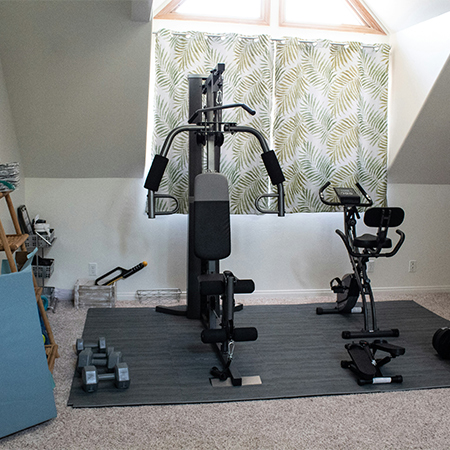
(Feature Impact) It’s a tale as old as treadmills: You buy a new exercise machine with the best of intentions, only for it to become an expensive laundry rack that makes you feel guilty every time you glance over at it. When it comes to making lifestyle changes, the key is not to overhaul your whole routine at once, but to figure out what habits match your lifestyle, personality and passions.
Use these tips to create a home workout space you’ll keep using after the novelty wears off.
Figure Out What Exercises You Enjoy
Before you commit to a big equipment purchase, think about what kinds of exercise feel natural and enjoyable (and which ones make you groan).
If you love running, a treadmill may be worth the space it takes up. However, a rack of dumbbells might just wind up collecting dust if you hate lifting weights. Yoga or dance enthusiasts may prefer to design a more studio-like home gym, while bodyweight strength trainers could be happy with a pull-up bar in the doorway and a mat to do planks on. Consider joining a workout class or gym for a month or two to try different kinds of exercises and machines so you’ll have a better idea of what’s worth investing in permanently.
Evaluate the Space You Have
A good home workout area needs to work around the physical realities of your house or apartment. If you have a whole room or finished basement to dedicate to the cause, this won’t constrain you too much. If you’re working with a corner of your home office, bedroom or garage, saving space becomes a more critical factor.
In these cases, it all comes down to priorities. If you only have room for one piece of bigger equipment, get the one you know you’ll actually use, whether that’s an elliptical, strength machine, standing bicycle or rowing machine. Then build out your collection with other items that can be easily moved and stored, like resistance bands and small weights or dumbbells.
Start Small and Expand as Needed
Don’t fall into the trap of thinking you need to have everything before you can get started. It’s often better to build out your workout space slowly – get a few things at a time, see what you use regularly and figure out what you might be missing along the way. Maybe you realize you enjoy lifting weights and keep wishing you had heavier ones, signaling a need to upgrade.
Add Some Atmosphere
Dark, dismal home gyms are more likely to make your workout feel like a punishment instead of a part of your day worth looking forward to. Creating a space you enjoy being in is just as important as choosing a workout you enjoy doing.
For you, that might look like choosing an area of the home with plenty of natural lighting to make you feel more awake – or adding string lights and color-changing wall sconces for a relaxing yoga session. Maybe it means adding art on the walls or a floor-to-ceiling mirror so you can check your form. A large rubber floormat with a cheerful design, a sound system to play your favorite hype songs or a daily calendar of motivational quotes could be the magic ingredient to get you into the right mindset so you can crush your workout. As long as it works for you, anything goes.
For more tips on home design that fits your life, visit eLivingtoday.com.
Photo courtesy of Unsplash
SOURCE:






-

 NEWS3 years ago
Suspect indicted, jailed in Tia Hutson murder
-

 NEWS4 years ago
Wreck takes the life of BHS teen, 16
-
 NEWS4 years ago
2 hurt, 1 jailed after shooting incident north of Nocona
-

 NEWS3 years ago
Murder unsolved – 1 year later Tia Hutson’s family angry, frustrated with no arrest
-
 NEWS3 years ago
SO investigating possible murder/suicide
-
 Show us something good9 years ago
Country music star children perform in Bowie
-
 100th Birthday4 years ago
Looking back at the 1958 Centennial edition of The Bowie News
-
NEWS3 years ago
Sheriff’s office called out to infant’s death