
COUNTY LIFE
Food handling safety tips for the holidays


Christmas, Kwanzaa, and Hanukah all fall within three days of each other this year. As friends and families gather together this season, the U.S. Department of Agriculture (USDA) Food Safety Inspection Service has four food safety tips to ensure a healthy and safe holiday.
Even on Holidays, Always Follow the Four Steps to Food Safety
Clean hands before food preparation by following these simple steps: wet hands, lather with soap, scrub for at least 20 seconds, rinse with clean warm water and dry hands with a clean towel. Always serve food on clean plates and avoid reusing plates that previously held raw meat and poultry.
Separate raw and cooked foods to avoid cross contamination, which is transferring bacteria from raw food onto ready-to-eat food. For example, when preparing a roast and raw veggies for a dip platter, keep the raw meat from coming into contact with the vegetables, or food that does not require further cooking such as sliced, cooked meat and cheese.
Cook using a food thermometer to make sure food reaches a safe minimum internal temperature. Cook all raw beef, pork, lamb and veal steaks, chops, and roasts to a minimum internal temperature of 145 °F as measured with a food thermometer before removing meat from the heat source. For safety and quality reasons, allow meat to rest for at least three minutes before carving or consuming.
Cook all raw ground beef, pork, lamb, and veal to an internal temperature of 160 °F as measured with a food thermometer. Cook all poultry to a safe minimum internal temperature of 165 °F as measured with a food thermometer. When transporting hot, cooked food from one location to another, keep it hot by carrying it in an insulated container. For more information about food thermometers, visit FoodSafety.gov
Chill leftovers within two hours of cooking. Keep track of how long items have been sitting on the buffet table and discard anything out longer than two hours. Never leave perishable foods, such as meat, poultry, eggs and casseroles in the “Danger Zone” over two hours. The danger zone is between 40 and 140 °F where bacteria multiply rapidly. After two hours, enough bacteria may have grown to make partygoers sick. Exceptions to the danger zone include ready-to-eat items like cookies, crackers, bread and whole fruit.
Consumers can learn more about key food safety practices at Foodsafety.gov and follow @USDAFoodSafety on Twitter. Consumers with questions about food safety can call the USDA Meat and Poultry Hotline at 1-888-MPHotline (1-888-674-6854) or chat live with a food safety specialist in English or Spanish at AskKaren.gov, available from 10 a.m. to 4 p.m. EST, Monday through Friday.
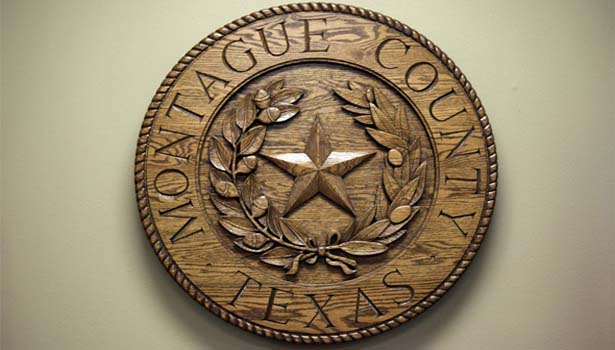
The Montague County Commissioner’s Court will meet at 9 a.m. on Oct. 12 in the County Courtroom at the Courthouse Annex in Montague.
Commissioners are scheduled to consider issuing a proclamation declaring October as Domestic Violence Awareness Month within Montague County.
The court also will consider accepting $850 in unanticipated revenue for the sheriff’s office generated during National Night Out activities, alongside interlocal cooperation contracts between the Texas Department of Public Safety and Justices of the Peace for Precincts 1 and 2.
An executive session is scheduled to discuss personnel matters pertaining to sewer/septic inspector for the county. Any action would be taken back in open session.

The Oct. 9-11 Art of the Song Music and Art Festival opens Friday night for three days of art and entertainment in downtown Nocona.
The festival opens on Oct. 9 with a Chisholm Trail Art Association Preview Party from 5 to 7 p.m. on Oct. 9 at the H.J. Justin Building.
Come see all the entries for the adult show, which formally opens at 10 a.m. on Oct. 10.
Live music will be played by Full Circle Band.
Also on Oct. 9 enjoy a Nocona Nights Street Dance from 7 to 9 p.m. with the Mark Murphey and Highway 82 Band. Cost is $10 per ticket and $200 for a table seating eight. Bring your lawn chairs.
Read the full schedule of events for the festival in your Thursday Bowie News.

These students are nominees for the 2026 homecoming court at Gold-Burg High School. Homecoming royals will be crowned in pre-game ceremonies before the Bears take on Throckmorton at 7:30 p.m. on Oct. 9. Pictured are: Freshmen: Kenzley Foster and Jackson Allen, freshmen; Yareli Aguirre and Jojuan Grace, sophomores; Zara Andrade, junior and Brayden Odom, Kaylie Duncan, both seniors. Not pictured: Caleb Epperson, junior and Keelyn Case, senior.






-

 NEWS3 years ago
Suspect indicted, jailed in Tia Hutson murder
-

 NEWS4 years ago
Wreck takes the life of BHS teen, 16
-
 NEWS4 years ago
2 hurt, 1 jailed after shooting incident north of Nocona
-

 NEWS3 years ago
Murder unsolved – 1 year later Tia Hutson’s family angry, frustrated with no arrest
-
 NEWS3 years ago
SO investigating possible murder/suicide
-
 Show us something good9 years ago
Country music star children perform in Bowie
-
 100th Birthday4 years ago
Looking back at the 1958 Centennial edition of The Bowie News
-
NEWS3 years ago
Sheriff’s office called out to infant’s death