
SPORTS
Bowie, Nocona boy powerlifters compete at Ponder

The Bowie and Nocona boy’s powerlifting teams competed at Ponder along with lifters from six other schools.
As a team the Jackrabbits came just three points short of first place Alvord while the Indians finished in sixth place.
Bowie had nine of its lifters finish among the top five in their weight classes, scoring points that contributed to the team total.
The Jackrabbits had five of its lifters win their overall weight classes which were more than any other team.
Coleton Price not only won the 308 pound weight class, but his 1,580 total pounds were more than any other lifter at the meet. It was just 30 pounds more than teammate Bryan Arellano, who won the 275 pound weight class.
Both were the only lifters who squatted 700 or more pounds while no one else at the meet squatted more than 540 pounds. Arellano’s 400 pound bench press and Price’s 540 pound deadlift were both meet highs as well.
Bowie’s other weight class champions included Jakson Hofbauer winning the 242 pound weight class with 1,305 total pounds, Johnny Arenas winning the 198 pound weight class with 1,055 total pounds and Colton Covington winning the 123 pound weight class while lifting 805 total pounds.
Those who finished in the top included Trevor Hopson finishing second in the 165 pound weight class; Gabe Arencibia finishing third in the 275 pound weight class; Jacobi McGregor finishing third in the 308 pound weight class; Jaxson Johnston finishing fourth in the 165 pound weight class and James Allison finishing fourth in the 123 pound weight class.
For Nocona, five of its lifters were able to finish among the top five in their weight classes and score team points.
Miguel Oliveras did the best for the Indians, finishing second in the 132 pound weight class with a total of 875 total pounds.
Nicky Diaz finished third in the 114 pound weight class with a total of 605 pounds.
Other Nocona lifters who finished in the top five included Dorian Ellis finishing fourth in the 132 pound weight class, Alessandro Rico finishing fourth in the 220 pound weight class and Landon Wilson finishing fifth in the 181 pound weight class.
The next varsity boys meet is scheduled for Feb. 10 at Paradise.
To results and weight totals for all Bowie and Nocona lifters, pick up a copy of the mid-week edition of the Bowie News.
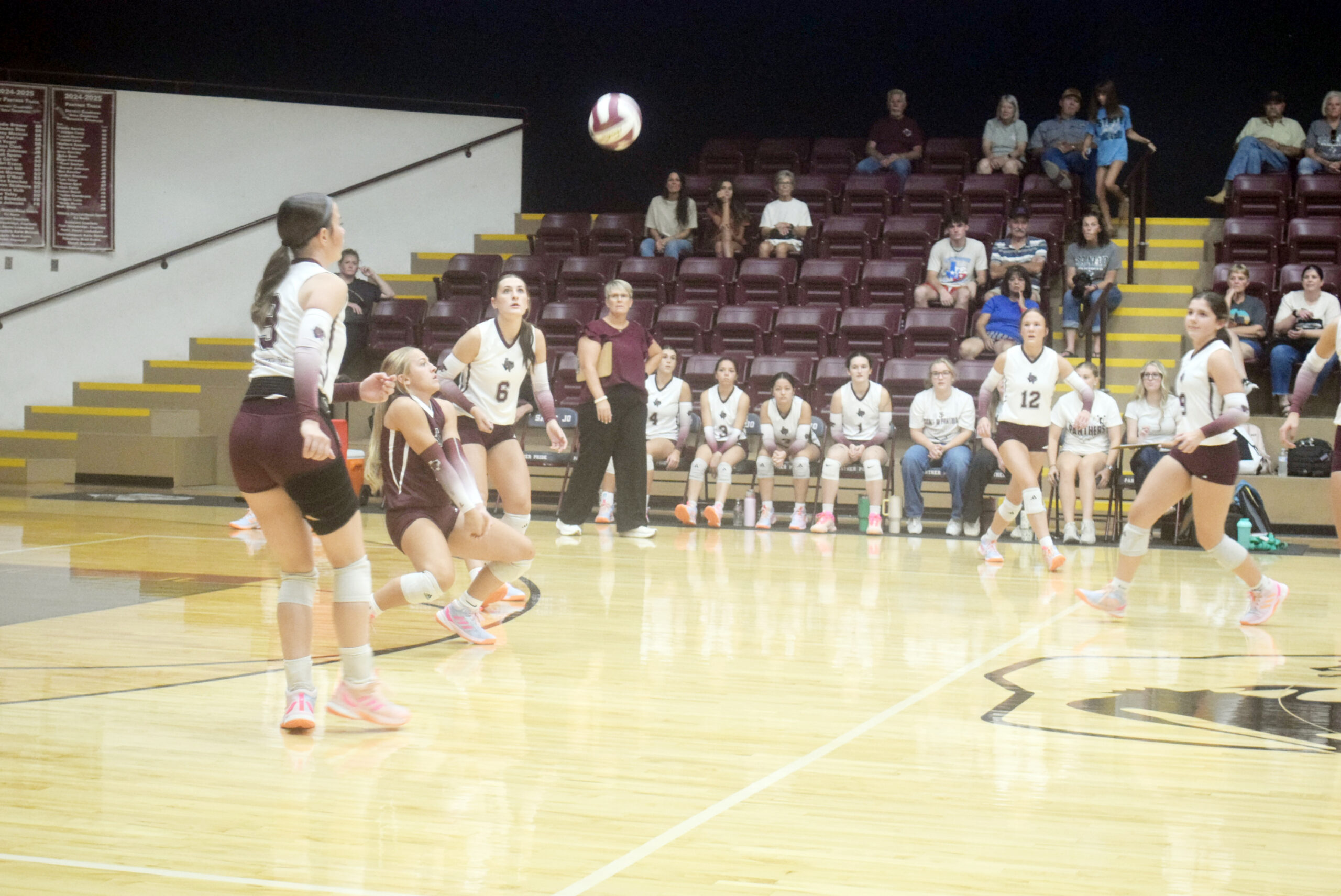
In its first match since last year’s state semifinal appearance, Saint Jo hosted Bryson Aug. 11 and took a 25-13, 25-12, 25-21 win over the Cowgirls.
The Lady Panthers lost some talent to graduation but have five seniors ready to have a successful season. Savannah Hil, one of the five, got Saint Jo rolling offensively with a four-point serving string, including a pair of aces. Abby Carter’s kill and Kamron Skidmore’s block helped put the Lady Panthers up 5-2 in game one.
Hadleigh Moore added a four-point string of her own to extend the lead to 10-3. Tatum Morman’s pair, helped by a Hill kill, gave Saint Jo a 14-5 lead. Bryson got within five before a Hill 3-pointer, with help by a Carter kill, put the lead back at 18-10.
After an Olivia Johnson kill broke serve, Jordyn O’Neal served up the final five points, with Johnson providing a kill to move things along.
For further details, pick up a copy of Thursday’s Bowie News.
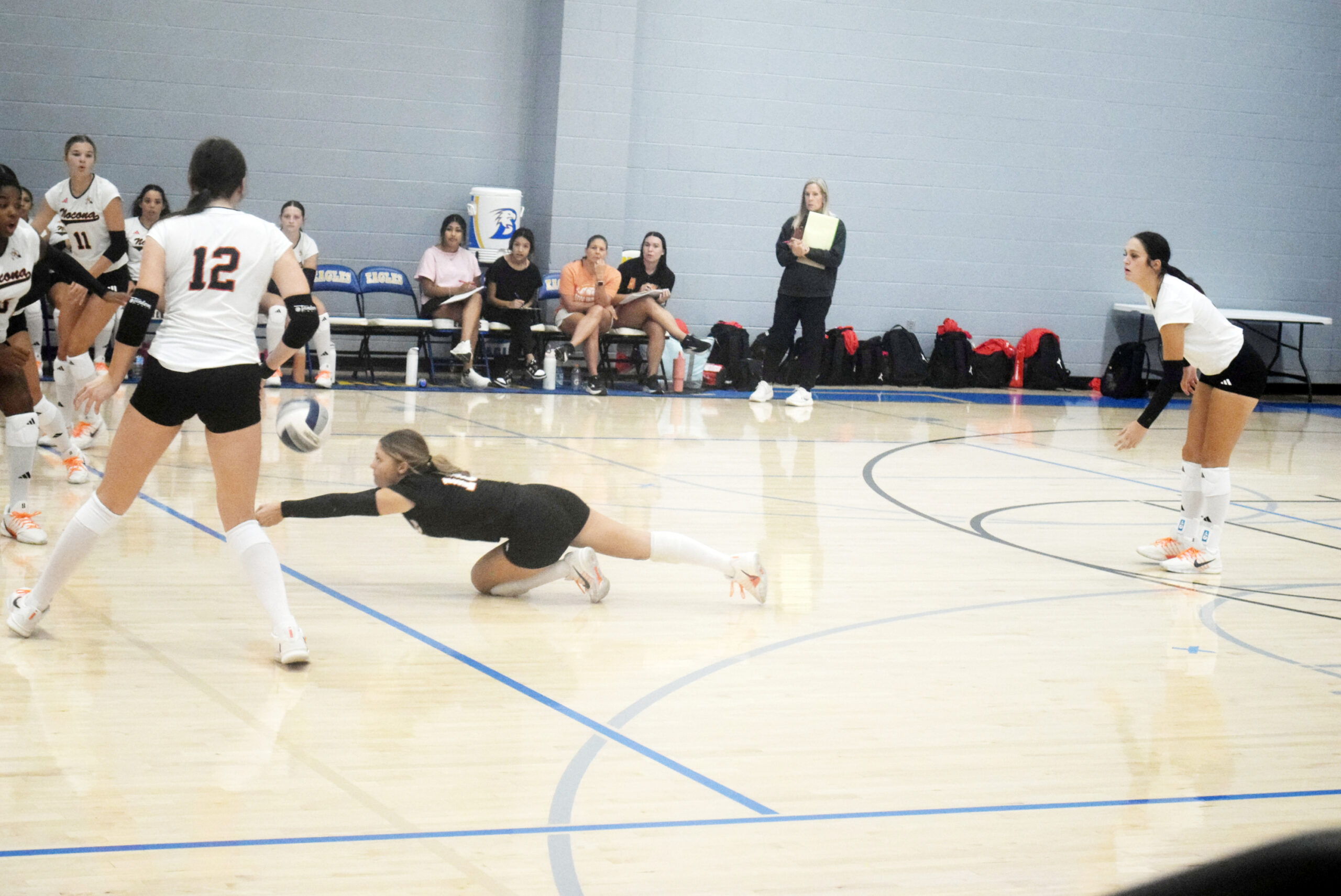
Despite being the smallest school in the Brock varsity classic volleyball tournament, the Lady Indians finished 4th out of the eight teams there.
After losing to the host team in its first pool play match Aug. 14 18-25, 14-25 and also to Class 3A Wall 12-25, 8-25, Nocona rebounded to close out pool play with a 20-25, 25-23, 25-20 win over Christoval. Sy Parker had 16 kills and 7 blocks in the three matches. Raylea Bowles had 12 kills, 17 digs and served up three aces. Maddyn Bowles had seven kills and 14 digs while Paige Davis had seven kills and 15 digs. Baylee Thomas added 11 digs.
From the setter spot, Kasi Castro had 20 assists, served up five aces and contributed 14 digs. Leah Meekins added 18 assists and six digs during the three matches.
To open Saturday’s bracket play, the Lady Indians posted a 25-18, 18-25, 26-24, 25-19 win over Fort Worth Christian. Castro staked Nocona to a 2-0 lead in game one. Kills by Parker set up pairs of points from Raylea Bowles and Leah Meekins helped Nocona negate an early deficit and take a 10-9 lead.
For further details, pick up a copy of Thursday’s Bowie News.
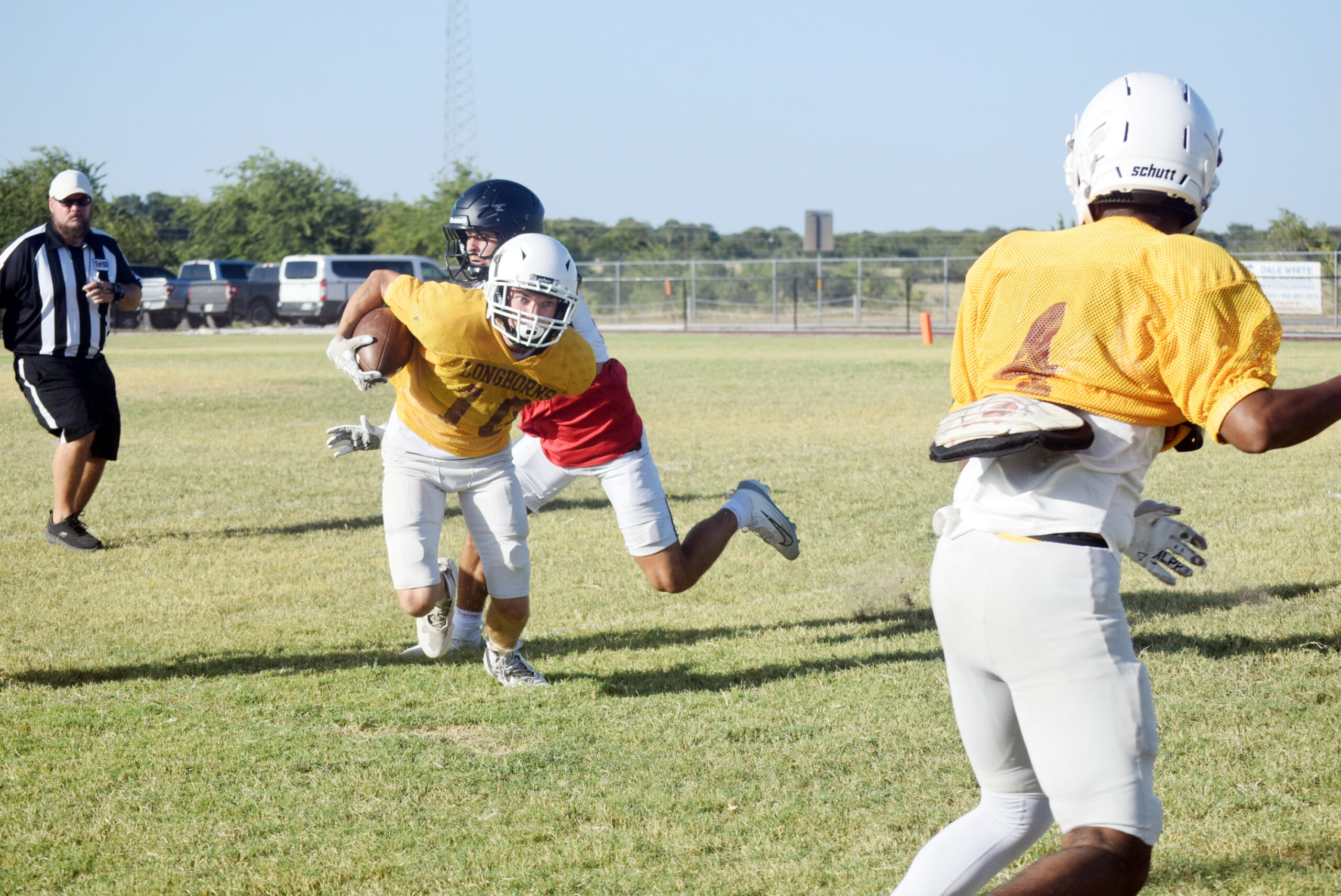
County football teams had their first scrimmage of the season Aug. 14 with mixed results.
Forestburg hosted Azle Christian and Victory Christian. Under a new system with new head coach Cori Hayes, the Longhorns looked pretty good in the coach’s eye.
“The first team looked good,” Hayes explained. “Overall we need to work on our pace and blocking assignments and blocking assignments. Overall we looked good for the new regime.”
Forestburg hits the road to scrimmage Newcastle Aug. 21.
For further details, pick up a copy of Thursday’s Bowie News.






-

 NEWS3 years ago
Suspect indicted, jailed in Tia Hutson murder
-
 NEWS4 years ago
2 hurt, 1 jailed after shooting incident north of Nocona
-
 NEWS3 years ago
SO investigating possible murder/suicide
-
 NEWS4 years ago
Wreck takes the life of BHS teen, 16
-
 NEWS3 years ago
Murder unsolved – 1 year later Tia Hutson’s family angry, frustrated with no arrest
-
 Show us something good9 years ago
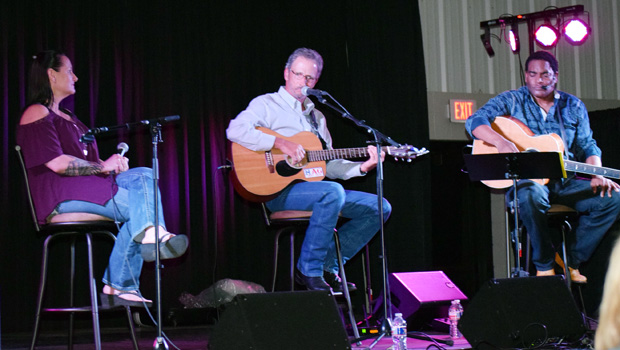
Country music star children perform in Bowie
-
 100th Birthday4 years ago
Looking back at the 1958 Centennial edition of The Bowie News
-
NEWS3 years ago
Sheriff’s office called out to infant’s death