
NEWS
Highs to approach 110F as dangerous heat intensifies in the Plains


By Renee Duff, AccuWeather meteorologist
Published Jul. 16, 2022 10:07 AM CDT | Updated Jul. 18, 2022 8:37 PM CDT
A well-known expert gives advice on how to keep your pets safe during extreme heat.
There are no signs of Mother Nature throttling back on the heat anytime soon across the interior West and High Plains. In fact, AccuWeather meteorologists warn that the most sizzling conditions yet this summer season are expected to build even more this week, putting dozens of record highs in jeopardy as temperatures soar past the century mark.
Unrelenting days of extreme temperatures are likely to put a significant strain not only on residents and visitors of the region, but also livestock, crops and the power grid. Rolling blackouts have already been an ongoing problem in Texas due to weeks of searing heat in heavily populated areas, including in Houston during an on-air TV broadcast.
Forecasters say that with the next wave of dangerously hot weather set to build this week, temperatures could reach their highest levels of the year so far from Rapid City, South Dakota, to Wichita, Kansas, as well as Oklahoma City and Dallas. Temperatures in many locales across the High Plains have averaged 3-6 degrees Fahrenheit above normal month-to-date and the intensifying heat will further elevate these departures from normal.

An area of high pressure already in place across the West will expand eastward and strengthen early in the week.
“With temperatures in the region already running well above average, the addition of higher pressure moving in will only act to increase temperatures,” AccuWeather Meteorologist Joseph Bauer said.
Triple-digit heat is expected to swelter a swath from South Dakota to Texas. Rapid City will approach their daily record of 106 F set in 2006 and likely eclipse their hottest day of the year so far set back on June 29 when a high of 102 was recorded. Forecast highs in the Texas hubs of Dallas (109) and Lubbock (105) are set to eclipse daily records, while the major metro area of Denver is forecast to be 100, which would narrowly break the daily record of 99 set in 2020.
Some of the records that will be challenged have stood since the 1930s, according to Bauer.
With a high of 104 F, North Platte, Nebraska, broke Monday’s record high of 103 set way back in 1936. Goodland, Kansas, fell just shy of matching their high point of 106 for that date, set in the same year, with the high temperature reaching 102 in the city.

The intense heat will be a quick-hitter in the northern Plains as more seasonably warm air will return on Tuesday. Farther south, temperatures are forecast to soar even higher.
High temperatures in the middle to upper 100s are expected to be widespread from western Kansas and West Texas through Oklahoma and into southwestern Missouri and northwestern Arkansas. A small pocket of temperatures eclipsing the 110-degree mark is possible in part of northwestern Texas, western and central Oklahoma and far southern Kansas.
The hottest it has been in Oklahoma City this summer is 105 on July 17. The city could come within a degree or two of 110 on Tuesday, perhaps falling just shy of that date’s record of 108. That record was also set during the Plains heat wave of 1936.
By Thursday, San Antonio, Texas, could also face record heat. The highest it has ever been on July 21 in the city is 102 set way back in 1911, but there is a high likelihood that this mark could be challenged.
Especially during the hottest part of the day, anyone who must be out and about is urged to monitor for signs of heat-related illnesses like heat exhaustion or heat stroke.
Temperatures inside parked cars and other vehicles will also rise to dangerous levels amidst searing heat and intense sunshine. Travelers are urged never to leave children or pets inside unattended in vehicles as temperatures can climb to deadly levels in mere minutes.
Given the risk of increased power outages amid the unrelenting heat, it will be important for any residents who find themselves in the dark to spend time at public cooling centers.
Agricultural interests can also be negatively impacted.
“Dry weather is forecast through much of the week, and with drought conditions already in place, this heat will put further stress on crops in the region,” Bauer said.

“Areas farther east from Iowa to Illinois can remain shielded from the highest temperatures which is good news for central portions of the Corn Belt,” Bauer said.
Forecasters do not have good news for residents feeling the strain of the heat both physically and financially.
“The storm track is expected to remain lifted near the Canadian border through the week, which is not expected to bode well to bring relief from the heat or substantial precipitation chances to the Plains,” Bauer said.

Members of the Bowie City Council will meet at 6 p.m. on Aug. 25 to finalize the budget and conduct a public hearing on a proposed tax rate.
The ordinances adopting both the 2026-27 budget and the 2026 tax rate are on the agenda for action. The public hearing on the tax rate presents a rate of .5750 cents per $100 in property value, which is slightly higher than the 2025 rate that is .5430.
The new rate is projected to generate $2,990,998, compared to $2,703,176 from last year’s rate. This is the first significant change in the rate since 2019, when it was .5445 cents. The next year it went to .5447 cents, where it stayed until 2023, when it went to .5430 cents, through 2025.
A bid will be awarded for the Rock and Pillar Street drainage project. Wall Contractors will be recommended by the city engineer and staff review. The bid came in about $1.3 million, which was lower than the estimated $2 million. It is expected to straighten the channel and get this intersection reopened for traffic after more than a year of closure to collapse of a portion of the pavement on the street.
The council will consider stop signs regulating traffic flow around the Kingdom Ridge Subdivision next to the elementary school.
In the city manager’s report Bert Cunningham will provide information on the hazard mitigation plan, the 2025-26 audit preparation and the bid for the Rock and Pillar project.

Montague County Commissioners will adopt a budget and tax rate when they meet at on Aug. 24 in the courthouse annex.
The budget hearing will be at 8:30 a.m. Aug. 24, followed by a public hearing for the proposed tax rate at 8:45 a.m.
During the regular meeting at 9 a.m., there will be one final budget workshop for any last minute tweaks or changes, followed by adoption of the 2026-27 budget and 2026 tax rate.
The proposed tax rate is .4961 cents per $100 in property value, which is the same rate as 2025. Due to the increase in property values despite the same rate, the total tax levy on all properties will see a 3.64% increase.
A copy of the proposed budget is available on the county website at https://www.co.montague.tx.us/.
Several other financial related items are on the agenda. Accumulated comp time in the sheriff office and jail will be discussed. The commissioners also will consider any year-end expenditures utilizing any or the budget year contingency funds.
Other items on the agenda will include: Acceptance of the District Attorney’s 2023- 2024 and 2025 Chapter 59 asset forfeiture reports and authorize DA Katie Boggeman to sign them; imposition of optional fees from the Texas Department of Motor Vehicles for 2027; House Bill 3834 cybersecurity and AI training certification for state and local governments compliance reports; interlocal cooperation agreement between the Department of Public Safety and the county court and district court; review the sherif office application for sheriff immigration law enforcement grant program Senate Bill 8; consider distribution of state grant HB 3000; and consider using Real Estate Station LLC Agent Denise Thurman to sell 5.9 acres on the corner of U.S. 81 and State Highway 59.
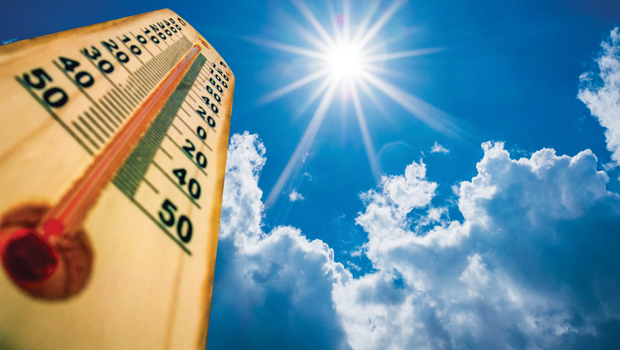
It should be no surprise, the month of July is recorded as the hottest month on record for the country.
July wrapped up with seven straight days of 100 degrees or higher July 25-31. August also opened hot with the first 100-plus degree day on Aug. 3 and it has topped that marked through Aug. 19. On Tuesday the high was 107 degrees at the water plant, but in town thermometers recorded 108 and 109 degrees.It was expected to top that mark on Wednesday.
There was no rainfall recorded in July or in August. Bowie has only 21.71 inches for the year so far and Nocona has 22.35 inches.
Lake Amon Carter
Aug. 19 –
917.22 msl, 80.2% full
July 19 – 918.10 msl, 86.1%
Aug. 19, 2025 – 919.84 msl, 98.8% full
Lake is full at 920msl
Lake Nocona
Aug. 19 – 823.48 msl, 76.3% full
July 19 – 824.41 msl, 81.05%
Aug. 19, 2025 – 826.878 msl, 95.85%
Lake full at 827.5msl






-

 NEWS3 years ago
Suspect indicted, jailed in Tia Hutson murder
-
 NEWS4 years ago
2 hurt, 1 jailed after shooting incident north of Nocona
-
 NEWS3 years ago
SO investigating possible murder/suicide
-

 NEWS4 years ago
Wreck takes the life of BHS teen, 16
-

 NEWS3 years ago
Murder unsolved – 1 year later Tia Hutson’s family angry, frustrated with no arrest
-
 Show us something good9 years ago
Country music star children perform in Bowie
-
 100th Birthday4 years ago
Looking back at the 1958 Centennial edition of The Bowie News
-
NEWS3 years ago
Sheriff’s office called out to infant’s death