
SPORTS
Protecting yourself from the sun’s rays

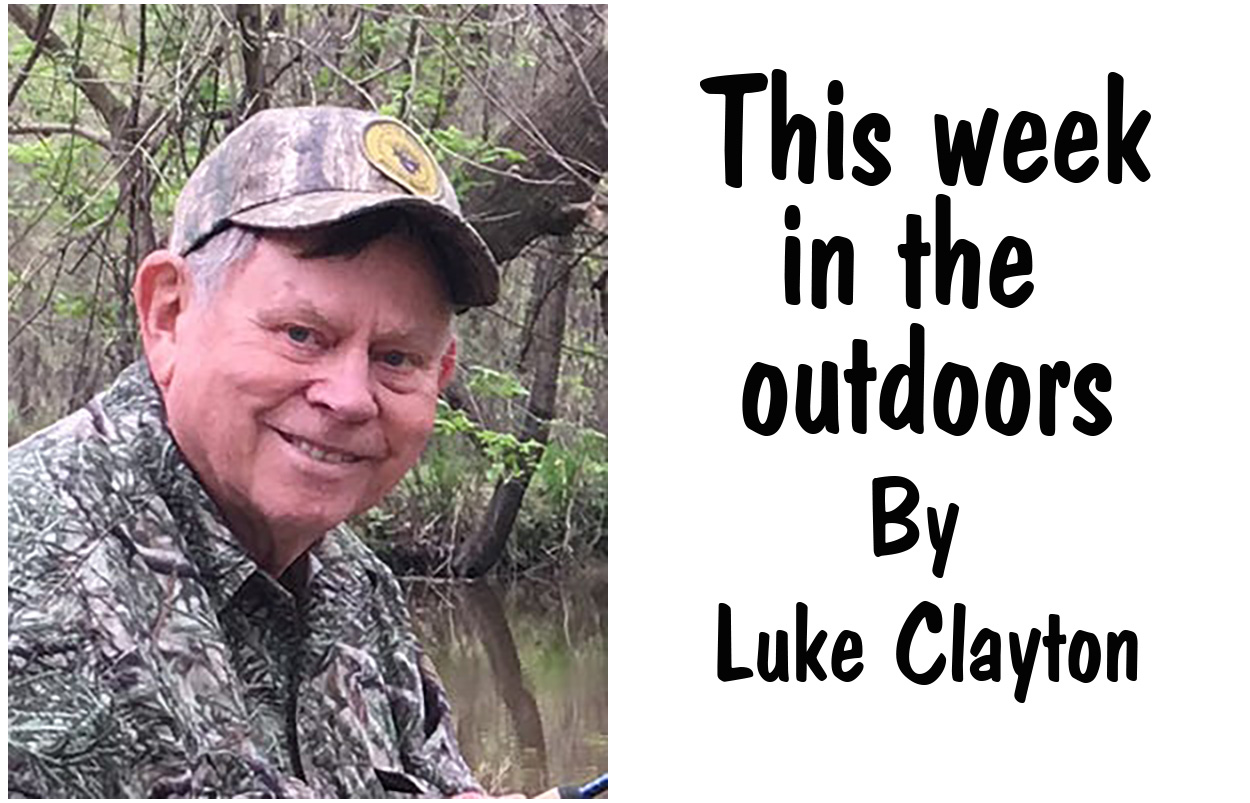
By Luke Clayton
You will find this week’s outdoor column a bit differently from what I normally share with you. I will give a bit of advice about protecting yourself from the sun’s harmful rays but I promise not to dwell on the subject long, just enough to cause you to this keeping yourself safe while outdoors. Then, I promise we will jump right into some current outdoor adventures!
Skin cancer is extremely common among those of us that spend a lot of time in the outdoors. People with fair completions are more apt to develop skin cancer that those with darker skin but everyone should know how to stay safe when exposed to the sun. I was prompted to share this with you after having a couple of Basic Cell Carcinomas removed through the years. These skin cancers usually present little problem when detected early and are easily removed. A yearly check up by a dermatologist is very important and is key to detecting skin cancer early. I considered myself too busy a few years ago and missed my yearly checkups for 3 year. Then I noticed a small brown blotch on my forehead. Passing it off as an ‘age spot’, I kept on hunting and fishing, wearing only a ball cap and no sunscreen. Then at a regular doctor’s check up, the doc inquired if I had been making my yearly appointments at the dermatologist. He pointed out that that little spot needed to be seen by my skin doctor. Even to her trained eye, it only looked slightly suspicious but she ordered a lab test and it was diagnosed as a melanoma, the kind of skin cancer that spreads more rapidly and can cause some very serious problems. She scheduled me with a surgeon and another lab test rated the spot as possibly the very early stage of melanoma. Without removal it could spread and turn into full blown cancer. After about thirty minutes on the surgeon’s table, it was removed and the skin was all stitched up. A day later, I had a shiner around my eye as big as a silver dollar, I looked like I had lost a skirmish with a wild boar but the spot, along with the risk of of serious skin cancer was gone.
So, here’s what I want you to give some serious consideration to doing when you are outdoors for an extended period of time: Wear a wide brimmed hat and long sleeves shirts made to block RV rays and always wear a good sun blocker of at least SPF 50. If you see me out on the lake, I’ll be the old guy with the funky white wide brimmed hat with the flap that covers the ears and a cool looking long sleeve shirt made of very lightweight material.
TIME TO HUNT TURKEYS This past week was largely devoted to getting this skin problem taken care of but I’ll be fully back in action by the time you read this doing two things I dearly love; hunting spring gobblers and catching and cooking fish. In last week’s column, I mentioned a turkey hunt/fishing outing I had planned with a good friend up in Grayson County. This I had to put on hold but in a couple days plan to make it happen. The gobblers have been sounding off on my buddies place and his pond is full of chunky bass in the 2 to 3 pound range, just right for a mid day blackening in the shade of a big oak on the banks of the remote pond. Who knows, we might just add a few well seasoned and fried turkey breast fillets to the menu!
If you’re planning a turkey hunt, remember that the period from about mid morning to mid afternoon can provide some very good action. Turkeys usually do a lot of their breeding early mornings and when hens have headed to their nest, gobblers are on the prowl. This is a great time to set up a decoy in a visible spot along the edge of a woodline and begin calling. Calling to frequently is a common mistake made by novice turkey hunters. I usually let the gobblers dictate how much to call. If I get a response from a gobbler back in the woods or across a field, I will call more frequently. I try to track his approach by his gobbles and call every minute or so. Once I hear him close, within 75 yards or so, I usually only give a few subtle hen purrs rather than a full blown loud yelp. Turkeys have a built in GPS and I’ve often watched them pop up out of the brush within a few yards of my position.
A decoy that is visible to approaching turkeys can be worth its weight in gold, the gobbler’s attention is taken off where the hen yelps are originating when he actually sees what he perceives to be his next romantic encounter! By the time the old gobbler figures out the lady love he is attempting to court is made of plastic, if the shot is true, Ole’ Luke will be attaching his turkey tag to the birds leg just above the spur!
CHANNEL CATFISH BITE RED HOT IN SHALLOW WATER Now is one of the best times of the year to catch channel catfish from the shore. For the next month or so, catching will be easy in shallow water on a variety of catfish baits fished under a cork. It’s hard to beat a good cheese based punch bait but anything from crickets to earthworms will put plenty of eater size channel catfish on your stringer. The best fishing is usually during the first couple hours of daylight when catfish and just about every other species in the lake are us shallow feeding on shad. Catfish feed a lot by smell and very often the longer the punch bait is I the water, the better the action.
A coffee can full of range cubes or better yet, soured grain often helps concentrate the fish quickly but this time of year, especially when fishing around rock rip rap in the vicinity of boat ramps, a limit of channel catfish is often accomplished in a couple hours or less when the fish are on a strong bite. Some mornings, the fish will strike hard, one minute you will see your cork and the next, it’s gone. But on the days when the fish bite softly, watch your cork and when it jiggles the slightest bit, set the hook!
Next week, I hope to have an account of a successful turkey hunt and noon fish fry on a remote pond to relate to you. Until then, remember to protect yourself from the sun while out there having fun!
Contact Outdoors writer Luke Clayton via his website www.catfishradio.org email lukeclayton1950@gmail.com. Listen to Luke’s weekly podcast , “Catfish Radio with Luke Clayton and friends” everywhere podcast are heard and watch the weekly outdoor show “A Sportsmans Life” on CarbonTv.com and YouTube.
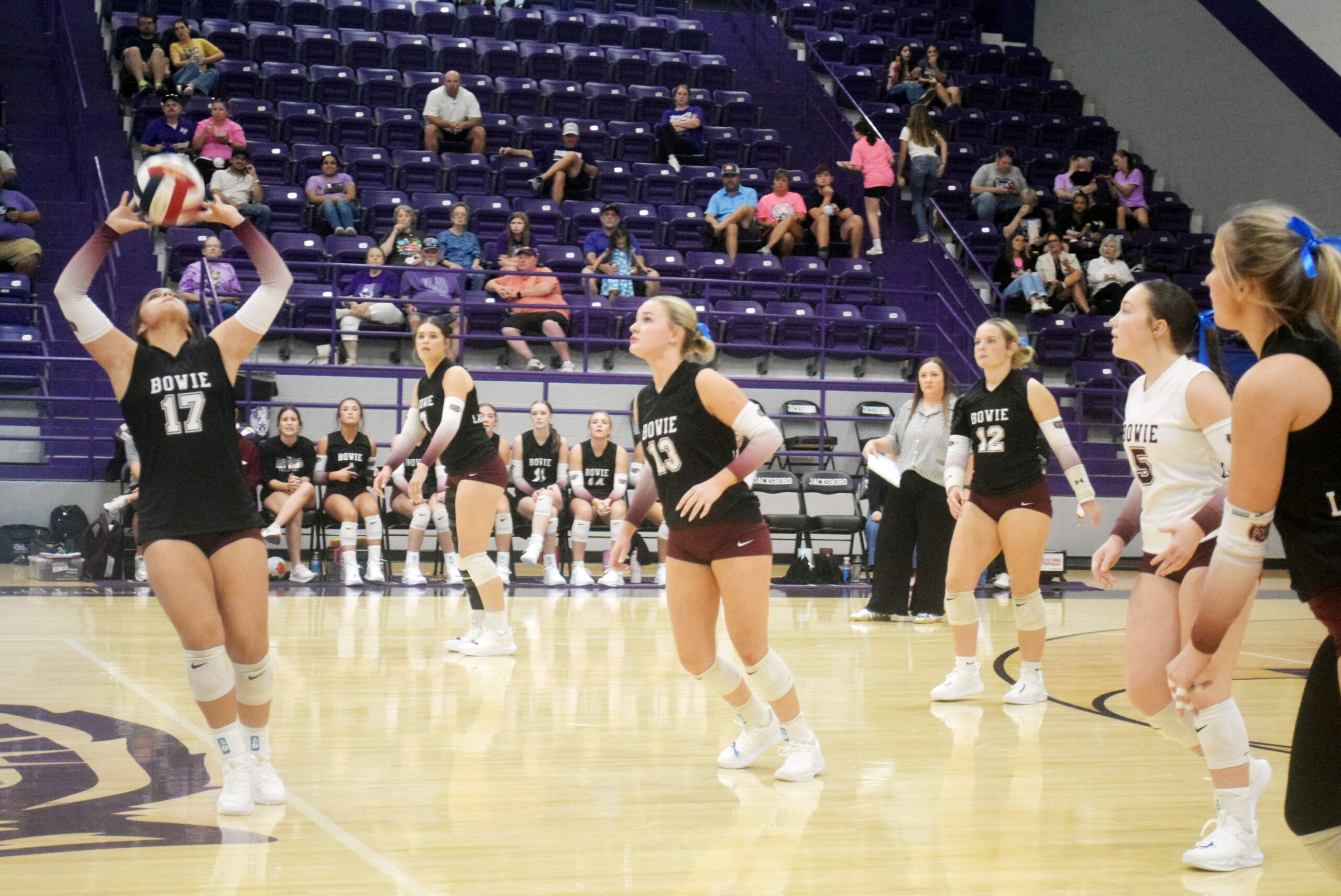
Bowie, playing on a short rest, held with host Jacksboro for most of the volleyball match Oct. 1, but the Tigerettes pulled away late and defeated the Lady Rabbits 3-1 (26-24, 12-25, 25-14, 22-25).
The match was scheduled for Oct. 2 but was moved. Both teams are now 2-2 in District 6-3A.
Jacksboro got out to a quick lead in game one before Olivia Stewart’s kill and a three-point Olivia Richey serving run put the visitors up 8-7. Junior Abby Reneau broke things open with a six-point string to give Bowie a 15-8 cushion and force Jacksboro into a timeout.
The Tigerettes came back and took an 18-16 lead. KP Rutherford’s kill broke the serve and allowed Molly Enlow to tie the game at 18.
For further details, pick up a copy of Thursday’s Bowie News.
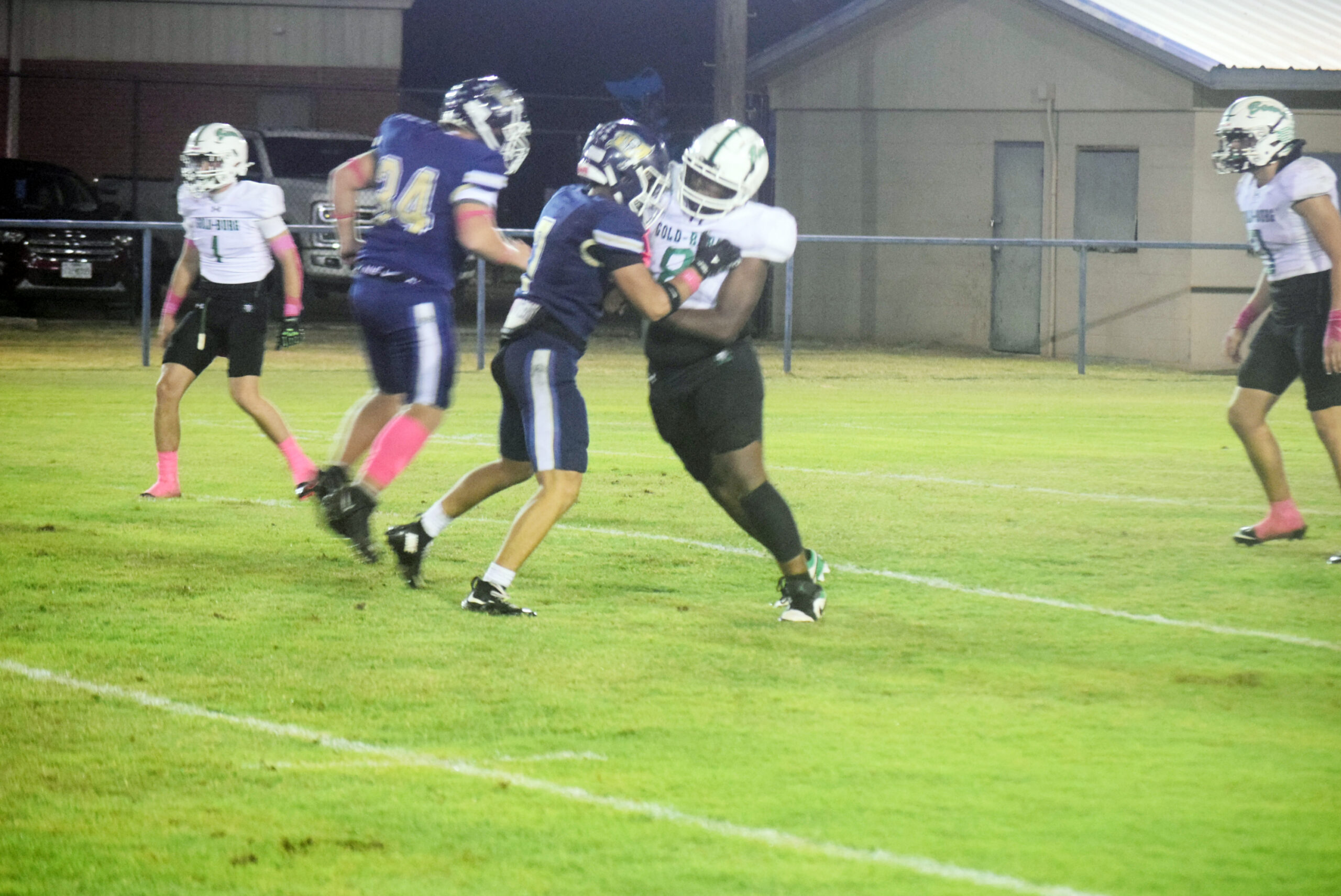
Gold-Burg Football Coach Austin Norman called his Bears’ 35-32 loss to host Perrin a “barn burner”.
It most definitely was as Gold-Burg, now 1-5 for the year gave the 5-1 Pirates everything they wanted for four quarters. Gold-Burg scored on the last play of the first half on a Peyton Epperson run with the two point conversion cutting the deficit to 20-16.
The Bears were their own worst enemy to open the third quarter with face mask and offside penalties moving the Pirates downfield setting up a first-and-goal at the Bear three. Defense by Epperson, Keelyn Case and Barrett Allen and a pair of Perrin penalties helped stop the drive and force a turnover on downs.
Gold-Burg was slapped with an intentional grounding penalty on the first play, giving Perrin a safety and extending the Pirate lead to 22-16. Defense by Epperson and JoJuan Grace after a first down run closed out the third quarter.
For further details, pick up a copy of Thursday’s Bowie News.
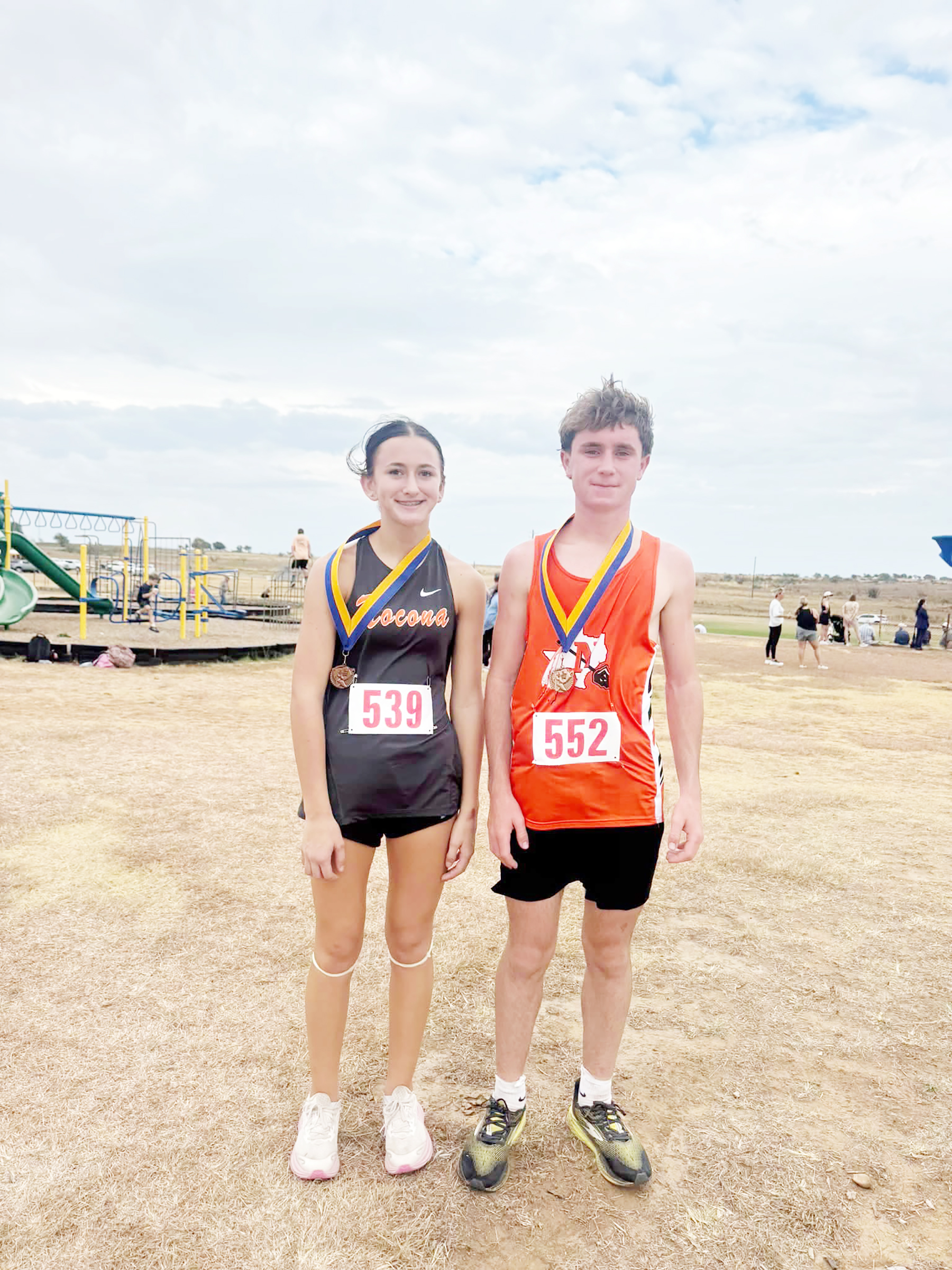
Nocona and Prairie Valley cross country teams took part in the Prairie Valley Invitational Sept. 20 while Bowie varsity runners competed in the Lubbock Invitational.
Lubbock
Leading the Rabbits was Kellen Rater who finished 10th among 162 runners with a time of 17:24.50. Finishing behind Rater was Shawn Willett with a time of 19:33.20. Hayden Sutton ran a 20:27.10 followed by Taven Melton in 20:39.20, Coleman Holloway in 20:53.80 and Jaxon Castro with a time of 21:31.60.
Laney Segura led the Lady Rabbits with a time of 14:41.30. She was followed by Kylee Waldrep in 15:56.80, Bella Lozano in 16:04.80, Angeles Alvarez with a time of 16:15.40, AnDee Miller in 16:23.70 and Isabella Caswell in 16:51 flat.
For further details, pick up a copy of Thursday’s Bowie News.






-

 NEWS3 years ago
Suspect indicted, jailed in Tia Hutson murder
-

 NEWS4 years ago
Wreck takes the life of BHS teen, 16
-
 NEWS4 years ago
2 hurt, 1 jailed after shooting incident north of Nocona
-
 NEWS3 years ago
Murder unsolved – 1 year later Tia Hutson’s family angry, frustrated with no arrest
-
 NEWS3 years ago
SO investigating possible murder/suicide
-
 Show us something good9 years ago
Country music star children perform in Bowie
-
 100th Birthday4 years ago
Looking back at the 1958 Centennial edition of The Bowie News
-
NEWS3 years ago
Sheriff’s office called out to infant’s death