
SPORTS
But I don’t like eating game meat. Really


By Luke Clayton
Hunting seasons are well under way and chances are good many of you already have afreezer well stocked with everything from venison steaks and ground meat to dove breasts.
Let’s not let all this tasty meat get freezer burned! We will discuss some ways to turn thefruits of your hunt into some memorable meals in this week’s column.
Game meat is far more nutritious than domestic but it does require different cooking techniques. Take venison, for example. Venison is very lean and what fat there is in themeat should be removed; it’s the fat that sometimes contributes to the ‘gamey’ taste that some folks complain about.
I’ve been eating game meat all my life and learned much of what I know about cooking game from an uncle that was a ‘sure nuff’ old time Dutch Kettle cook. He made a pot of squirrel and dumpling that I have yet to duplicate. No canned biscuits for uncle, he made his dumplings the old-fashioned way by rolling out dough. I can still see that old Dutch kettle setting on the outside of the campfire coals slow cooking those squirrels.
I am often asked if wild hogs are good to eat or ‘doesn’t venison have that ‘gamey’ taste. I’ve found it impossible to answer these questions with a blanket statement. I often reply with something like this: “If you were going to a hog farm to purchase your pork chops, would you choose the oldest boar?
Likewise, you wouldn’t choose an older bull for your rib eye steaks! Younger game animals in good condition obviously make better table fare than older ones. This is not to say that venison from older bucks, if prepared properly, is not good eating. I always use the center ham cuts, tenderloins and backstraps for steaks and grind the rest for sausage or, add beef fat to it and make venison burger.
Because of its ‘dry’ nature, larger cuts of venison must always be cooked with moisture. I’ve slow cooked many venison hams with the result a flavorful, tasty piece of meat. Slow cooking at low temperature is the key to preparing roasts from game animals. I usually season the roast well with my favorite dry seasonings and a couple of bay leaves, and using a sharp knife, make incisions into the roast and insert pieces of bacon, slivers of garlic and onion or jalapeno pepper. Then, covered with slices of fatty bacon and a little butter on top, I place the roast in a covered cast iron kettle and bake slowly for about 10 hours at 200 degrees.
The meat falls off the bone and is well received at the dinner table when served with carrots, potatoes and onions (which I add to the roast a couple hours before serving).
Making BBQ from these larger cuts is another great way to please crowd at hunting camp or home. I do a lot of my cooking on an electric smoker and I’ve found it to be a very easy, carefree method of tenderizing larger, tougher cuts of meat. I simply place the roast in a double layer of heavy duty foil, add BBQ sauce and allow to smoke uncovered a couple hours, using hickory, plum, peach or pecan wood. Then, wrapped in the foil, the roast is allowed to smoke at 190 to 200 degrees for up to 12 hours or so, or overnight. This method makes some of the best tasting, most tender BBQ imaginable. I often smoke cuts of wild hog, which have flavorful fat, with venison and blend the two for chopped BBQ.
Chicken fried venison steak is better tasting than the best beef round steak, to my way of thinking. I use a tenderizing mallet and pound the steaks, adding dry seasonings during the process. Then, I cover the steaks with milk and refrigerate several hours before frying. Dipped in an egg batter and dusted with the flour, the steaks need only three or four minutes on each side in hot oil.
Drain the steaks, chop and sauté an onion in a little of the remaining oil and pour a big can of mushroom soup (with a little water) and you have smothered steak! Put a lid on the cast iron skillet and bake or cook on the stove top over low heat for an hour or so to tenderize; serve with hot rice and hot dinner rolls.
Preparing and cooking WATERFOWL requires a bit different technique but if all the duck dinners you have been served in the past tasted like ‘liver’, chances are pretty good the cook didn’t have a clue on how to prepare and cook ducks and geese. Lanell Holland, my wife’s cousin, was married to the legendary waterfowl guide the late Jack Holland.
Through the years at their hunting camp in Southeast Texas, Lanell has served waterfowl many different ways; everything from duck or goose gumbo to jambalaya. She is a stickler for prepping waterfowl before the cooking process begins. Years ago, she instructed me in the proper way to prepare duck and goose breasts.
“It’s the blood in the meat of waterfowl that can give it the strong, liver flavor. Remove the breast halves and butterfly them. Then place in cold water and, using your hands squeeze the meat. This greatly aids in removing the blood in the meat.” she instructed.
I often use tenderizer mallet to tenderize the breast halves, and then place them in a pan of cold water with a little salt. Waterfowl breasts, prepared thus, are excellent when wrapped in fatty bacon and grilled or, believe it or not chicken fried just like venison steaks. Served with hot biscuits and cream gravy, Bryan proved to me it’s tough to distinguish the flavor of duck breasts from chicken fried venison!
Quail and dove can be prepared and fried just like chicken. The late Bob Hood, longtime Texas based outdoor writer and great friend, came upon a method for preparing quail that is the best I’ve found. He places a couple rows of Ritz crackers in a plastic bag and crushes them into a fine meal. Next, in a Dutch oven he melts two sticks of butter, and then coats the quail pieces (or chicken wings) in butter, then covers them with the Ritz meal.
Cooked for about 1 hour, the quail are a golden brown. The Ritz meal batter is crunchy and adds a great deal of flavor to the game birds.
If you’re new to cooking game and game birds, hopefully these tips will serve as a good place for you to expand your culinary skills. Making great tasting meals from game animals and birds is really no great feat but it does require a bit of common sense and adherence to a few basic rules. In no time, I expect you will develop your own list of ‘favorites’!
Contact outdoors writer Luke Clayton via www.catfishradio.org Listen to his weekly podcast “Catfish Radio with Luke Clayton and Friends” just about everywhere podcast are found.
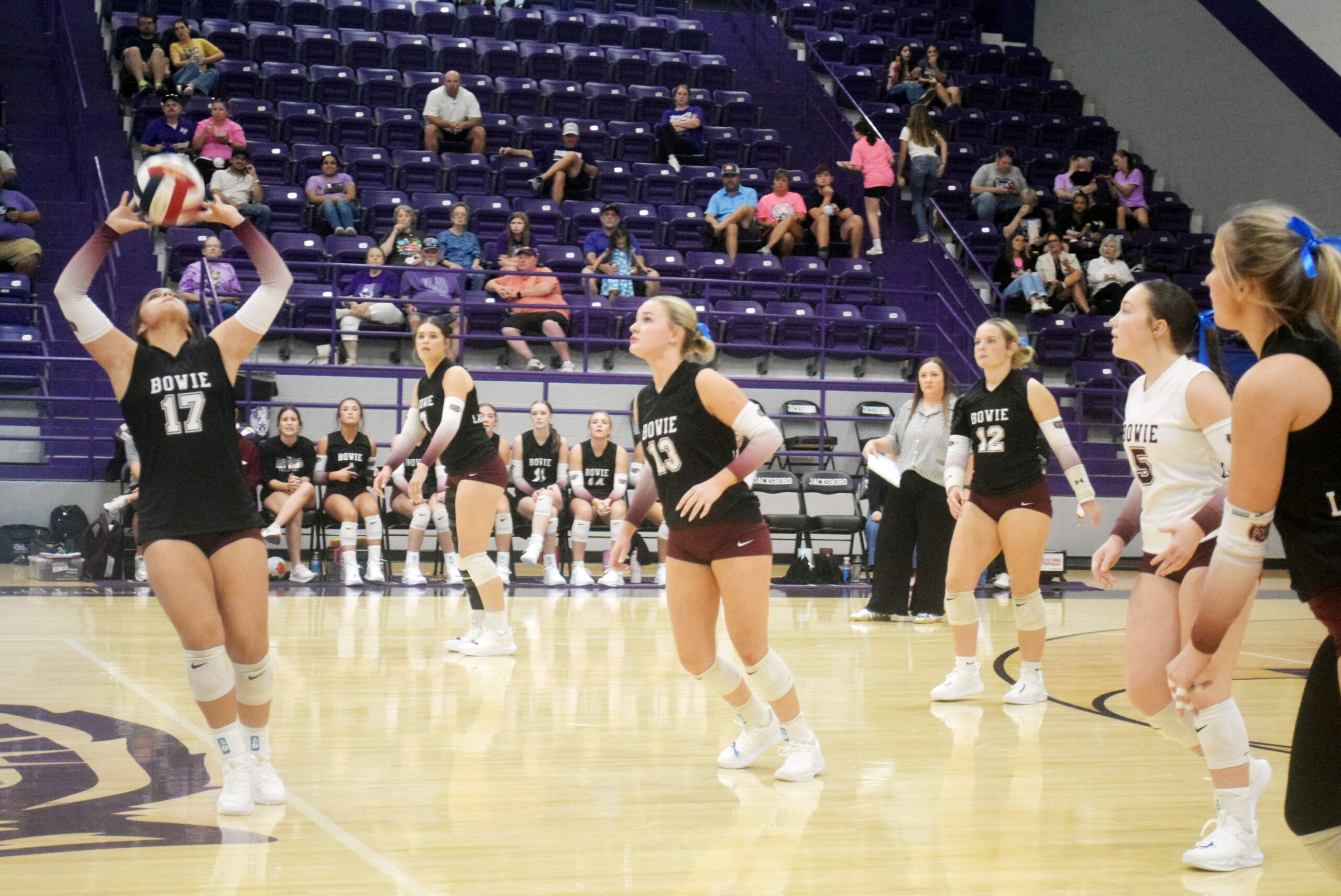
Bowie, playing on a short rest, held with host Jacksboro for most of the volleyball match Oct. 1, but the Tigerettes pulled away late and defeated the Lady Rabbits 3-1 (26-24, 12-25, 25-14, 22-25).
The match was scheduled for Oct. 2 but was moved. Both teams are now 2-2 in District 6-3A.
Jacksboro got out to a quick lead in game one before Olivia Stewart’s kill and a three-point Olivia Richey serving run put the visitors up 8-7. Junior Abby Reneau broke things open with a six-point string to give Bowie a 15-8 cushion and force Jacksboro into a timeout.
The Tigerettes came back and took an 18-16 lead. KP Rutherford’s kill broke the serve and allowed Molly Enlow to tie the game at 18.
For further details, pick up a copy of Thursday’s Bowie News.
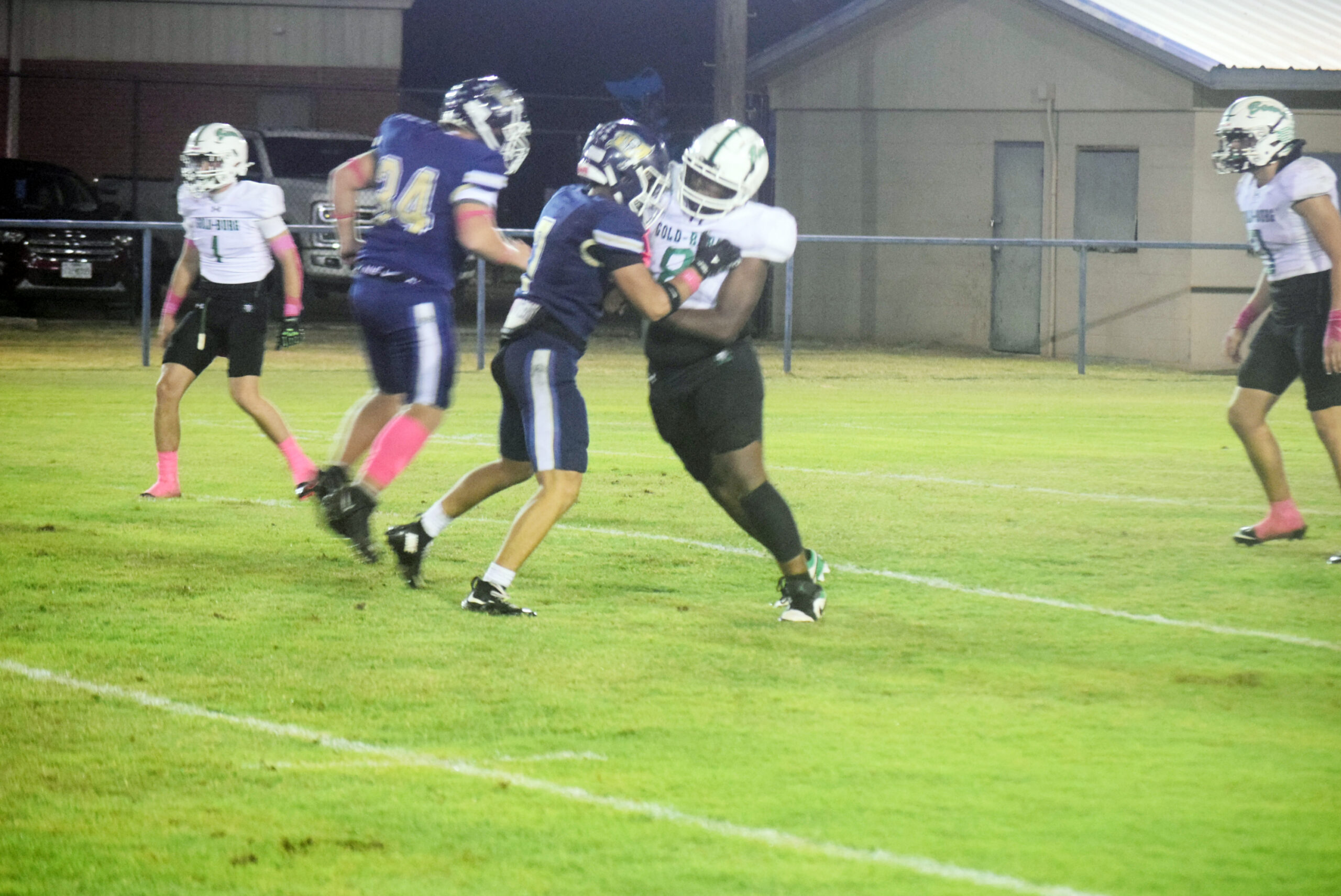
Gold-Burg Football Coach Austin Norman called his Bears’ 35-32 loss to host Perrin a “barn burner”.
It most definitely was as Gold-Burg, now 1-5 for the year gave the 5-1 Pirates everything they wanted for four quarters. Gold-Burg scored on the last play of the first half on a Peyton Epperson run with the two point conversion cutting the deficit to 20-16.
The Bears were their own worst enemy to open the third quarter with face mask and offside penalties moving the Pirates downfield setting up a first-and-goal at the Bear three. Defense by Epperson, Keelyn Case and Barrett Allen and a pair of Perrin penalties helped stop the drive and force a turnover on downs.
Gold-Burg was slapped with an intentional grounding penalty on the first play, giving Perrin a safety and extending the Pirate lead to 22-16. Defense by Epperson and JoJuan Grace after a first down run closed out the third quarter.
For further details, pick up a copy of Thursday’s Bowie News.
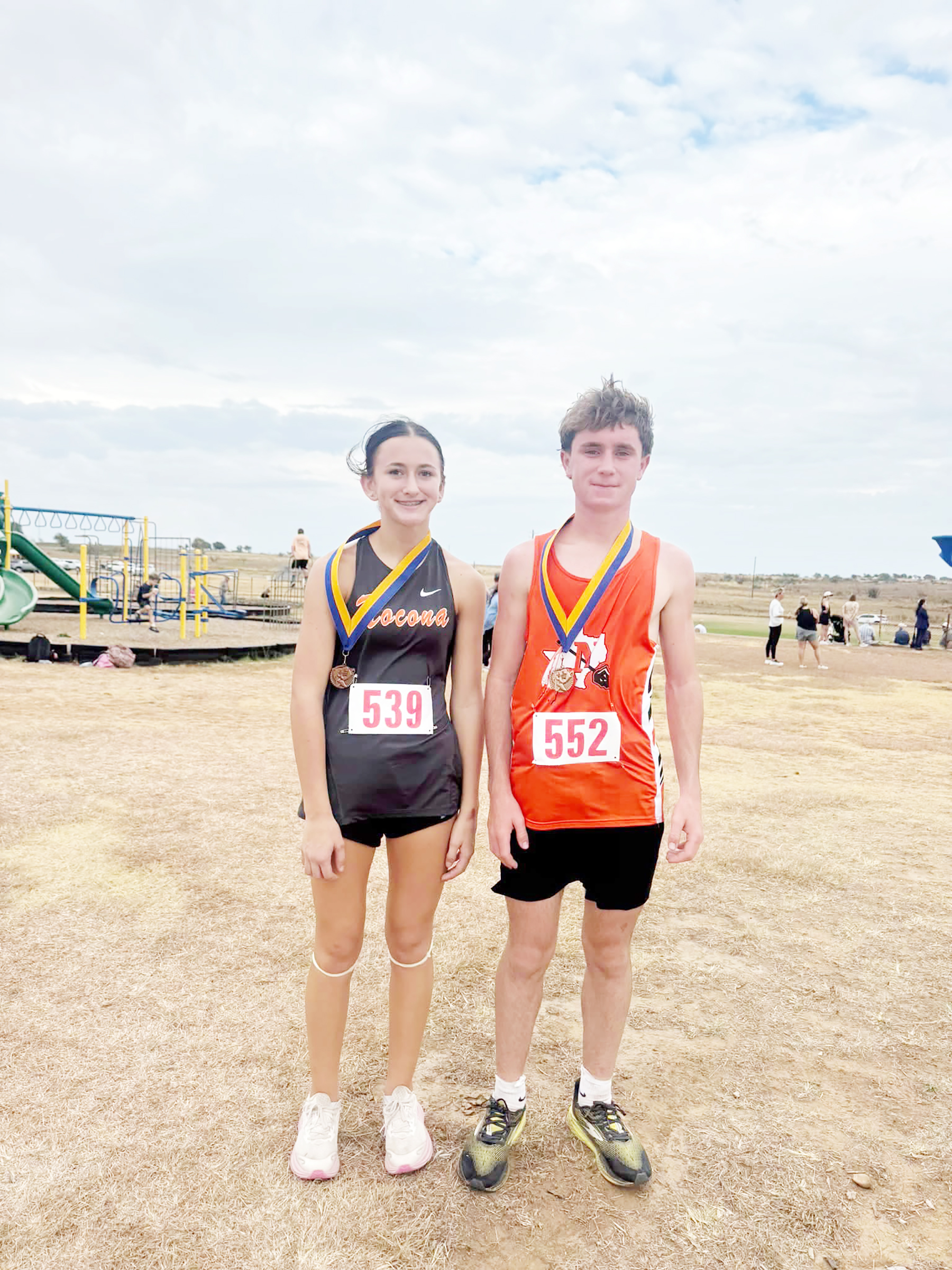
Nocona and Prairie Valley cross country teams took part in the Prairie Valley Invitational Sept. 20 while Bowie varsity runners competed in the Lubbock Invitational.
Lubbock
Leading the Rabbits was Kellen Rater who finished 10th among 162 runners with a time of 17:24.50. Finishing behind Rater was Shawn Willett with a time of 19:33.20. Hayden Sutton ran a 20:27.10 followed by Taven Melton in 20:39.20, Coleman Holloway in 20:53.80 and Jaxon Castro with a time of 21:31.60.
Laney Segura led the Lady Rabbits with a time of 14:41.30. She was followed by Kylee Waldrep in 15:56.80, Bella Lozano in 16:04.80, Angeles Alvarez with a time of 16:15.40, AnDee Miller in 16:23.70 and Isabella Caswell in 16:51 flat.
For further details, pick up a copy of Thursday’s Bowie News.






-

 NEWS3 years ago
Suspect indicted, jailed in Tia Hutson murder
-

 NEWS4 years ago
Wreck takes the life of BHS teen, 16
-
 NEWS4 years ago
2 hurt, 1 jailed after shooting incident north of Nocona
-
 NEWS3 years ago
Murder unsolved – 1 year later Tia Hutson’s family angry, frustrated with no arrest
-
 NEWS3 years ago
SO investigating possible murder/suicide
-
 Show us something good9 years ago
Country music star children perform in Bowie
-
 100th Birthday4 years ago
Looking back at the 1958 Centennial edition of The Bowie News
-
NEWS3 years ago
Sheriff’s office called out to infant’s death