
SPORTS
Comical occurrences in the outdoors


By Luke Clayton
As an outdoors writer for the past forty years and a lifelong outdoors person, I have more than my share of down right comical things that occurred while spending time hunting, fishing and kicking around the outdoors. I’m betting if you have spent much time on the water or in the field, you too could fill a small book expounding upon your experiences. Looking back, sometimes WAY back, here are a few of the mishaps that have occurred that come to mind.
Many years ago I was invited by to hunt desert mule deer on Clayton William’s West Pyle Ranch out in the Trans Pecos region of Texas. I asked Paul Henderson, the wildlife manager on the ranch, if I could bring my muzzleloader. I could tell he was a bit hesitant but agreed-providing I could prove how well it shot at the range before the hunt. West Texas cowboys served as guides on the West Pyle and they were all intrigued with my “old west” looking TC SCOUT 50 caliber. They were also impressed at the groups the rifle was shooting at 100 yards. Just before it was time to go hunting, I was circled by six or so of the guides, all intent upon learning how to load and cap the muzzleloader.
The wind was blowing a gale and I made the mistake of looking away from the task of pouring powder into the rifle’s bore for an instance. A few hours later, I was putting the sneak on a tremendous 10 pointer that was with a herd of 12 or so does; the rut was going strong. Walt was watching me with binoculars as I stalked from rock to rock. When about 100 yards from the buck, I eased behind a big rock, scooted the Scout over the top of the rock, cocked the hammer and settled the sights on the buck’s shoulder. BANG.
I (and Walt, through binoculars) watched the big 350 grain conical bullet kick up dust way short of the buck. I realized I had just fired a very light powder charge (remember the wind was blowing hard when I loaded and I made the mistake of looking away from the task at hand). I slumped behind the rock, reloaded as quickly as my shaking hands could work, placed the #11 primer on the nipple eased back over the rock and to my amazement, the buck had only moved about 20 yards; he was still within range.
With a full charge of 90 grains of Pyrodex pushing it, the big conical bullet found its mark and I had my buck on the ground. Back at the truck Walt said something like “you don’t recon the wind blew the powder away before you could get it down the bore, do you”? I replied, “I recon it did.”
Way before I became a veteran outdoors writer, I was a fisherman; a fisherman that owned some of the most “clunkiest” old boats and motors one could imagine. Back in the early eighties, I remember buying an old Lone Star Commander 14 foot V nose aluminum boat that had seen years and years of use and abuse before I became its proud owner. I had an 18 HP. Evinrude mounted on the boat’s transom, vintage 1958. The old motor ran pretty well, most of the time but I simply could not get the boat’s battered hull to stop leaking. I dabbed everything from roofing tar to glue on the rivets and just when I thought I had the leaks stopped, a new one, or several
would pop up.
! A good friend, the late Loren Flynn who was my bass tournament partner, presented me with two empty coffee cans, a one pound can and a two pound can. It’s important to note that Loren owned a state-of-the-art (of the day) bass boat with all the bells and whistles available at the time. He enjoyed kidding me about the “Sea Dog”. “Here you go, Luke, I want you to keep these in the “Sea Dog”. The small one is your 12 volt bilge pump, the larger will serve duty your 24 volt. Use the smaller can for days when the boat is only leaking slightly. When things get really bad, go for the 24 volts.!” We had many laughs over Loren’s bilge pumps through the years!
I remember getting the idea to make the raggedly old trailer that came with the boat a “drive on”. I had another buddy that was a pretty good shade tree welder. He used some of the old black gas pipe to extend the wiring up from the trailer and I sprang for some brand new lights which he mounted to the top of the gas pipe extensions. His welding looked pretty good after I mounted the lights up high so they would not be exposed to the water when we backed the trailer down into the water. Nobody told us that the gas pipe was made from cast iron, a metal know known for taking much abuse! I backed the trailer down into the water and off loaded the boat just fine. The problem came when the fishing trip was over and it was time to load the boat. I will never forget easing the old boat just a few feet upwind from the trailer so that I could center the boat’s keel on the rollers. The nose of the boat contacted the left vertical piece of gas pipe and it instantly snapped off at the trailers frame. The wind caused the boat to contact the right vertical pipe and it too snapped as though it were made of a peppermint stick! From then on, I remember wading out and pushing the vintage craft back onto the trailer by hand! We caught a lot of bass and crappie from that ole boat and spent many happy hours fishing Lakes Crockett and Coffee Mill near Honey Grove.
Contact outdoors writer Luke Clayton through his website www.catfishradio.org. Catch Luke’s weekly podcast “Catfish Radio with Luke Clayton and Friends” just about everywhere podcasts are found.
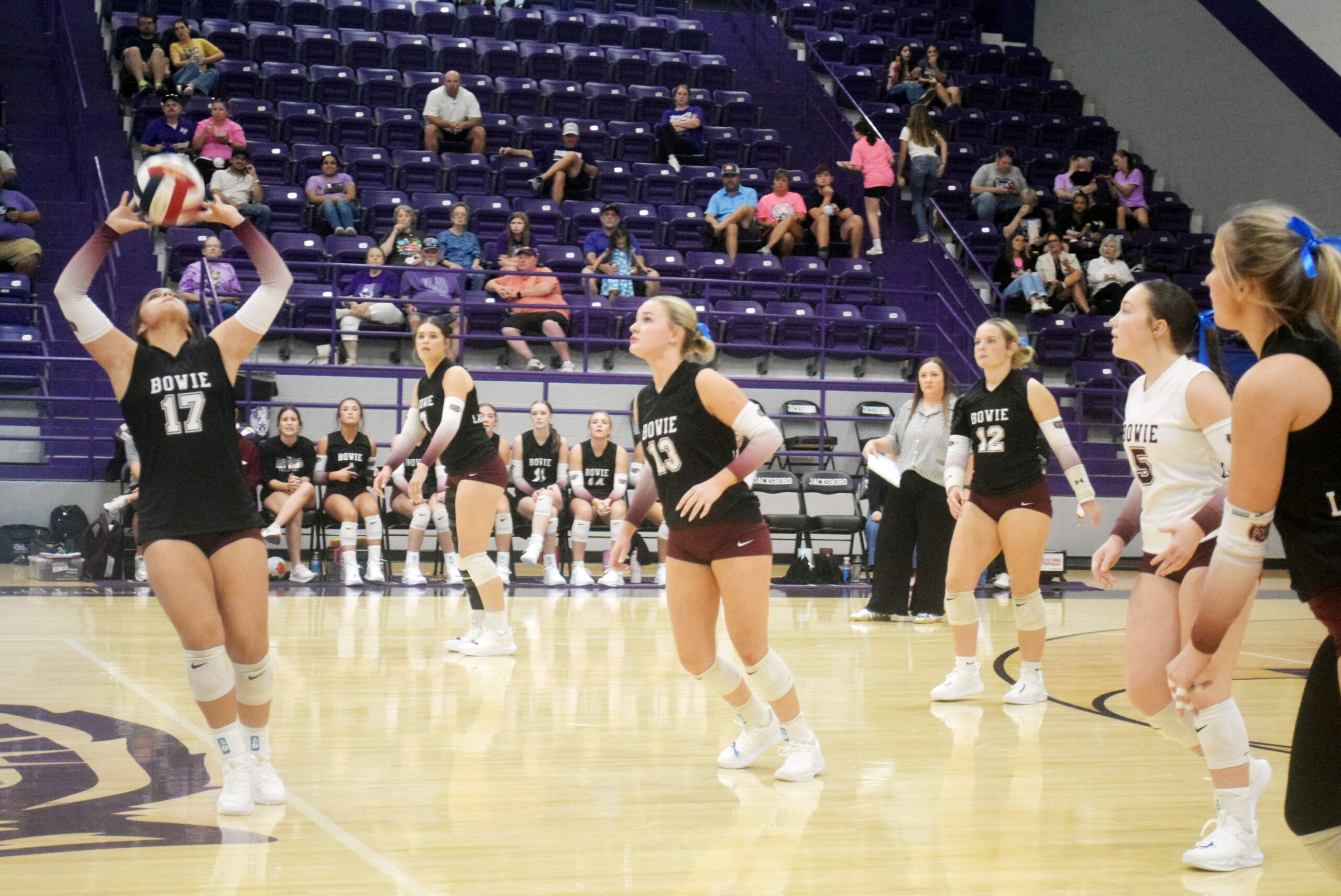
Bowie, playing on a short rest, held with host Jacksboro for most of the volleyball match Oct. 1, but the Tigerettes pulled away late and defeated the Lady Rabbits 3-1 (26-24, 12-25, 25-14, 22-25).
The match was scheduled for Oct. 2 but was moved. Both teams are now 2-2 in District 6-3A.
Jacksboro got out to a quick lead in game one before Olivia Stewart’s kill and a three-point Olivia Richey serving run put the visitors up 8-7. Junior Abby Reneau broke things open with a six-point string to give Bowie a 15-8 cushion and force Jacksboro into a timeout.
The Tigerettes came back and took an 18-16 lead. KP Rutherford’s kill broke the serve and allowed Molly Enlow to tie the game at 18.
For further details, pick up a copy of Thursday’s Bowie News.
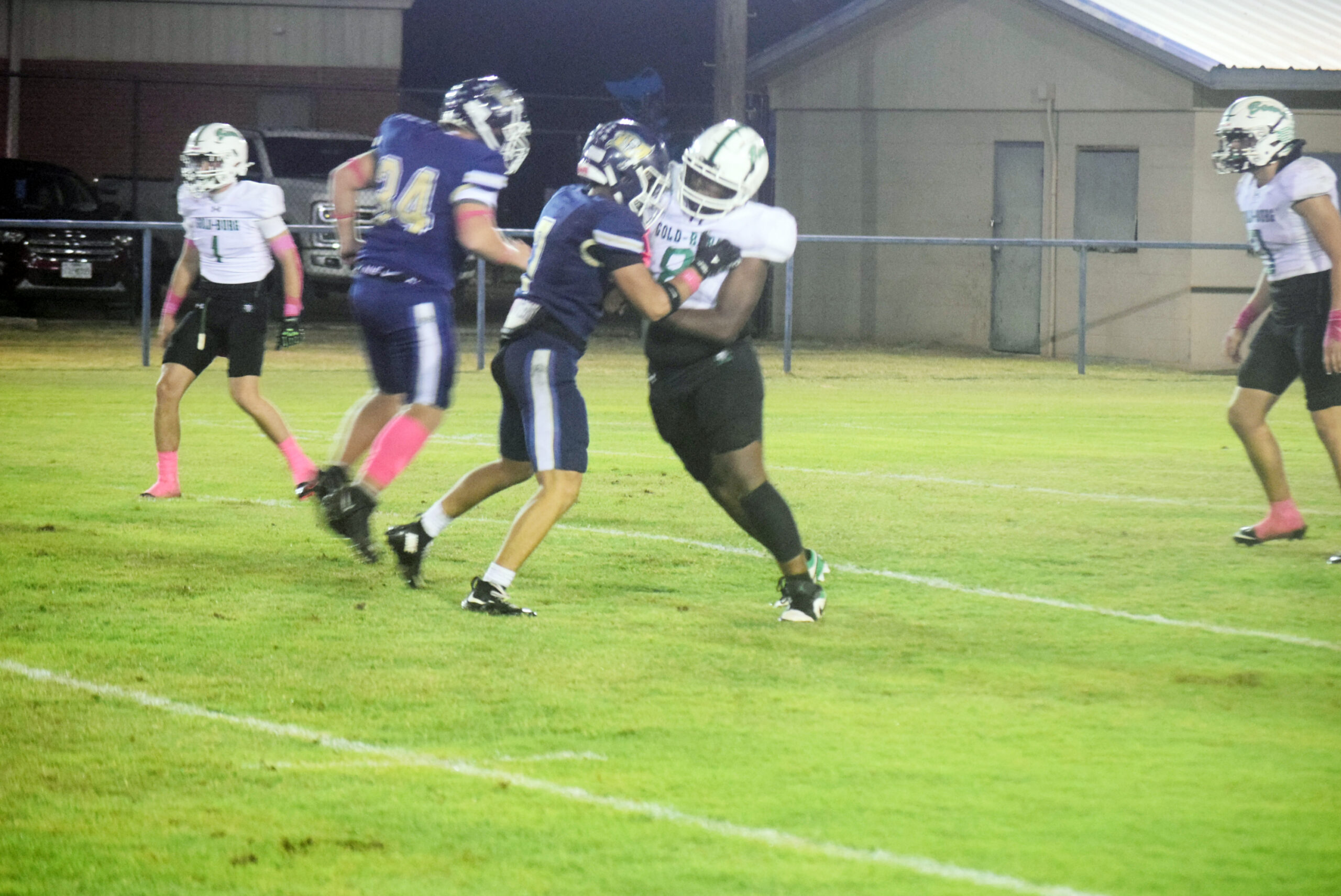
Gold-Burg Football Coach Austin Norman called his Bears’ 35-32 loss to host Perrin a “barn burner”.
It most definitely was as Gold-Burg, now 1-5 for the year gave the 5-1 Pirates everything they wanted for four quarters. Gold-Burg scored on the last play of the first half on a Peyton Epperson run with the two point conversion cutting the deficit to 20-16.
The Bears were their own worst enemy to open the third quarter with face mask and offside penalties moving the Pirates downfield setting up a first-and-goal at the Bear three. Defense by Epperson, Keelyn Case and Barrett Allen and a pair of Perrin penalties helped stop the drive and force a turnover on downs.
Gold-Burg was slapped with an intentional grounding penalty on the first play, giving Perrin a safety and extending the Pirate lead to 22-16. Defense by Epperson and JoJuan Grace after a first down run closed out the third quarter.
For further details, pick up a copy of Thursday’s Bowie News.
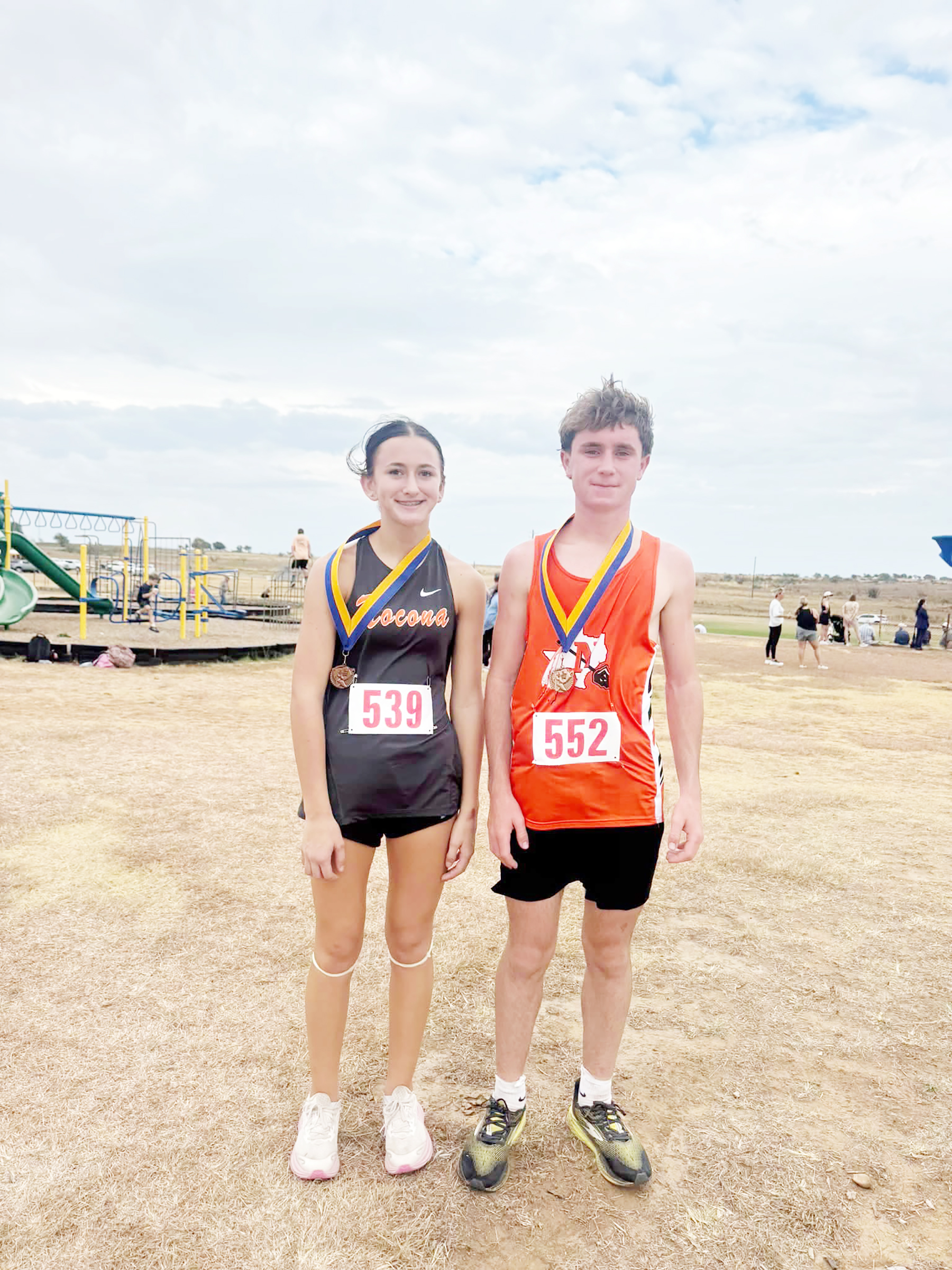
Nocona and Prairie Valley cross country teams took part in the Prairie Valley Invitational Sept. 20 while Bowie varsity runners competed in the Lubbock Invitational.
Lubbock
Leading the Rabbits was Kellen Rater who finished 10th among 162 runners with a time of 17:24.50. Finishing behind Rater was Shawn Willett with a time of 19:33.20. Hayden Sutton ran a 20:27.10 followed by Taven Melton in 20:39.20, Coleman Holloway in 20:53.80 and Jaxon Castro with a time of 21:31.60.
Laney Segura led the Lady Rabbits with a time of 14:41.30. She was followed by Kylee Waldrep in 15:56.80, Bella Lozano in 16:04.80, Angeles Alvarez with a time of 16:15.40, AnDee Miller in 16:23.70 and Isabella Caswell in 16:51 flat.
For further details, pick up a copy of Thursday’s Bowie News.






-

 NEWS3 years ago
Suspect indicted, jailed in Tia Hutson murder
-

 NEWS4 years ago
Wreck takes the life of BHS teen, 16
-
 NEWS4 years ago
2 hurt, 1 jailed after shooting incident north of Nocona
-

 NEWS3 years ago
Murder unsolved – 1 year later Tia Hutson’s family angry, frustrated with no arrest
-
 NEWS3 years ago
SO investigating possible murder/suicide
-
 Show us something good9 years ago
Country music star children perform in Bowie
-
 100th Birthday4 years ago
Looking back at the 1958 Centennial edition of The Bowie News
-
NEWS3 years ago
Sheriff’s office called out to infant’s death