SPORTS
STORM CENTER: Travel always part of athletics
Last Friday night, the parents of four North Central Texas College softball players received news they didn’t want to hear.
Parents learned their daughters – Brooke Deckard, 20, Scurry; Jaiden Pelton, 20, Telephone; Meagan Richardson, 19, of Wylie; and Katelyn Woodlee, 18, of Windom – were dead.
The story first broke during the second half of last week’s football games.
I was on the home sideline watching Nocona take on Henrietta at Jack Crain Stadium when I received tweets on my Twitter account.
A tractor-trailer crossed a median and plowed into the side of North Central Texas College’s activity vehicle.
In addition to the four dead, there were more than one dozen women injured.
The accident occurred south of Davis on Interstate-35.
It’s a road I’ve traveled many times, and I’m sure you have, too. After all, the road connects Dallas with Oklahoma City, two of this area’s largest hubs. Read more in the weekend edition of The Bowie News.
A scholarship fund called Angels in the Infield has been created at North Central Texas College to honor the memory of the four young women, softball players killed last weekend in the tragic bus accident that also injured 15 people. (Graphic from NCTC website)
SPORTS
Looking Back
By Luke Clayton
Looking back over the past years, I have seen many changes in the way we hunt and fish. My friends often joke with me saying things like, “Luke, all you do is hunt and fish and talk about it on your radio shows, the TV show you do and then write about the adventure in the newspapers and magazines.
They are at least partially correct, I do spend a lot of time in the outdoors fishing and hunting, I always have but when I became an outdoors writer forty years ago, these outings changed from being all fun to fun with some work involved. I learned about photography and how to capture the images I needed to compliment my articles. I later bumbled my way through radio, luckily, I had some very experienced radio personalities such as Dan Foster to help me along the way.
Dan was the news man for radio icon Bill Mack for many years. I used to drive 50 miles each way every week to a little recording studio where Dan flipped the switches and produced my show. Now, I can record excellent digital sound right at home, email the file to my producer and BINGO, it appears on a total of 41 radio stations the next weekend and becomes a podcast everywhere.
In the beginning as a fledging writer, it was sometime difficult to make the connections necessary to provide good content for my readers but as the years passed, so did my knowledge of the outdoors and my connections with professionals that made their living as guides, outfitters, etc. I’ve learned a great deal from these guys and gals and to this day, seldom go afield or out on the water without learning something new.
I remember writing my articles on paper and then typing and mailing or delivering the copy to editors. Photos were a real challenge, I would rush to get the film developed, hoping I got some good shots, and then deliver or mail the photos. These days, a click of my computer button sends the images anywhere in a matter of seconds.
As you might imagine, there have been a great deal of changes in the way most hunters and anglers pursue their sports. It’s difficult for young fishermen to fathom but back then there was no GPS nor spot lock that keeps your boat perfectly positioned over a fishing hot spot. I remember well lining up with features on the shore, triangulating we called it in order to get “close” a fishing hot spot.
A marker buoy would be tossed out, the anchor would then be let out upwind a good distance and anchor line let out until the boat was on the buoy. In the early days of civilian GPS, the government scrambled the coordinates so that precise positioning was impossible. One could get within about 50 feet of pre-determined coordinates. We all thought this was awesome, it was much better than lining up with reference points on shore but nothing like the pinpoint positioning today.
I don’t think many anglers under the age of thirty could imagine lining up a water tower and barn or radio antenna on shore to locate a good fishing spot. This method would get you close out in open water and then it was necessary to turn on your flasher unit to find the structure/fish you were looking for.
WHAT IS A FLASHER? Young anglers will ask Well it has absolutely nothing to do with quick removal of one’s clothing in a crowd.! It was a device before the advent of the modern day graph that would indicate the depth of water and, if you learned how to read the flashers properly, show you the fish.
I never became really good at reading anything but the depth and structure such as trees and bottom structure but I fished with guides that could accurately identify baitfish and gamefish just by looking at how the flashes appeared on the unit. Beyond doubt, the biggest change in fishing sonar is the introduction of forward-facing sonar a few years ago. With these units, the angler actually sees his bait below the boat and the fish he is trying to catch. These units have become hugely popular and are in widespread use by both amateur anglers and pros alike.
I’ve fished with several guides that put the technology to good use and won’t deny that it is highly effective. Personally, I don’t enjoy keeping my head glued to a little computer screen that shows my bait and the target fish but I must admit I’ve learned a lot about what triggers strikes, especially with white bass. They almost always chase the bait up vertically before striking.
I remember hunting hogs at night with an electrician buddy way before thermal scopes were invented. We wired several DC light bulbs in series to a car battery way back in the woods and baited the spot heavily for a few days until we saw hog sign and then set up at night nearby with shotguns loaded with double-ought buckshot. We managed to put some fresh pork in the freezer in this manner.
And live feed trail cameras common today were light years ahead of the technology 40 years ago. Many hunters have a cell phone app that instantly sends them a photo from a game camera back in the woods somewhere. Some cameras transmit live feed video. Many hog trappers use this system to ‘drop the gate’ on their hog traps. They watch the video, real time within a couple seconds until all the desired hogs are inside the trap and then, press the ‘drop gate’ button!
My first “trail camera” was a 35 mm. film camera with a trip wire that ran across a game trail, connected to a little shutter connector. The idea was to run the trip wire across the trail and the deer would trip the shutter as it walked past. I would then get the film from the camera, get it developed and in a week or so see what had tripped the shutter. Well, that was the plan.
I don’t remember actually getting the photo of deer but did get some fuzzy photos of a skunk and armadillo! Email Luke through his website www.catfishradio.org Listen to his weekly hour long podcast “Catfish Radio with Luke Clayton and Friends” just about everywhere podcasts are found.
SPORTS
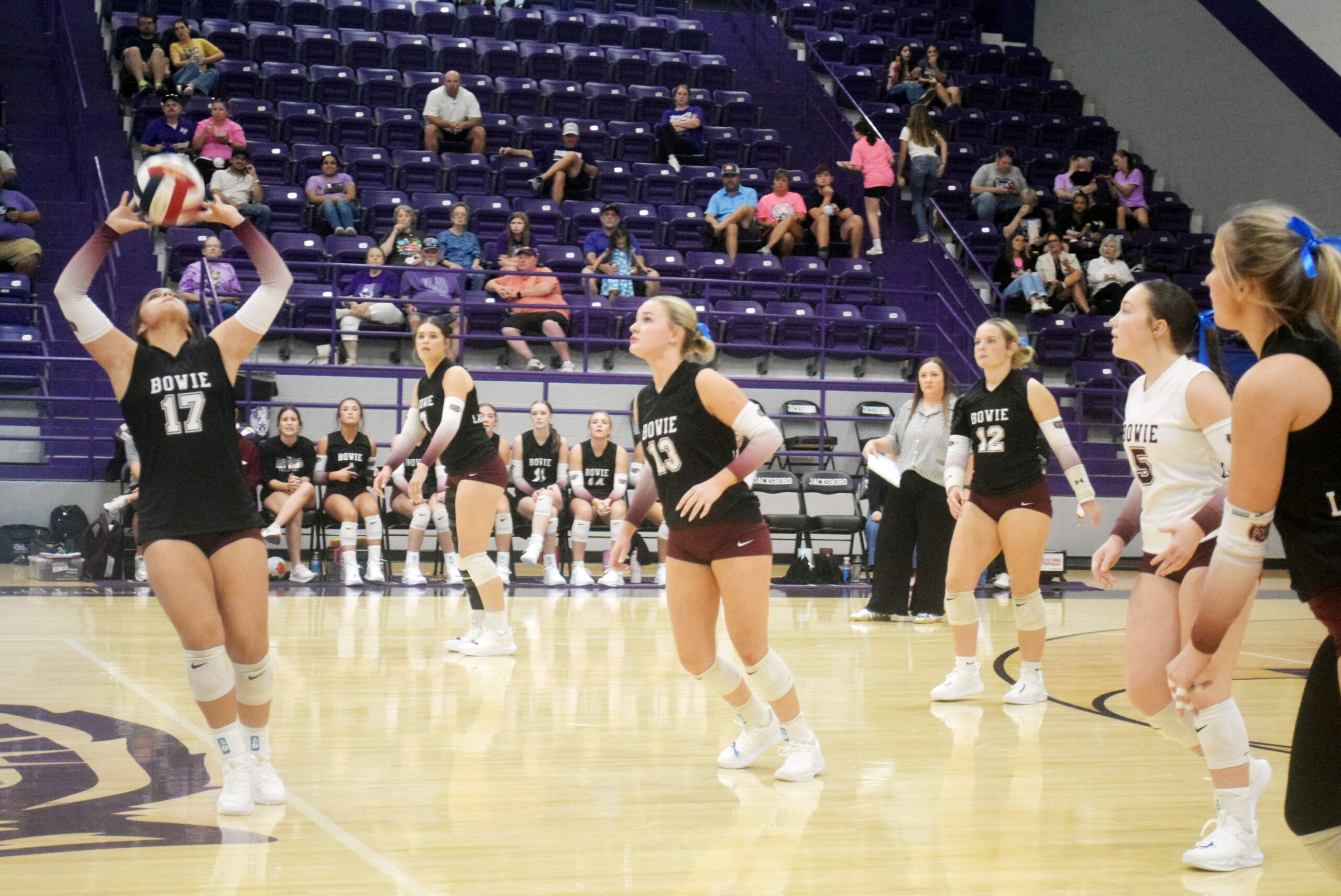
Saint Jo boys 2nd at North Hopkins
Saint Jo’s boy’s basketball team took part in the North Hopkins Tournament Dec. 29-30.
Before the tournament the boys suffered a 65-41 loss to Class 3A Valley View. Saint Jo used six Landon Williams points and two points each from Trent Gaston and Zeke Bonn to take a 10-7 lead after one.
Valley View outscored the Panthers 28-10 in the second quarter. Lee Yeley had three points as did Brody Morris with Barrett Johnson and Williams scoring two points each. Valley View led 35-20 at halftime. Gaston paced a 16-point quarter for the Panthers with seven points with Williams adding six and Morris three. Saint Jo was down 52-36 heading into the fourth quarter.
For further details, pick up a copy of Thursday’s Bowie News.
SPORTS
Indians open district with win over Olney
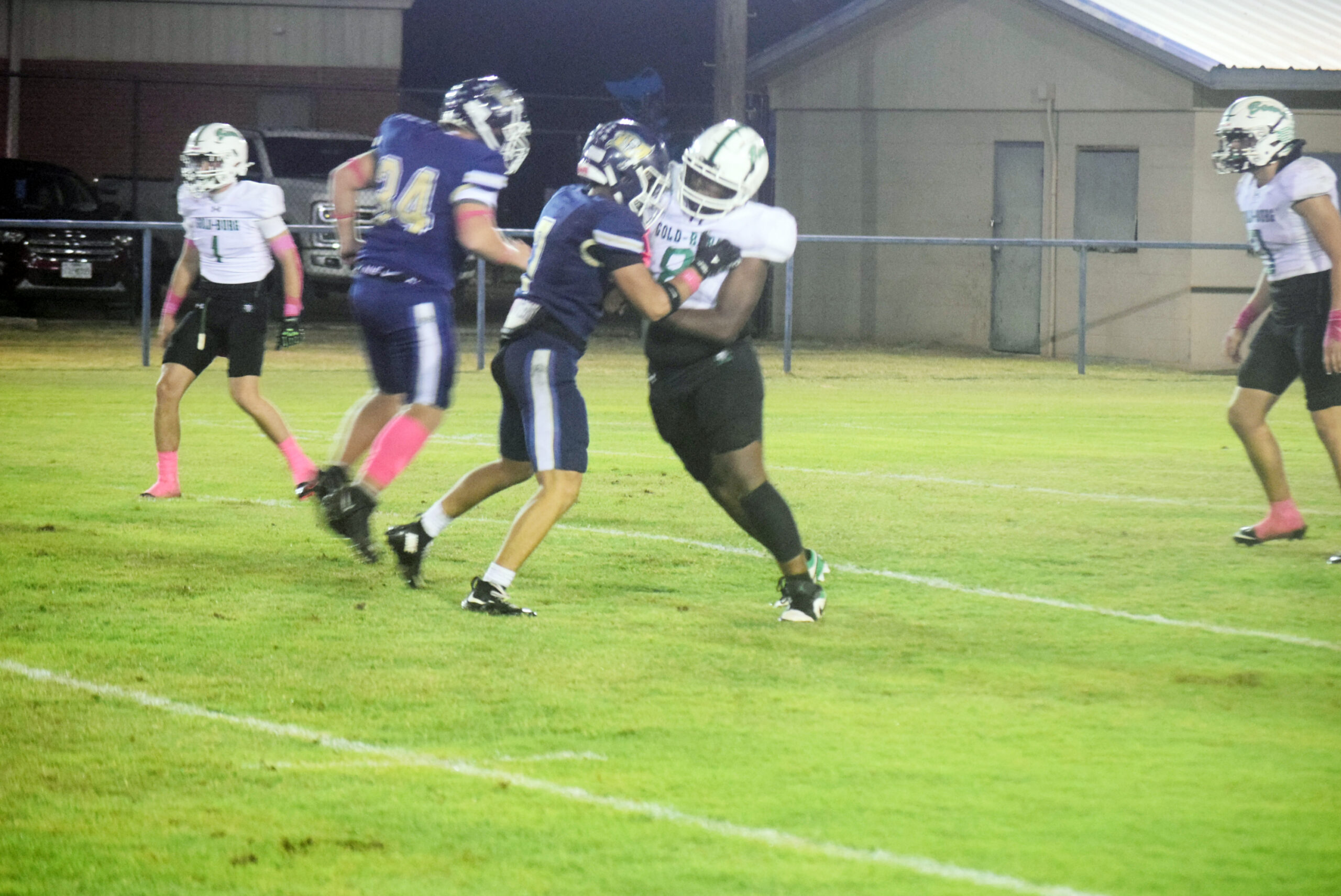
An 11-0 Nocona first quarter run broke open the district opener Friday against Olney and gave the Indians a 77-49 win over the visiting Cubs.
Nocona goes to 22-2 for the year and 1-0 in district with Olney falling to 12-7 and 0-1. Nocona mentor Brody Wilson said coming out aggressively early was key.
“We knew they’d come out hard and they did, so we matched them hard,” Wilson said. “We wanted to set the tempo early.”
Olney got out to a 4-0 lead in the first 90 seconds but 30 seconds later, RJ Walker and Landon Fatheree tied the game at four. Walker broke the tie with a 3-pointer on the next possession and the Indians never trailed again.
For further details, pick up a copy of Thursday’s Bowie News.
-

NEWS2 years agoSuspect indicted, jailed in Tia Hutson murder
-
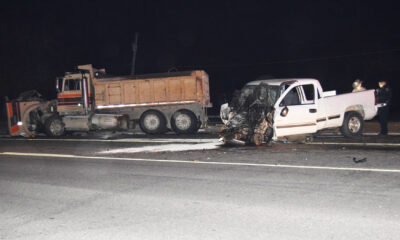
NEWS3 years ago2 hurt, 1 jailed after shooting incident north of Nocona
-
NEWS3 years agoSO investigating possible murder/suicide
-
NEWS3 years agoWreck takes the life of BHS teen, 16
-
NEWS2 years agoMurder unsolved – 1 year later Tia Hutson’s family angry, frustrated with no arrest
-
Show us something good9 years agoCountry music star children perform in Bowie
-

NEWS3 years agoSheriff’s office called out to infant’s death
-
100th Birthday3 years agoLooking back at the 1958 Centennial edition of The Bowie News