
HOME
Fusion Energy


EarthTalk®
From the Editors of E – The Environmental Magazine
Dear EarthTalk: What is fusion energy and why are environmentalists so bullish on it?
— Mickey Brent, Milwaukee, WI
Nuclear fusion may be the most promising energy source that most of us have never heard of. Scientists first discovered fusion as a potential energy source in the 1930’s and have been quietly working on it ever since. Only recently, given societal pressure to find alternatives to fossil fuels, has fusion started to capture the attention of the media and policymakers—and now researchers are hoping the process can become a key source of safe, clean, reliable energy in the near future.
Nuclear fusion is the fusing of two atoms into one. Fusion is very different from fission, in which atoms are split in half. Although both emit energy, fusion emits much more. Fusion takes an immense amount of heat and pressure and is the reaction that happens inside of stars, including our own sun. The temperature at the center of the sun is around 15 million Kelvin (27 million degrees Fahrenheit)! Scientists have achieved temperatures of around 100 million degrees inside experimental fusion devices but have yet to make the process net energy positive. The issue with doing reactions at such high heats is that the heated substance cannot touch anything or the container will melt. Therefore, fusion reactions are done in a donut of floating plasma, suspended by magnetic fields.
When compared to other energy sources, fusion energy seems like it might be our best bet in the long term. Compared to fossil fuels and renewable energy sources, fusion is wildly more efficient and no more dangerous. Fusion is three to four times more efficient even than nuclear fission, without the downsides such as the risk of nuclear meltdown or dirty bombs. While nuclear fission requires uranium to function, fusion reactors only require deuterium, which occurs naturally in seawater, and tritium, which can be produced through a reaction of deuterium and lithium. These low raw material costs cause fusion to be considered a potential source of limitless energy. Due to the low radioactivity of fusion, even in the case of an explosion, radioactivity would be contained to the reactor site. Fusion reactors’ small input and extremely high output have made them a popular idea.
So what are the drawbacks of nuclear fusion? Or is it the perfect energy source? Most critics of fusion energy point to the timeline as its greatest weakness. The majority of projections see 2050 as the first year fusion reactors could be commercially available. This is too late for fusion energy to solve our current energy crisis. Some environmentalists claim that funding for fusion energy could be better spent on renewable sources such as solar and hydro that give us clean energy now. Another concern with fusion is public opinion. People tend to be wary of anything nuclear, if only because of the incredible devastation of nuclear bombs. While nuclear fusion is far safer than fission, many activists in France, for example, are protesting all forms of nuclear energy.
The biggest fusion energy project in the world is called the ITER which means “the way” in Latin. ITER is located in Southern France and funded by the European Union, the U.S., China, India, Korea, Russia and Japan. ITER will be a fusion reactor used for research and is currently under construction. Current plans are for ITER to be ready for the first test of plasma by 2025. The main other research on fusion energy is being done at the Massachusetts Institute of Technology (MIT). Though commercial fusion reactors are far from a reality, the abundant raw materials and high safety, paired with enormous energy output, make it an outstanding possibility for the future.
CONTACT: ITER, www.iter.org.
EarthTalk® is produced by Roddy Scheer & Doug Moss and is a registered trademark of the nonprofit Earth Action Network. To donate, visit www.earthtalk.org. Send questions to: question@earthtalk.org.

Earlier this year The Garden Guy told you about Luscious Vanilla Breeze making its debut in 2027. I have fallen head over heels for this new variety and I think you will too!
As a guy who treasures flaming orange, I was a little timid with respect to white. Not so with son James who always uses it.
Now in November this white is electrifying in the landscape. The individual florets start out a soft butter yellow and begin their journey to a glistening white that boldly stands out.
Read the full Garden Guy Column in Thursday’s Bowie News.

A 36-point underdog heading into its bi-district football game with Wall, Bowie gave possibly its finest performance of the 2026 season against Wall, ranked No.4 in the state.
The Jackrabbits found themselves down just 10-7 at the half. All 10 Wall points came as a result of Bowie turnovers. The Hawk defense held tough in the second half while scoring a pair of touchdowns in a much closer than it looked 24-7 win over the Rabbits Nov. 13 at Cisco’s Chesley Field.
Bowie, which had not made the playoffs since 2017, ended its season at 5-6 while Wall, the defending state champion, moves into area at 10-1. Bowie Coach Tyler Price said he was proud of what his players accomplished in 2026.
“We were excited about this group of seniors coming in (to the season),” Price said. “These kids left their mark.”
For further details, pick up a copy of Thursday’s Bowie News.
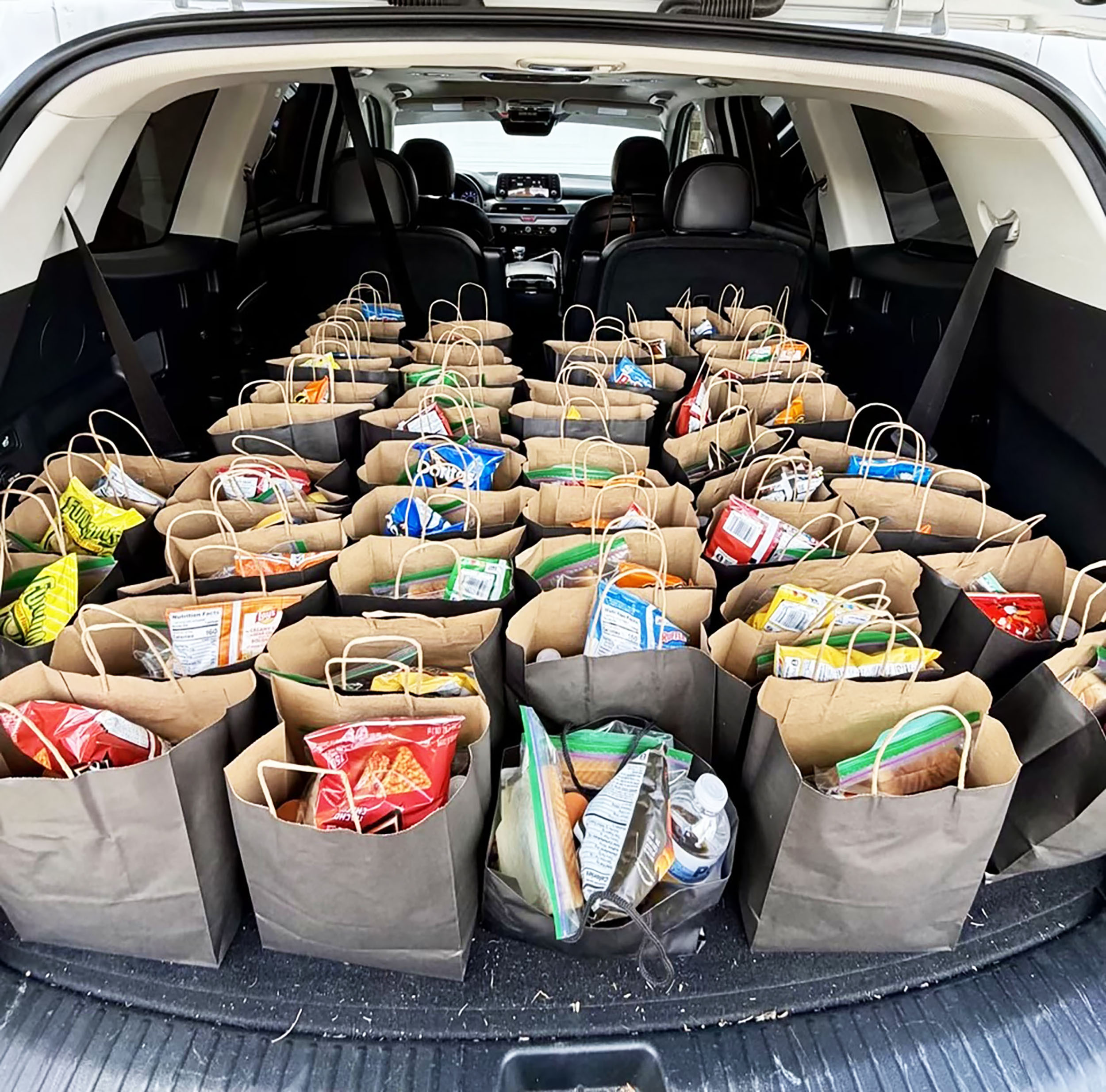
I volunteered to make 50 peanut butter and jelly sandwiches. It sounded easy when I signed up.
And really, none of it was difficult but somewhere between buying the correct amount of ingredients, opening the bread, mixing the filling, spreading sandwiches and putting every single one into a baggie, I developed a greater appreciation for anyone who feeds a crowd.
Our varsity moms were asked to contribute to football away-game goodie bags. This week, for the last away game of the regular district season, I was able to help.
Varsity has grown from about 28 players to about 40 since the junior varsity team ended midway through the season. Add coaches and student trainers, and there are quite a few people to send down the road with something to eat.
My assignment was the “sammies.”
Read the full On the Table feature in the Thursday Bowie News.








-

 NEWS3 years ago
Suspect indicted, jailed in Tia Hutson murder
-

 NEWS4 years ago
Wreck takes the life of BHS teen, 16
-

 NEWS3 years ago
Murder unsolved – 1 year later Tia Hutson’s family angry, frustrated with no arrest
-
 NEWS4 years ago
SO investigating possible murder/suicide
-
 NEWS4 years ago
2 hurt, 1 jailed after shooting incident north of Nocona
-
 Show us something good9 years ago
Country music star children perform in Bowie
-
 100th Birthday4 years ago
Looking back at the 1958 Centennial edition of The Bowie News
-
 Show us something good9 years ago
Bowie finally earns ‘World’s Largest Bowie Knife” record from Guinness