
COUNTY LIFE
Easy at-home advice for handling food safely this Thanksgiving

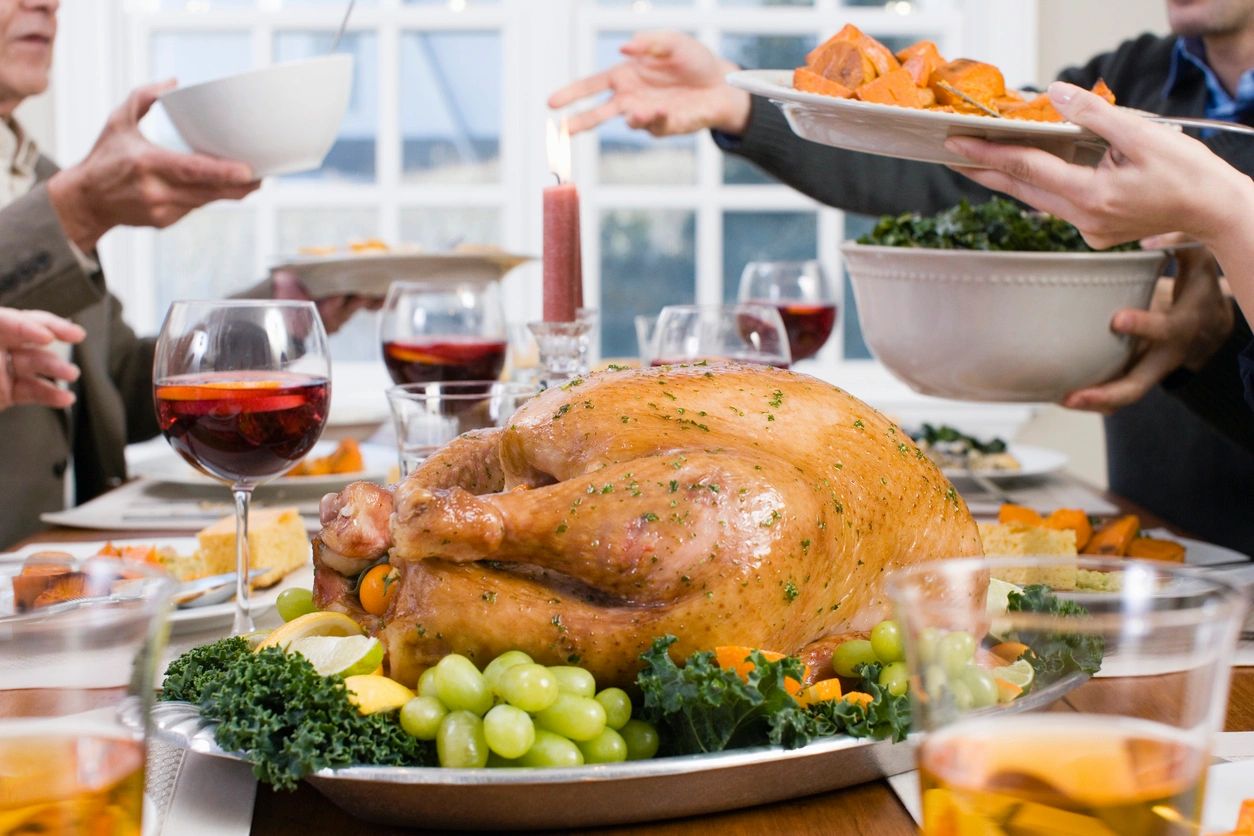
WASHINGTON, Nov. 23, 2020 – This week, Americans will enjoy a delicious meal on Thanksgiving Day with family and friends – either in person or virtually. Taking the necessary steps toward safe food handling and sanitation will help protect you and your loved ones this year. To make sure your Thanksgiving meal is prepared safely, the U.S. Department of Agriculture (USDA) is offering food safety advice to reduce foodborne illness, including on Thanksgiving Day.
“Our data shows that consumers can reduce their likelihood of foodborne illness by focusing on good hand hygiene and other food safety practices,” said Dr. Mindy Brashears, USDA’s Under Secretary for Food Safety. “As home chefs nationwide prepare their Thanksgiving meals, proper handwashing and avoiding cross contamination in the kitchen are critical to keeping your loved ones safe.”
Wash Your Hands
The first step to safe food preparation is to clean. In recent USDA observational research, participants did not even attempt to wash their hands, or did not wash their hands sufficiently about 95 percent of the time before and during meal preparation.
Handwashing is recommended to control the spread of germs, especially before, during and after preparing food (especially after touching raw meat or poultry).
Thawing the Turkey
Frozen turkeys should never be thawed on the counter or in hot water and must not be left at room temperature for more than two hours. The best method to thaw the turkey is in the refrigerator since this allows slow, safe thawing. When thawing turkey in the refrigerator, allow about 24 hours for every five pounds of turkey. Once thawed, it can remain safe in the fridge for one to two days. Other safe thawing methods include a cold-water bath or the microwave. If you use either of these thawing methods, you should cook the turkey immediately after it is thawed. If using the cold-water method, allow 30 minutes per pound, and submerge the turkey in its original wrapping to avoid cross-contamination. If thawing in the microwave, make sure to follow the manufacturer’s instructions when defrosting the turkey.
Avoid Cross-Contamination
In a recent study, USDA found 60 percent of kitchen sinks were contaminated with germs after participants washed or rinsed poultry. To avoid this cross-contamination risk, do not wash your turkey. But if you do wash your turkey or put your turkey in the sink, you need to fully clean and sanitize your sink. Cleaning and sanitizing is a two-step process. To clean, rub down surfaces — including the sink, cutting boards, and counter tops — with soap and hot water, and then sanitize them with a cleaning solution to remove any residual germs you cannot see. You can use a homemade solution of one tablespoon of unscented, liquid chlorine bleach in one gallon of water. Let air dry.
Do Not Stuff the Turkey
Although many choose to stuff the turkey, USDA does not recommend doing so for optimal safety. Instead, cook stuffing outside of the turkey cavity to reduce cross-contamination risk. This will also allow your turkey to cook more quickly.
Cooking to the Safe Temperature
A whole turkey is safe when cooked to a minimum internal temperature of 165 degrees Fahrenheit as measured by a food thermometer in three parts: the thickest part of the breast, the innermost part of the wing, and the innermost part of the thigh. Even if the turkey has a pop-up temperature indicator, you should still use a food thermometer to check that the bird has reached at least 165 degrees Fahrenheit in those three places. If you are planning to cook a turkey breast instead of a whole turkey, check the temperature with the food thermometer (165 degrees Fahrenheit) at the thickest part the breast. All previously cooked side dishes should be reheated to 165 degrees Fahrenheit as measured by a food thermometer as well.
The Two-Hour Rule
To make sure food stays safe to eat through the weekend, all perishable items should be refrigerated within two hours of when they finished cooking. After two hours, perishable food will be in the Danger Zone (40 to 140 degrees Fahrenheit) too long, which is when bacteria can multiply quickly and cause the food to become unsafe. If foods have been left out for more than two hours they should be discarded.
Store and Reheat Leftovers
Store leftovers in small, shallow containers in the refrigerator until the Monday after Thanksgiving Day or in the freezer for later use. Shallow containers help cool leftovers more quickly than storing them in large containers. Reheat leftovers to an internal temperature of 165 degrees Fahrenheit. Check the internal temperature of the food in several places with a food thermometer after allowing a resting time.
You Have Questions, USDA Has Answers
For advice about how to safely prepare the turkey and all other menu items this Thanksgiving Day, call the USDA Meat and Poultry Hotline at 1-888-MPHotline (1-888-674-6854) or chat live with a food safety expert at ask.usda.gov from 10 a.m. to 6 p.m. Eastern Time, Monday through Friday. If you need last-minute help on Thanksgiving Day, the USDA Meat and Poultry Hotline is open from 8 a.m. to 2 p.m. Eastern Time. Visit FoodSafety.gov or follow USDA’s Food Safety and Inspection Service (FSIS) on Twitter @USDAFoodSafety or on Facebook at Facebook.com/FoodSafety.gov for the latest food safety tips.
###
The Montague County Commissioner’s Court will meet at 9 a.m. on Oct. 12 in the County Courtroom at the Courthouse Annex in Montague.
Commissioners are scheduled to consider issuing a proclamation declaring October as Domestic Violence Awareness Month within Montague County.
The court also will consider accepting $850 in unanticipated revenue for the sheriff’s office generated during National Night Out activities, alongside interlocal cooperation contracts between the Texas Department of Public Safety and Justices of the Peace for Precincts 1 and 2.
An executive session is scheduled to discuss personnel matters pertaining to sewer/septic inspector for the county. Any action would be taken back in open session.

The Oct. 9-11 Art of the Song Music and Art Festival opens Friday night for three days of art and entertainment in downtown Nocona.
The festival opens on Oct. 9 with a Chisholm Trail Art Association Preview Party from 5 to 7 p.m. on Oct. 9 at the H.J. Justin Building.
Come see all the entries for the adult show, which formally opens at 10 a.m. on Oct. 10.
Live music will be played by Full Circle Band.
Also on Oct. 9 enjoy a Nocona Nights Street Dance from 7 to 9 p.m. with the Mark Murphey and Highway 82 Band. Cost is $10 per ticket and $200 for a table seating eight. Bring your lawn chairs.
Read the full schedule of events for the festival in your Thursday Bowie News.

These students are nominees for the 2026 homecoming court at Gold-Burg High School. Homecoming royals will be crowned in pre-game ceremonies before the Bears take on Throckmorton at 7:30 p.m. on Oct. 9. Pictured are: Freshmen: Kenzley Foster and Jackson Allen, freshmen; Yareli Aguirre and Jojuan Grace, sophomores; Zara Andrade, junior and Brayden Odom, Kaylie Duncan, both seniors. Not pictured: Caleb Epperson, junior and Keelyn Case, senior.






-

 NEWS3 years ago
Suspect indicted, jailed in Tia Hutson murder
-

 NEWS4 years ago
Wreck takes the life of BHS teen, 16
-
 NEWS4 years ago
2 hurt, 1 jailed after shooting incident north of Nocona
-
 NEWS3 years ago
Murder unsolved – 1 year later Tia Hutson’s family angry, frustrated with no arrest
-
 NEWS3 years ago
SO investigating possible murder/suicide
-
 Show us something good9 years ago
Country music star children perform in Bowie
-
 100th Birthday4 years ago
Looking back at the 1958 Centennial edition of The Bowie News
-
NEWS3 years ago
Sheriff’s office called out to infant’s death