
HOME
Lead Contamination in City Water

Dear EarthTalk: I find it hard to believe that Flint, Michigan is the only city or town in the U.S. with lead contamination of its water system. Has anyone looked at where else this could be a problem? — Jason K., Clearwater, FL
A new analysis of data from the U.S. Environmental Protection Agency (EPA) by the non-profit Natural Resources Defense Council (NRDC) found that 18 million Americans live in communities where water systems contain unsafe levels of lead. In “What’s In Your Water: Flint & Beyond,” NRDC reports that 5,300 different water systems across the country either shirked responsibilities to treat their water supplies to reduce lead levels, failed to monitor water supplies for lead, or neglected to report unsafe lead levels to the public or regulators. “These violations were recorded because the systems were not doing everything that they are required to do to protect the public from lead issues,” added NRDC.
“Imagine a cop sitting, watching people run stop signs, and speed at 90 miles per hour in small communities and still doing absolutely nothing about it—knowing the people who are violating the law…” said Erik Olson, NRDC’s health program director. “That’s unfortunately what we have now.”
Even more surprising to NRDC is the fact that Flint didn’t even show up as having violations for lead in the EPA’s database, illustrating “the serious problem of underreporting and gaming of the system by some water supplies to avoid finding lead problems, suggesting that our lead crisis could be even bigger.”
Of course, Flint is far from the only metropolitan area with contaminated water supplies. Researchers believe thousands of water supplies across the country have been “gaming” the system for decades, with the EPA turning a blind eye to the situation.
“Cheating became something you didn’t even hide,” Marc Edwards, the Virginia Tech researcher credited with exposing water supply management issues in Washington DC and later Flint, recently told CNN. Some of the most common “bad practices” by water supply managers include testing only homes that are unlikely to have high levels of lead, asking residents to “pre-flush” their taps, and taking water samples slowly to reduce lead levels.
For its part, the EPA says that individual states are responsible for the majority of drinking water enforcement actions and should continue to be “the first line of oversight” of drinking water systems. The agency adds that “many of the drinking water systems that NRDC cites in its analysis are already working to resolve past violations and return to compliance with the Safe Drinking Water Act.”
So what’s to be done? According to NRDC, fixing Flint—with both emergency relief and long-term infrastructure and systemic improvements—should be priority #1. Beyond Flint, NRDC says that the EPA should be taking a hard look at the rest of the country’s water infrastructure, removing lead service lines and fixing other water problems, especially in underserved communities.
To find out if your community is affected, check out NRDC’s interactive map showing which communities’ water systems were in violation of the EPA’s “lead action level” of 15 parts per billion (ppb) and which have failed to monitor or report on lead levels.
CONTACTS: NRDC’s “What’s In Your Water: Flint & Beyond,” www.nrdc.org/resources/whats-your-water-flint-and-beyond; EPA, www.epa.gov.
EarthTalk® is produced by Roddy Scheer & Doug Moss and is a registered trademark of the nonprofit Earth Action Network. To donate, visit www.earthtalk.org. Send questions to: question@earthtalk.org.

Perfect Score, Director’s Select, Best of the Best and Leader of the Pack are just a few of the awards for Superlophus. I’m also reasonably sure you are thinking: What is a Superlophus?
Superlophus Sunglow is the official name botanically known as an Oenothera commonly called Texas Primrose. That’s right: This golden yellow flower that is a non-stop bloomer and tough-as-nails is a native selection and winner of 15 awards from Canada to Mississippi.
Read the full Garden Guy feature in the Thursday Bowie News.
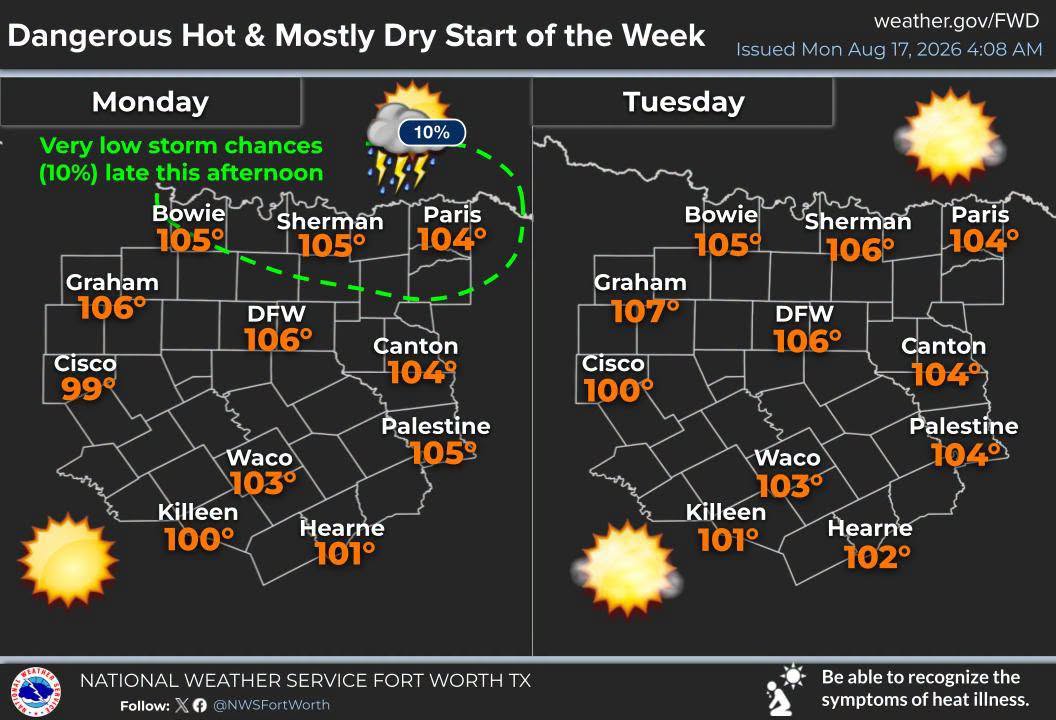
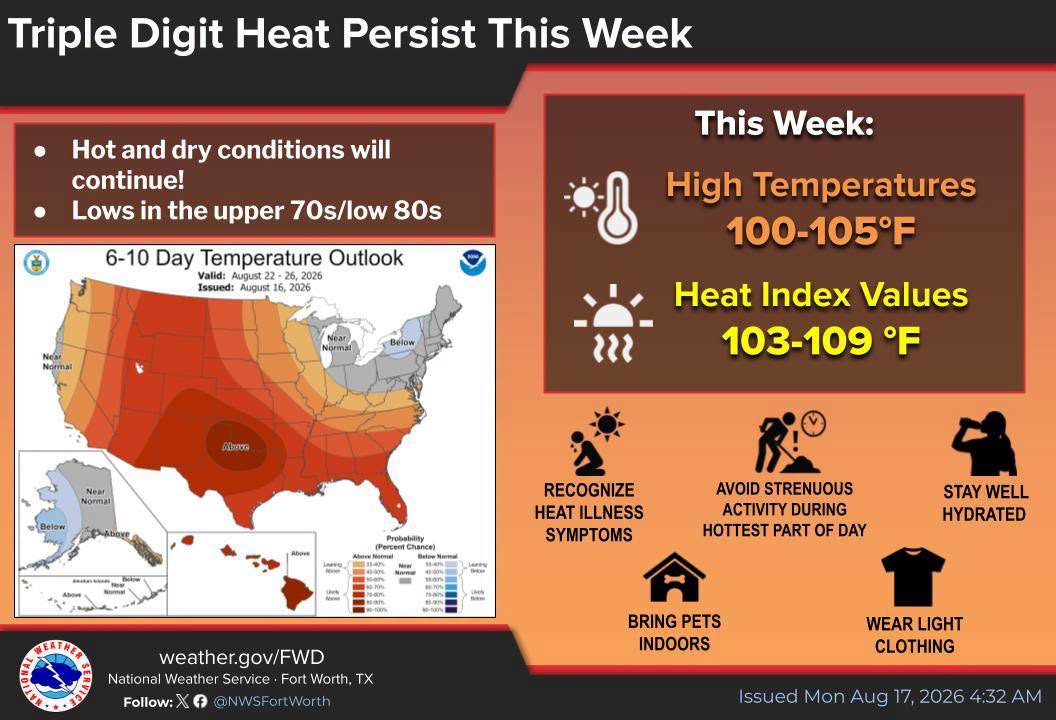
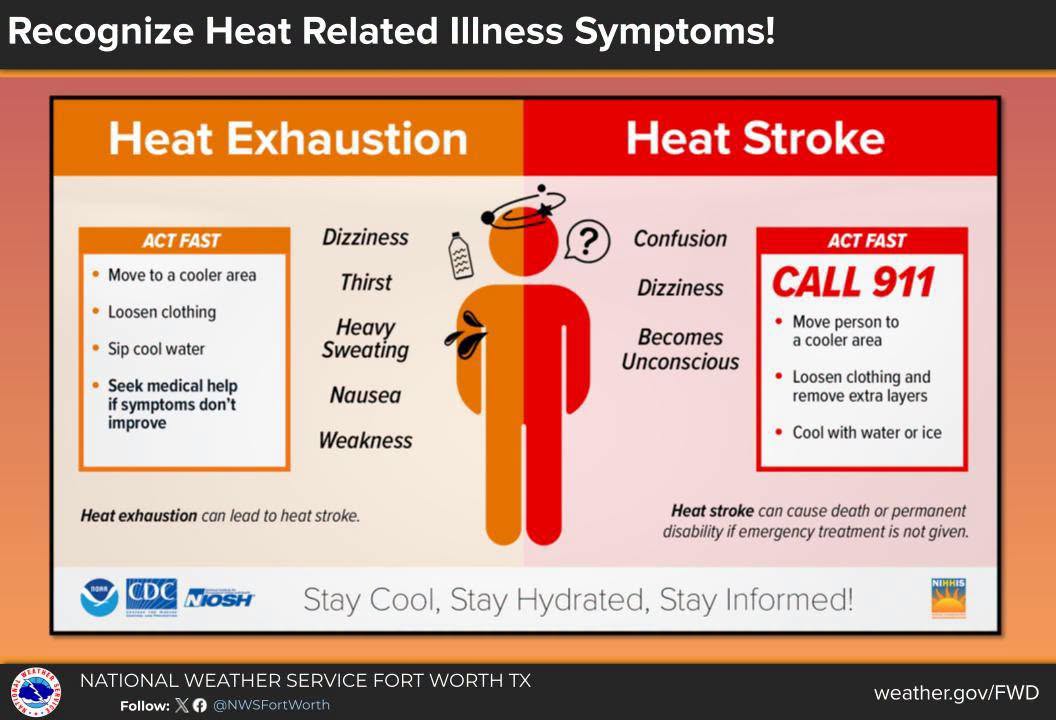
Get ready for more hot and mostly dry weather conditions this week! Outside of some very low rain/storm chances late this afternoon (and maybe tomorrow afternoon), the heat will be the main story for us! We’re almost there…fall is coming at some point!

A few years ago, if someone had suggested that I would be brewing tea from orange peels, fig leaves, and the assortment of wild plants flourishing in my yard, I would have giggled in disbelief. My perception of tea was limited to the neatly packaged bags sold at the store, each little bag a promise of convenience.
I still vividly recall a few memorable trips to Great Britain, where I savored the robust flavor of a PG Tips tea bag—moments like that felt exquisitely sophisticated to me! The British, with their ritual approach and passion for creating the perfect cuppa, truly have mastered the art of tea.
Read the full On The Table column in your Thursday Bowie News.






-

 NEWS3 years ago
Suspect indicted, jailed in Tia Hutson murder
-
 NEWS4 years ago
2 hurt, 1 jailed after shooting incident north of Nocona
-

 NEWS4 years ago
Wreck takes the life of BHS teen, 16
-
 NEWS3 years ago
SO investigating possible murder/suicide
-

 NEWS3 years ago
Murder unsolved – 1 year later Tia Hutson’s family angry, frustrated with no arrest
-
 Show us something good9 years ago
Country music star children perform in Bowie
-
 100th Birthday4 years ago
Looking back at the 1958 Centennial edition of The Bowie News
-
NEWS3 years ago
Sheriff’s office called out to infant’s death