
NEWS
Governor activates state emergency response resources for critical fire danger


AUSTIN – Governor Greg Abbott today announced that he directed the Texas Division of Emergency Management (TDEM) to activate additional state emergency response resources in anticipation of extremely critical wildfire danger expected across West Texas and ongoing elevated-to-critical fire weather conditions across most of the state into the weekend.
“The State of Texas continues to monitor the heightened wildfire threats that are impacting large portions of the state,” said Governor Abbott. “Due to the unpredictable nature of wildfires, I directed the Texas Division of Emergency Management to ready additional emergency response resources to assist local communities with any wildfire outbreaks. With dry conditions, wind gusts, and low humidity increasing wildfire danger, Texans are encouraged to make an emergency plan, limit any activities that can cause a spark, and heed the guidance of local officials to keep yourself and your family safe.”
According to the Texas A&M Forest Service, dry surface fuels, very strong wind gusts, and low humidity will continue to support increased wildfire danger across nearly all of the state, with extremely critical wildfire danger expected in areas including the High Plains, South Plains, Permian Basin, Big Country, Texoma, Metroplex, and Hill Country. High winds could promote large wind-driven fires with high resistance to control.
The Texas A&M Forest Service is monitoring conditions for the potential of a Southern Plains Wildfire Outbreak tomorrow, a dangerous fire weather pattern that could develop under the current forecast. According to the National Weather Service, increased wildfire danger is expected to continue over the next several days.
The Wildland Fire Preparedness Level remains at Preparedness Level 3, indicating that wildfire activity is impacting several regions of the state as the result of drought, dry vegetation, or frequent fire weather events.
The Texas State Emergency Operations Center (SOC) remains activated at Level II (Escalated Response) as the state stands ready to support local officials’ response to wildfire danger. At the Governor’s direction, more than 750 state emergency responders and over 300 pieces of equipment have mobilized from more than 16 state agencies to support the state’s wildfire response across Texas.
The following state emergency response resources continue to remain ready to support local wildfire response operations, including:
- Texas A&M Forest Service (Texas Intrastate Fire Mutual Aid System): Local, state, and out of state firefighters and support personnel, fire engines, bulldozers, and motor graders; federally contracted firefighting aircraft, including large air tankers, single-engine air tankers for retardant drops, air attack platforms for surveillance and spotting, super scoopers for water drops, helicopters with firefighting capability, fire bosses and an aerial supervision module for aerial guidance
- Texas Division of Emergency Management: The State of Texas Incident Management Team to support deployed emergency response resources across the state
- Texas National Guard: Chinook and Blackhawk helicopters with firefighting capability
- Texas Department of State Health Services (Texas Emergency Medical Task Force): Wildland Fire Support Packages consisting of medics, ambulances, and all-terrain vehicles
- Texas Department of Public Safety: Texas Highway Patrol Troopers to patrol roadways and assist stranded motorists
- Texas Parks and Wildlife Department: Game Wardens, State Park Police
- Texas A&M Engineering Extension Service (Texas A&M Task Force 1 and Texas Task Force 2): Type 3 Urban Search and Rescue Teams
- Texas A&M AgriLife Extension Service: Disaster Assessment and Recovery Agents as well as AgriLife Extension Agents to support agricultural and livestock needs
- Texas Animal Health Commission: Coordinating animal resource needs
- Texas Department of Agriculture: Coordinating agricultural resource needs
- Texas Department of Transportation: Personnel monitoring road conditions
- Public Utility Commission of Texas: Power outage monitoring and coordination with utility providers
- Railroad Commission of Texas: Monitoring of the state’s natural gas supply and communication with the oil and gas industry
- Texas Commission on Environmental Quality: Air/water/wastewater monitoring
- Texas Health and Human Services Commission: Personnel to provide information on available services through the 2-1-1 Texas Information Referral Network
- Texas Department of Information Resources: Monitoring technology infrastructure
Texans are urged to implement wildfire prevention measures, including avoiding activities that may cause sparks or flames, making an emergency plan, follow instructions from local officials, and keeping emergency supplies easily available.
Texans can visit TexasReady.gov for wildfire prevention information, locate all-hazards preparedness information at tdem.texas.gov/prepare and find the latest wildfire information at tfsweb.tamu.edu.
Governor Abbott continues to take action to provide all available resources to help support local communities and protect Texans from wildfire impacts, including:
- Encouraging Texans impacted by wildfire to report damage by using TDEM’s online damage reporting tool.
- Increasing the Readiness Level of the State Emergency Operations Center and adding counties to the state’s wildfire disaster declaration.
- Deploying additional state emergency response resources ahead of extremely critical wildfire danger.
- Activating state wildfire response resources ahead of wildfire danger.
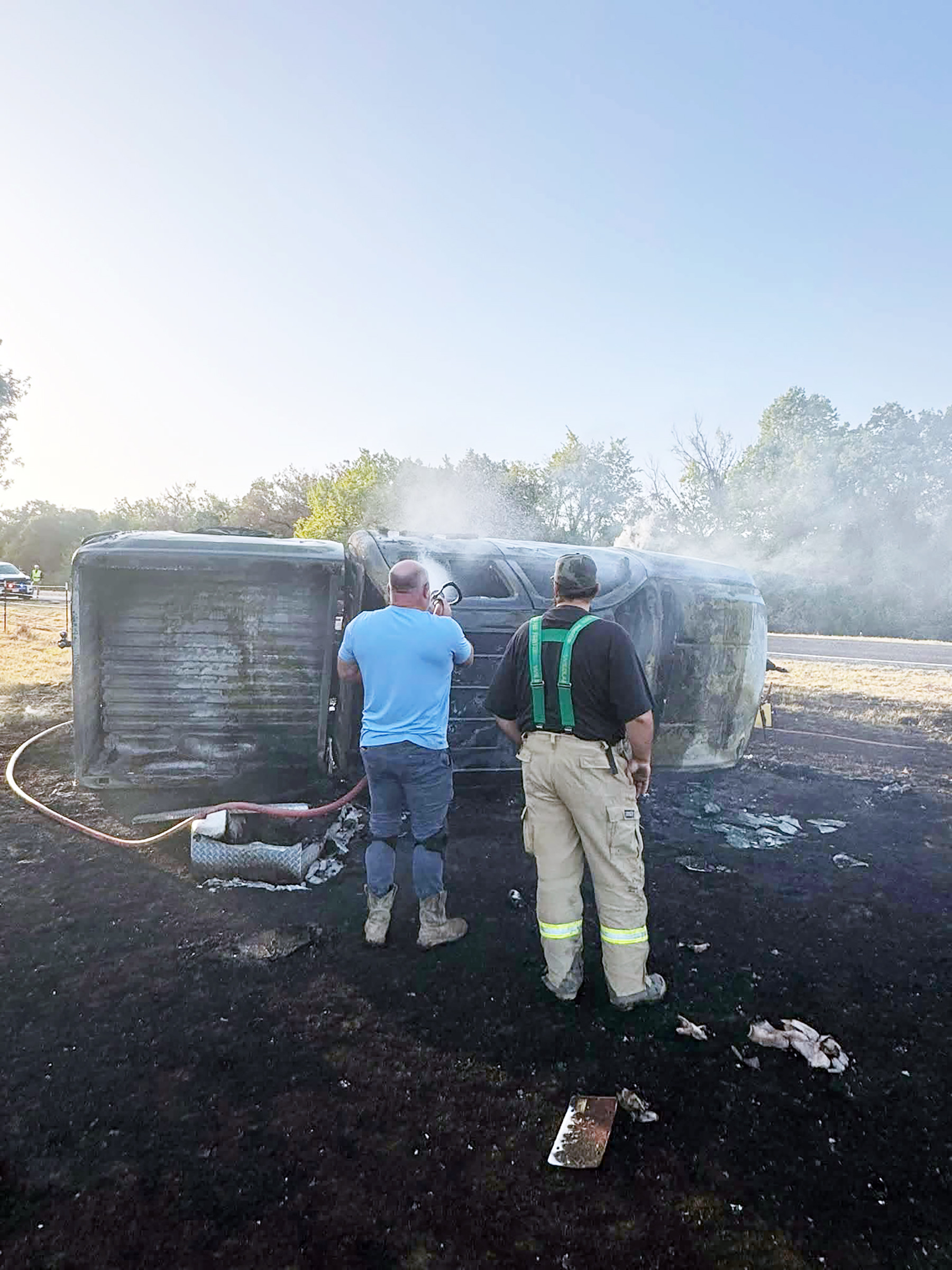
A Wednesday morning rollover on State Highway 59caused a vehicle to catch fire but had no injuries.
Montague County Public Information Officer Sgt. Aaron Randle said the call came in around 7:30 a.m. at the intersection of SH 59 and Nobile Road. When Montague Volunteer Fire Department firefighters arrived, the 2008 Chevy pickup had rolled over and was fully enguled in flames. The17-year-old adult driver was out of the vehicle.
Brandle said the fire was under control at 8:06 a.m. Bowie Emergency Medical Services was also on the scene.
By BARBARA GREEN
editor@bowienewsonline.com
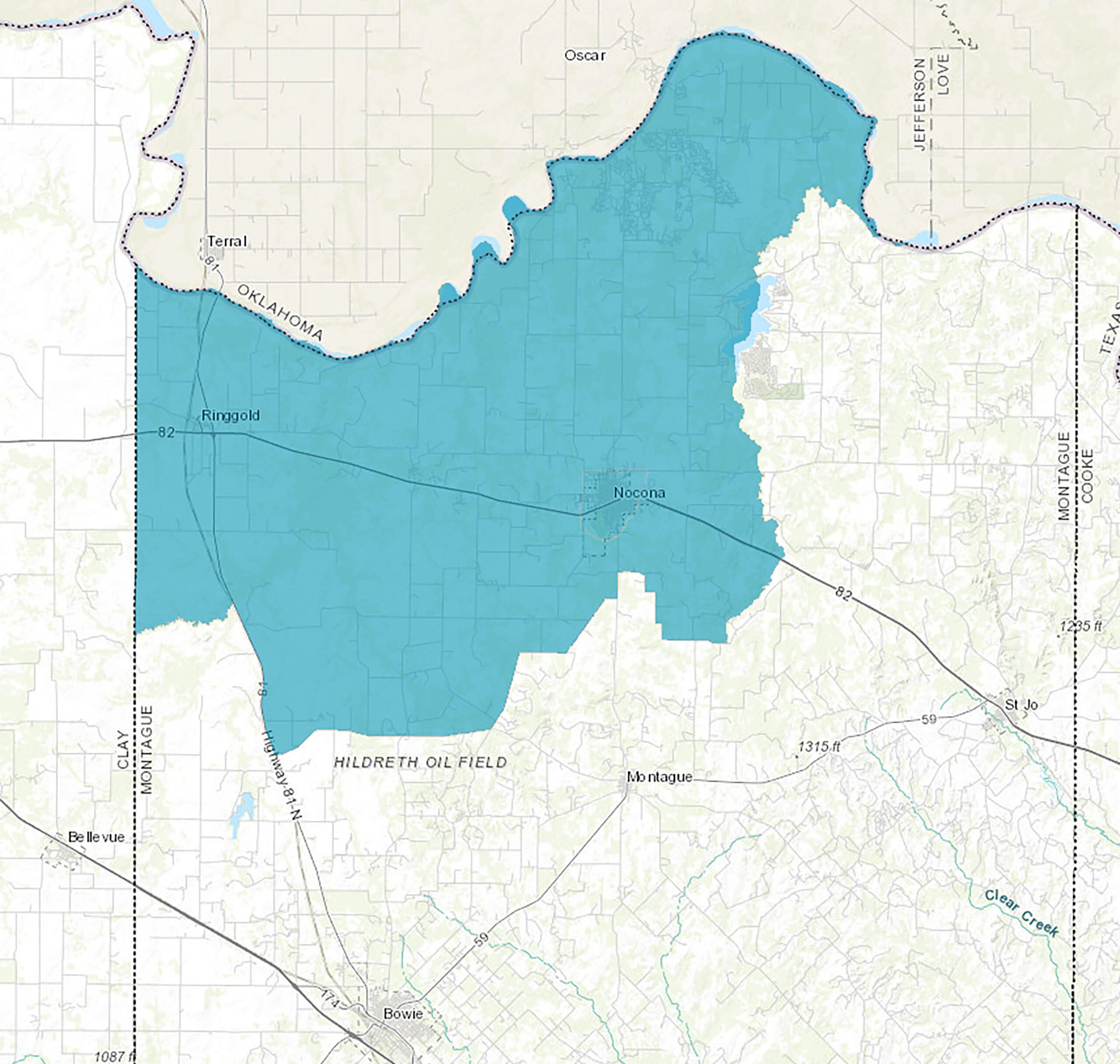
The City of Nocona has been nominated as a rural Opportunity Zone by Texas Governor Greg Abbott and Mayor Christopher Nunneley said they will begin “pitching” this federal tax angle to potential businesses.”
At a Tuesday afternoon press conference Nunneley, Donna Culpepper, executive director for the Nocona Economic Development Corporation and Michelle Page of the Nocona Chamber of Commerce announced the nomination and offered a brief overview of the federal tax incentives that can become available.
Read the full story in the Thursday Bowie News.


Remember Sept. 11 2001, 25 years later
While history will remember Sept. 11, 2001 among the darkest days in America’s history, it also is a day marked not only by tremendous heroism and bravery by first responders, but also every day Americans from all walks of life who showed the world our country would not be intimidated by terrorism.
There were 2,996 people killed during the attacks on Sept. 11, 2001 including 343 firefighters and paramedics, 23 New York city police officers and 37 Port Authority police officers. Tens of thousands more suffered in the aftermath due to exposure to chemicals and industrial debris.
The Bowie News editor asked some local lawmen, firefighters, a pilot and two retired FBI agents their memories of this tragic day and how their jobs were impacted by the events. We thank them for sharing their reflections.
Read the full feature in your Thursday Bowie News.






-

 NEWS3 years ago
Suspect indicted, jailed in Tia Hutson murder
-
 NEWS4 years ago
2 hurt, 1 jailed after shooting incident north of Nocona
-
 NEWS4 years ago
Wreck takes the life of BHS teen, 16
-
 NEWS3 years ago
SO investigating possible murder/suicide
-

 NEWS3 years ago
Murder unsolved – 1 year later Tia Hutson’s family angry, frustrated with no arrest
-
 Show us something good9 years ago
Country music star children perform in Bowie
-
 100th Birthday4 years ago
Looking back at the 1958 Centennial edition of The Bowie News
-
NEWS3 years ago
Sheriff’s office called out to infant’s death