
COUNTY LIFE
TSA seeing more guns in carry-on baggage

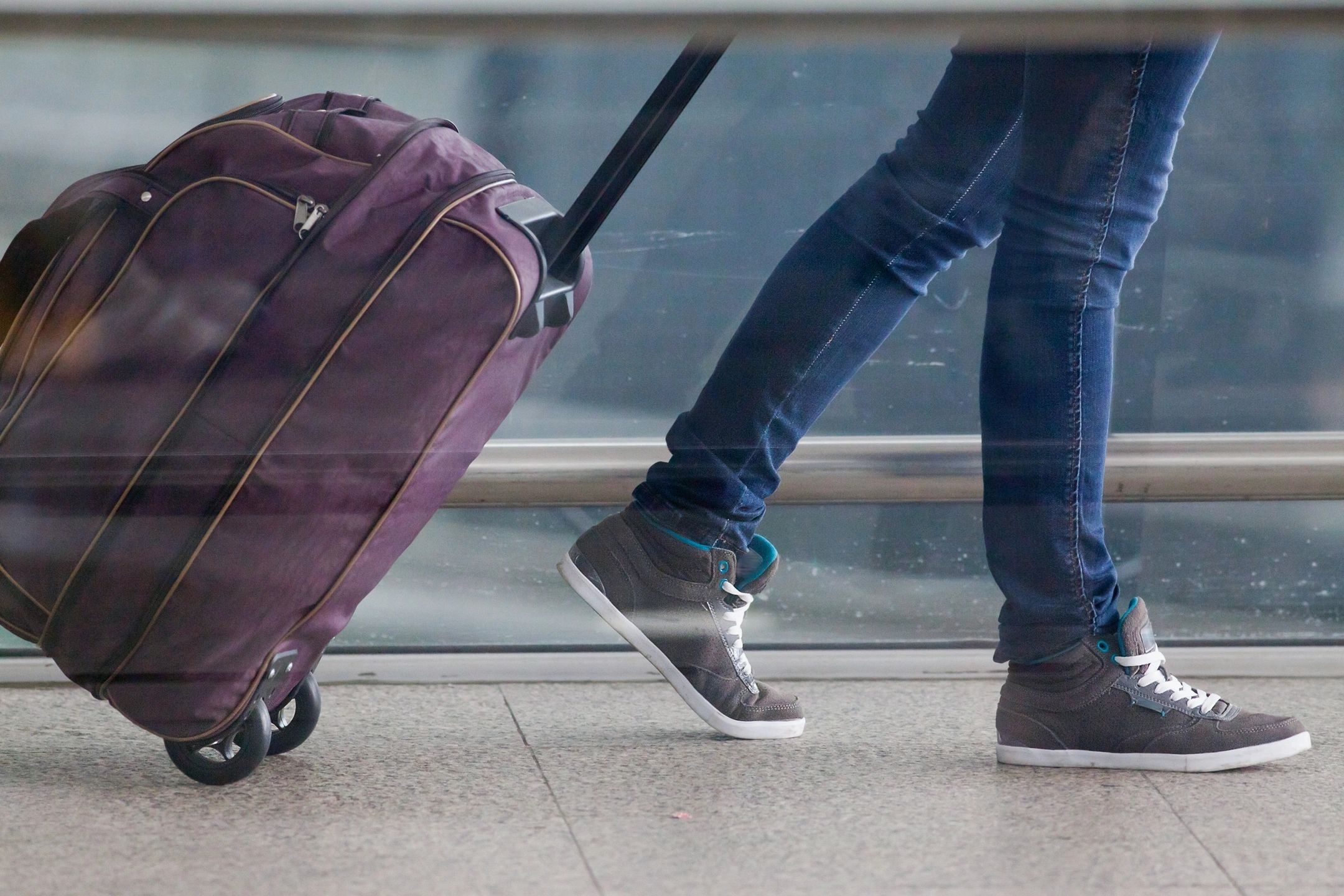
Transportation Security Administration officers detected firearms in carry-on bags at a rate three times higher this past July than the same month in 2019, though passenger volume is significantly lower.
TSA officers detected 15.3 guns per million people last month compared to 5.1 guns per million people screened during July 2019. The rate is particularly alarming, given that TSA screened about 75 percent fewer passengers in July 2020, over the previous year’s volume.
“TSA is diligently working to ensure our employees and passengers are safe and secure while traveling during a pandemic, and yet we are noticing a significant increase in loaded firearms coming into checkpoints,” said TSA Administrator David Pekoske. “Travelers must understand that firearms are prohibited items at airports and in the passenger cabins of aircraft. As hard as we are working to mitigate other risks at this time, no one should be introducing new ones.”
The recommended Federal civil penalty for an unloaded firearm starts at $2,050 and it starts at $4,100 for a loaded gun. The penalty can go up to the statutory maximum of more than $10,250 per violation, depending on the circumstances. The complete list of penalties is posted online.
In addition to financial civil penalties, individuals who violate rules regarding traveling with firearms will have their trusted traveler status and TSA PreCheck™ expedited screening benefits revoked for a period of time. The duration of the disqualification will depend upon the seriousness of the offense and if there is a repeated history of violations.
“Even more concerning is that 80 percent of the firearms coming into the checkpoint are loaded and it’s just an accident waiting to happen. Travelers need to know that if they bring a gun to the security checkpoint, regardless of whether it is in a handbag, knapsack, roller-bag or strapped to their belt, it will be an inconvenient and expensive mistake on their part,” Pekoske said.
Nationwide last year, 4,432 firearms were discovered in carry-on bags at checkpoints across the country, averaging about 12.1 firearms per day, approximately a five percent increase nationally in firearm discoveries from the total of 4,239 detected in 2018. Eighty-seven percent of firearms detected at checkpoints last year were loaded.
Passengers are permitted to travel with firearms in checked baggage, if they are properly packaged and declared at check-in with the airline. Firearms must be unloaded, packed in a hard-sided case, locked, and packed separately from ammunition. Ammunition and firearm parts, including firearm frames, receivers, clips and magazines are also prohibited in carry-on baggage and must be checked. Any type of replica firearm is prohibited in carry-on baggage and must be transported in checked luggage. Firearm possession laws vary by state and locality; therefore, travelers should familiarize themselves with state and local firearm laws for each point of travel prior to departure.
TSA has details on how to properly travel with a firearm posted on its web site. Airlines may have additional requirements for traveling with firearms and ammunition. Travelers should also contact their airline regarding firearm and ammunition carriage policies.
The Montague County Commissioner’s Court will meet at 9 a.m. on Oct. 12 in the County Courtroom at the Courthouse Annex in Montague.
Commissioners are scheduled to consider issuing a proclamation declaring October as Domestic Violence Awareness Month within Montague County.
The court also will consider accepting $850 in unanticipated revenue for the sheriff’s office generated during National Night Out activities, alongside interlocal cooperation contracts between the Texas Department of Public Safety and Justices of the Peace for Precincts 1 and 2.
An executive session is scheduled to discuss personnel matters pertaining to sewer/septic inspector for the county. Any action would be taken back in open session.

The Oct. 9-11 Art of the Song Music and Art Festival opens Friday night for three days of art and entertainment in downtown Nocona.
The festival opens on Oct. 9 with a Chisholm Trail Art Association Preview Party from 5 to 7 p.m. on Oct. 9 at the H.J. Justin Building.
Come see all the entries for the adult show, which formally opens at 10 a.m. on Oct. 10.
Live music will be played by Full Circle Band.
Also on Oct. 9 enjoy a Nocona Nights Street Dance from 7 to 9 p.m. with the Mark Murphey and Highway 82 Band. Cost is $10 per ticket and $200 for a table seating eight. Bring your lawn chairs.
Read the full schedule of events for the festival in your Thursday Bowie News.

These students are nominees for the 2026 homecoming court at Gold-Burg High School. Homecoming royals will be crowned in pre-game ceremonies before the Bears take on Throckmorton at 7:30 p.m. on Oct. 9. Pictured are: Freshmen: Kenzley Foster and Jackson Allen, freshmen; Yareli Aguirre and Jojuan Grace, sophomores; Zara Andrade, junior and Brayden Odom, Kaylie Duncan, both seniors. Not pictured: Caleb Epperson, junior and Keelyn Case, senior.






-

 NEWS3 years ago
Suspect indicted, jailed in Tia Hutson murder
-
 NEWS4 years ago
Wreck takes the life of BHS teen, 16
-
 NEWS4 years ago
2 hurt, 1 jailed after shooting incident north of Nocona
-

 NEWS3 years ago
Murder unsolved – 1 year later Tia Hutson’s family angry, frustrated with no arrest
-
 NEWS3 years ago
SO investigating possible murder/suicide
-
 Show us something good9 years ago
Country music star children perform in Bowie
-
 100th Birthday4 years ago
Looking back at the 1958 Centennial edition of The Bowie News
-
NEWS3 years ago
Sheriff’s office called out to infant’s death