
SPORTS
National Hunting and Fishing Day Sept. 23


Texas Commemorates National Hunting and Fishing Day this Saturday, Sept. 23
AUSTIN – Texas Parks and Wildlife Department (TPWD) is encouraging Texans to bring their family and friend into the outdoors to celebrate National Hunting and Fishing Day on Saturday. National Hunting and Fishing Day, celebrated on the fourth Saturday of every September, recognizes hunters and anglers for their contributions and leadership to wildlife and conservation.
Hunters and anglers primarily fund the state’s wildlife management programs through the purchase of hunting and fishing licenses and stamps, as well as through taxes paid on hunting and fishing equipment, motorboat fuel, firearms and ammunition. License purchases generates millions of dollars for conservation programs that benefit both game and non-game species statewide.
“The significant contribution made by Texas’ outdoors women and men toward research and species management is one of the reasons why the tradition of hunting and fishing in Texas has endured for generations,” said TPWD Executive Director David Yoskowitz, Ph.D.
“Without the help of Texas’ hunters and anglers, biologists would not be able to complete critical projects aimed at preserving and maintaining the state’s natural spaces and wildlife population,” said Yoskowitz. “This year, in honor of National Hunting and Fishing Day, I invite all Texans to take a hunter education course, attend a neighborhood fishing event and learn how participating in these activities aids in conserving the environment and our native species.”
For many years, the proportion of people who hunt and fish in Texas has lagged behind huge increases in the state population. While Texas has experienced a recent pandemic-influenced surge in outdoor recreation, this hasn’t created a significant long-term increase in the total number of people participating in hunting and fishing, which could spell problems for natural resource conservation in the future. Conservation is mostly funded by these participants.
In 2021, TPWD launched the Texas Recruitment, Retention and Reactivation (R3) Strategic Plan on this day to connect more Texans to outdoor recreation and carry forward these time-honored traditions to future generations. Increased participation in fishing, boating, hunting, and shooting sports brings funding for conservation agencies like TPWD to continue supporting efforts such as fish stocking, access and habitat improvements, and mentored hunting programs (to introduce new hunters to the sport in a safe environment).
In addition to conservation, TPWD endeavors to foster lifelong participants in hunting, fishing, boating, and shooting sports, and create a better-informed public with more interest in conserving wild things and wild places in Texas and beyond.
To learn about hunting, take an online or in-person hunter education course. Hunter education certification is required for anyone born on or after Sept. 2, 1971 and equips them with the necessary tools and information they need to be safe in the field: basics about firearm safety, species identification, zones of fire and more.
TPWD also offers mentored hunting workshops to introduce new hunters to the experience and teach needed skills. The Hunting for Beginners webpage also offers a wealth of information.
Texans who want to learn to fish can also find many resources on the TPWD Fishing for Beginners webpage: how to get started, safety, basic gear assembly, tackle boxes and supplies, bait and lures, how to cast and more. Individuals interested in becoming a volunteer fishing instructor can visit the TPWD angler education instructor website. Fishing events around the state are listed on the online event page and no license is required to fish from the shore or dock at a Texas State Park.
By Luke Clayton
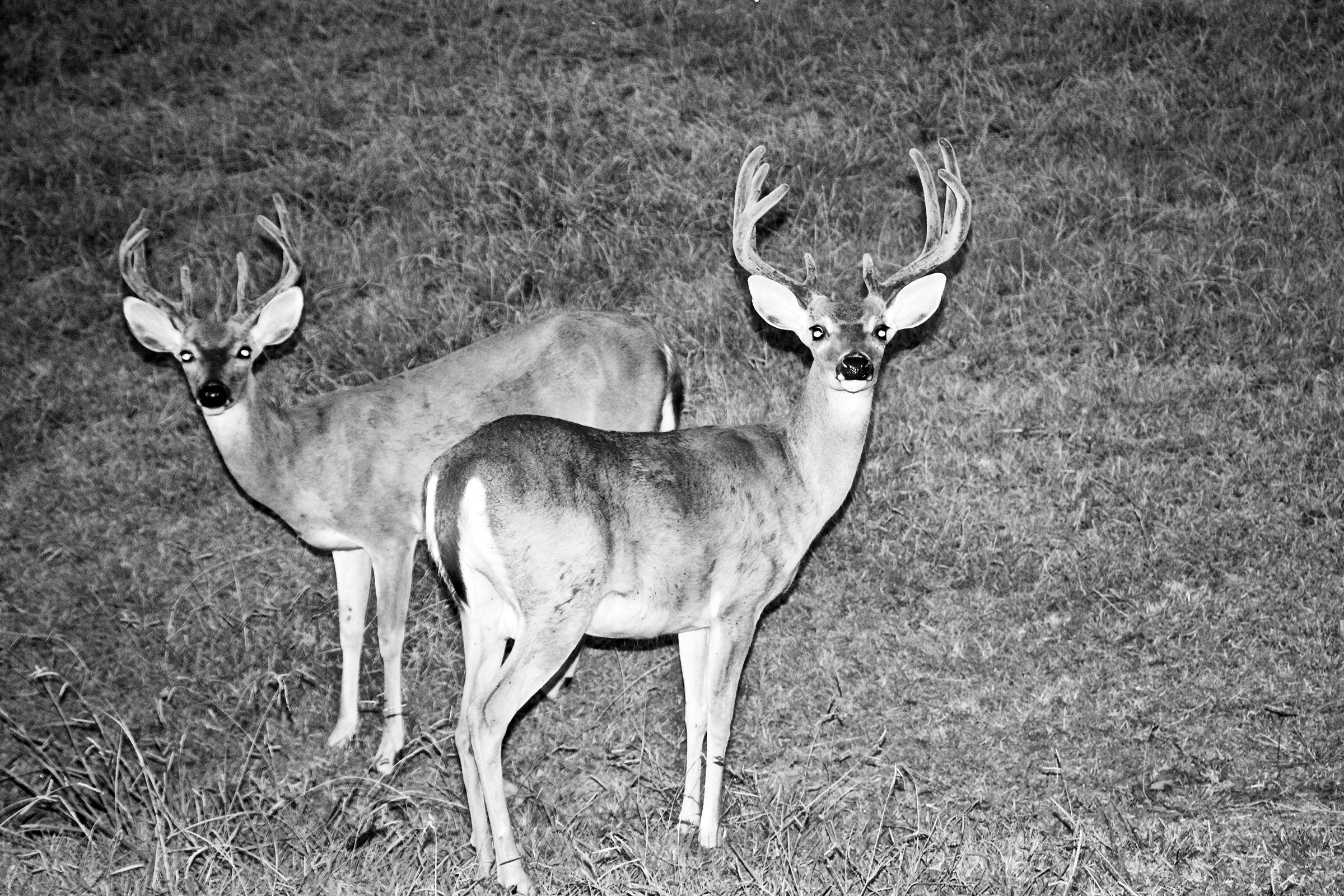
In my early days as a deer hunter, I learned the basic patterns of the whitetail rut (breeding season) by observation. I had little idea of why deer interact as they do during different times of the year but I learned through years of hunting when to watch for signs such as rubs where bucks remove the velvet from their antlers on trees and later spar with small sapplings during the primary rut. I learned to spot rub trees by looking for an isolated juniper sapling or check the edge of a sumach grove. I had no idea why bucks chose those particular trees but I learned early on that they did.
And early in my career it becomes obvious that bucks often favored each other’s company during the summer months but usually in September, they broke away from their bachelor herds and stayed to themselves during the rut. Oh, it’s common to see a couple bucks together during the rut but when breeding season actually begins, a pecking order has developed, dominance has been established by the mature bucks, the fighting is done except by mature bucks just prior to the peak of the breeding season.
I will never forget my first time experiencing two mature bucks fighting. The year was 1964 and I was hunting west of Houston near Waller on a big ranch owned by a family member. I was setting on a couple of 2X 4’s nailed in a fork of a big white oak that was dropping acorns and a hotspot for attracting deer. It was almost dark and I heard what sounded like two baseball bats whacking together and then the darndest commotion imaginable, especially in the quiet, still period just before dark on a cold November morning.
At first, I had no idea what was happening but in very low light I watched the two bucks battle their way to within a few yards from the tree I was in. I remember setting spellbound for at least two minutes until one of the bucks decided he had enough and bound away through the woods at top speed. I was slow getting down from that tree after dark I remember, I didn’t want any part of those antlers if the dominate buck still wanted to fight.
As a young deer hunter, I remember wondering what caused the bucks to fight. I had no idea it was nature’s way of allowing the strongest to breed and ensure the continuation of the species. What I didn’t know is that was surely a doe in estrus nearby that caused the ruckus.
Yes, much of what I’ve learned about deer is through simply being in the woods for many decades and watching the animals. Later in life I was fortunate to spend time with guys like
Richard Boitnott who was one of the top wildlife biologists for International Paper Company and my good friend Larry Weishuhn with whom I have had the pleasure of hunting deer for many years. I’ve learned a lot about deer from Larry and spent a great deal of time around deer camps quizzing Larry about things that I have observed through the years but didn’t really understand what caused deer do the things they do.
During our visit on my weekly outdoor show -Catfish Radio- this past week I asked Larry to explain the onset to the whitetail rut and what causes the changes in bucks’ attitude and appearance (loss of velvet) this time of year.
Larry explained it something like this- With the decreasing amount of daylight this time of year, a buck’s testosterone increased and the antler bases respond by shutting off the blood supply which caused the velvet covering the antlers to die and dry up. Velvet will eventually fall off but bucks rub their antlers on bushes and small saplings, and soon their antlers are in what we hunters call “hard horn”. During this period of increased male hormone, bucks begin to see other bucks in a different light and leave their buddies they spent the summer with and become somewhat solitary. A pecking order is quickly established through mock fights early in the fall which transition to serious battles as the rut progresses, battles where bucks are often injured or sometime killed. During the rut bucks make scrape, usually under overhanging limbs. They deposit their scent on the overhanging limb by rubbing their preorbital glands on the branch. Between their front toes is the interdigital gland which is a unique calling card each deer, both buck and doe possessed. Deer can track each other through the unique scent left by these glands, which is unique to each deer. These scrapes become a social gathering spot for deer during the rut and both doe and buck stop by to leave their calling card.
The actual breeding period is timed so that fawns will be born about 230 days later in spring/early summer when fawn survival is best because of available cover and food.
Sometime in late winter and early spring the male hormone decreases, antlers drop and soon a slow hormonal rise caused the new antlers to begin growing and the entire amazing process repeats itself.
White tail deer are amazing animals and hunting them has been a lifelong passion for many of us. We eagerly await frosty morning, knowing that “our time” of the year has once again arrived. We don’t have to be wildlife biologists to learn about deer. With a working knowledge of why deer do what they do and when to expect changes in their behavior, we can all become better hunters.
Here’s to a fun and successful deer season to all, OUR time of year begins with bow season which is less than a month away. Many ranches in Texas under TPWD managed land
programs allow hunting with all legal means at the beginning of bow season through permits allocated to the landowner. Here’s to a freezer full of venison and possibly a new shoulder mount for the den wall!
Listen to Luke’s radio show/podcast “Catfish Radio with Luke Clayton and Friends” just about everywhere you listen to your podcast. Email Luke through his website at www.catfishradio.org.
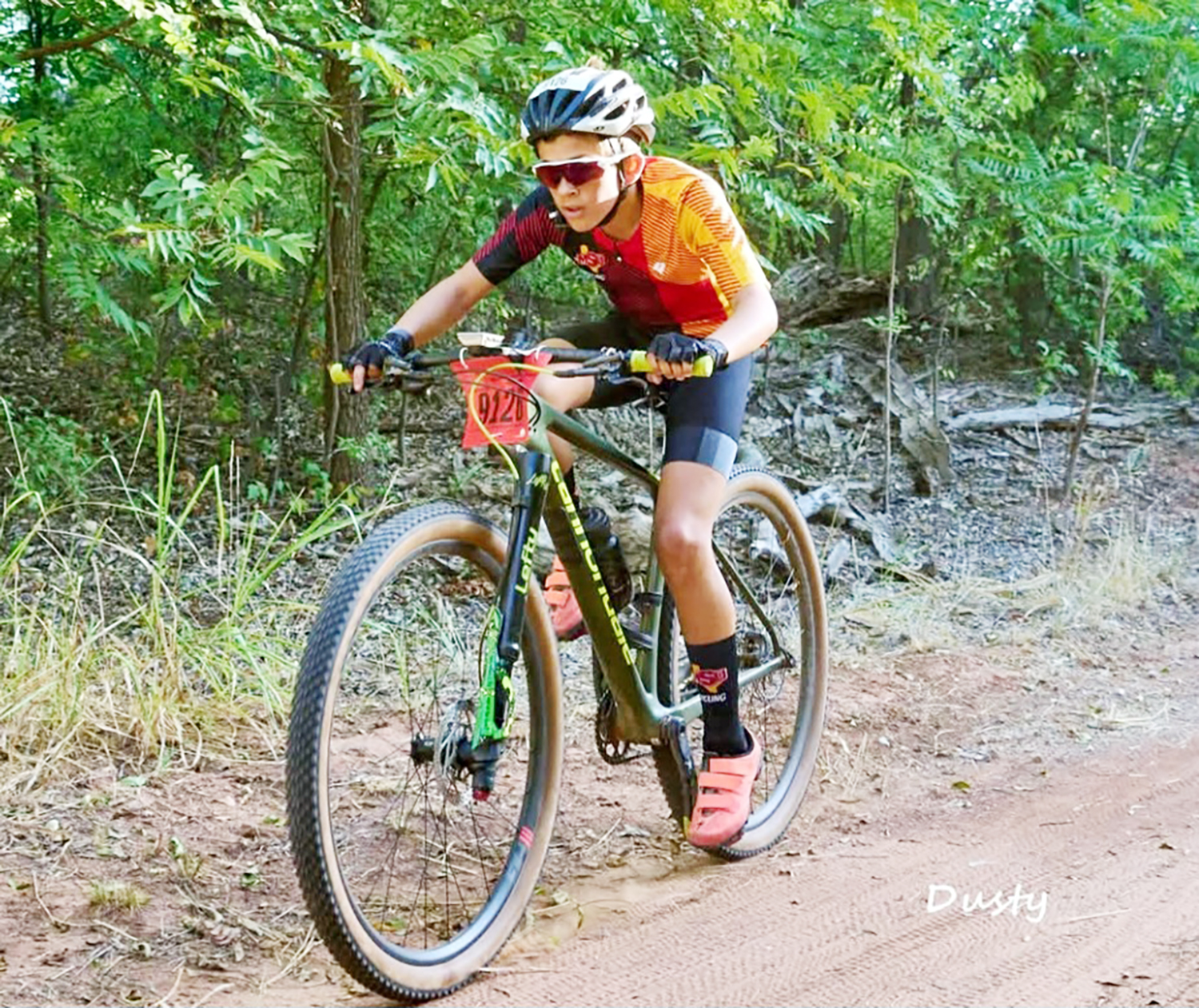
Kai Kutie, an eighth grader at Prairie Valley School, defender his title in the Notter ‘N Hell 100 youth division race winning the title in the 26.5 mile race.
The win was just one of three races he competed in during the four-day event. He also competed in the gravel bike race where he finished 25th overall out of 200 riders, a mountain bike riding competition where he finished 9th overall and a Criterion where a rider does as many laps as they can over a certain area in a 20-25 minute time.
Kutie said he knew he had a pretty good shot at defending his youth title when he got out to a 30-second lead quickly. He admitted not feeling any pressure on defending his title. He said what aided his cause is the weather being a little cooler particularly in the morning.
Kutie said he trains between 50-75 miles per week in preparation for his race, riding with his dad Steve, who gives him tips on the roads around Sunset a few nights a week.
For further details, pick up a copy of Thursday’s Bowie News.
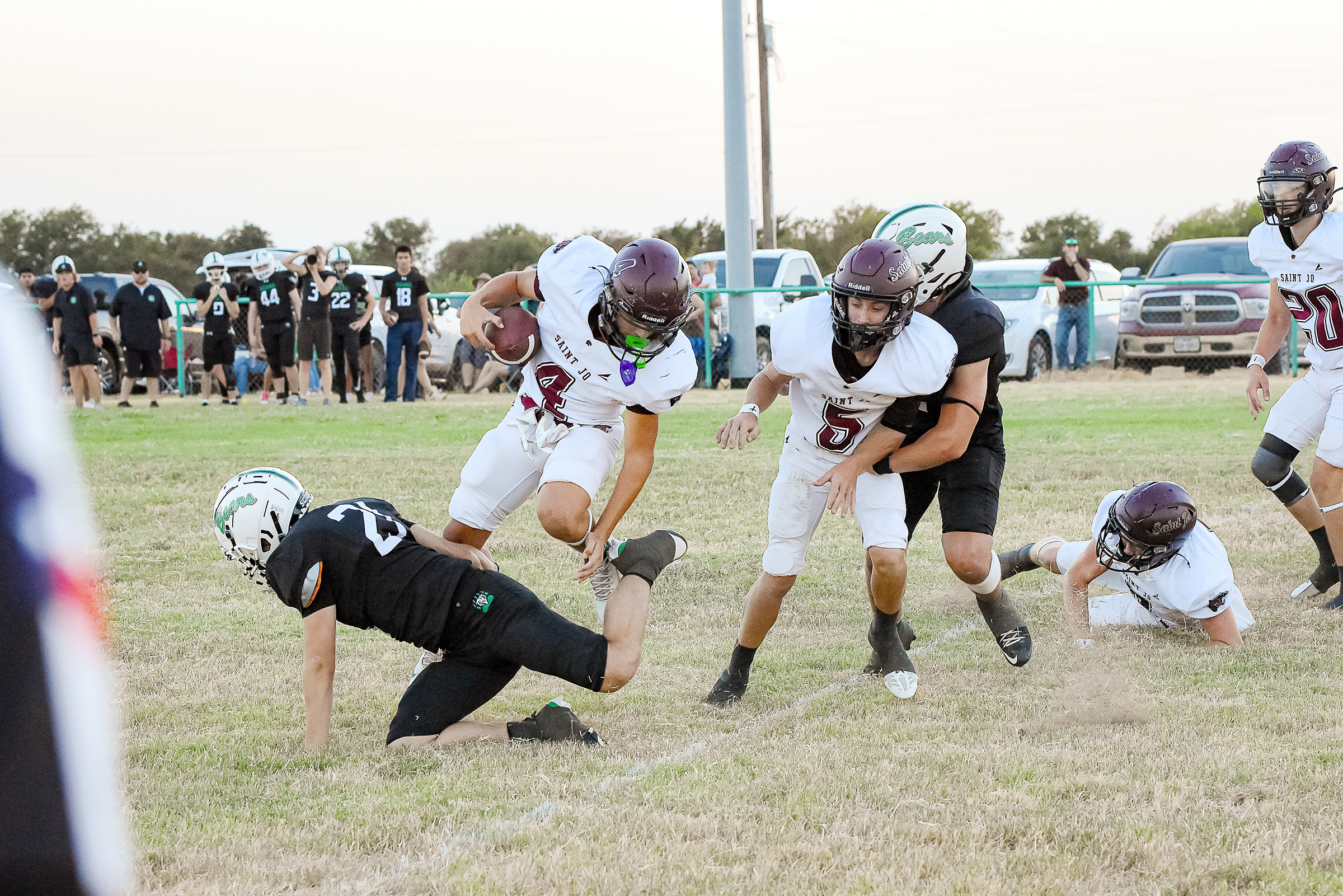
Nocona matched its win total from 2025 while Forestburg and Gold-Burg picked up their first wins of the campaign Friday night.
Brief summaries of the games follow:
Nocona 37, Archer City 6
The Indians remained perfect at 2-0 with the road win. Coach Jeff Hill said his squad staying smooth and consistent for four quarters was key to the win.
“(The) biggest within was that our kids stayed levelheaded throughout the game,” Hill commented. “They showed a lot of maturity when things didn’t go well and when things did go well, never got too high.”
For further details, pick up a copy of Thursday’s Bowie News.






-

 NEWS3 years ago
Suspect indicted, jailed in Tia Hutson murder
-
 NEWS4 years ago
2 hurt, 1 jailed after shooting incident north of Nocona
-

 NEWS4 years ago
Wreck takes the life of BHS teen, 16
-
 NEWS3 years ago
SO investigating possible murder/suicide
-

 NEWS3 years ago
Murder unsolved – 1 year later Tia Hutson’s family angry, frustrated with no arrest
-
 Show us something good9 years ago
Country music star children perform in Bowie
-
 100th Birthday4 years ago
Looking back at the 1958 Centennial edition of The Bowie News
-
NEWS3 years ago
Sheriff’s office called out to infant’s death