
NEWS
History of Labor Day in America


Labor Day: What it Means
Labor Day, the first Monday in September, is a creation of the labor movement and is dedicated to the social and economic achievements of American workers. It constitutes a yearly national tribute to the contributions workers have made to the strength, prosperity, and well-being of our country.
Labor Day Legislation
The first governmental recognition came through municipal ordinances passed in 1885 and 1886. From these, a movement developed to secure state legislation. The first state bill was introduced into the New York legislature, but the first to become law was passed by Oregon on February 21, 1887. During 1887 four more states — Colorado, Massachusetts, New Jersey, and New York — created the Labor Day holiday by legislative enactment. By the end of the decade Connecticut, Nebraska, and Pennsylvania had followed suit. By 1894, 23 more states had adopted the holiday, and on June 28, 1884, Congress passed an act making the first Monday in September of each year a legal holiday in the District of Columbia and the territories.
Founder of Labor Day
More than a century after the first Labor Day observance, there is still some doubt as to who first proposed the holiday for workers.
Some records show that Peter J. McGuire, general secretary of the Brotherhood of Carpenters and Joiners and a co-founder of the American Federation of Labor, was first in suggesting a day to honor those “who from rude nature have delved and carved all the grandeur we behold.”
But Peter McGuire’s place in Labor Day history has not gone unchallenged. Many believe that Matthew Maguire, a machinist, not Peter McGuire, founded the holiday. Recent research seems to support the contention that Matthew Maguire, later the secretary of Local 344 of the International Association of Machinists in Paterson, N.J., proposed the holiday in 1882 while serving as secretary of the Central Labor Union in New York. What is clear is that the Central Labor Union adopted a Labor Day proposal and appointed a committee to plan a demonstration and picnic.
The First Labor Day
The first Labor Day holiday was celebrated on Tuesday, September 5, 1882, in New York City, in accordance with the plans of the Central Labor Union. The Central Labor Union held its second Labor Day holiday just a year later, on September 5, 1883.
In 1884 the first Monday in September was selected as the holiday, as originally proposed, and the Central Labor Union urged similar organizations in other cities to follow the example of New York and celebrate a “workingmen’s holiday” on that date. The idea spread with the growth of labor organizations, and in 1885 Labor Day was celebrated in many industrial centers of the country.

Members of the Bowie City Council will meet at 6 p.m. on Aug. 25 to finalize the budget and conduct a public hearing on a proposed tax rate.
The ordinances adopting both the 2026-27 budget and the 2026 tax rate are on the agenda for action. The public hearing on the tax rate presents a rate of .5750 cents per $100 in property value, which is slightly higher than the 2025 rate that is .5430.
The new rate is projected to generate $2,990,998, compared to $2,703,176 from last year’s rate. This is the first significant change in the rate since 2019, when it was .5445 cents. The next year it went to .5447 cents, where it stayed until 2023, when it went to .5430 cents, through 2025.
A bid will be awarded for the Rock and Pillar Street drainage project. Wall Contractors will be recommended by the city engineer and staff review. The bid came in about $1.3 million, which was lower than the estimated $2 million. It is expected to straighten the channel and get this intersection reopened for traffic after more than a year of closure to collapse of a portion of the pavement on the street.
The council will consider stop signs regulating traffic flow around the Kingdom Ridge Subdivision next to the elementary school.
In the city manager’s report Bert Cunningham will provide information on the hazard mitigation plan, the 2025-26 audit preparation and the bid for the Rock and Pillar project.

Montague County Commissioners will adopt a budget and tax rate when they meet at on Aug. 24 in the courthouse annex.
The budget hearing will be at 8:30 a.m. Aug. 24, followed by a public hearing for the proposed tax rate at 8:45 a.m.
During the regular meeting at 9 a.m., there will be one final budget workshop for any last minute tweaks or changes, followed by adoption of the 2026-27 budget and 2026 tax rate.
The proposed tax rate is .4961 cents per $100 in property value, which is the same rate as 2025. Due to the increase in property values despite the same rate, the total tax levy on all properties will see a 3.64% increase.
A copy of the proposed budget is available on the county website at https://www.co.montague.tx.us/.
Several other financial related items are on the agenda. Accumulated comp time in the sheriff office and jail will be discussed. The commissioners also will consider any year-end expenditures utilizing any or the budget year contingency funds.
Other items on the agenda will include: Acceptance of the District Attorney’s 2023- 2024 and 2025 Chapter 59 asset forfeiture reports and authorize DA Katie Boggeman to sign them; imposition of optional fees from the Texas Department of Motor Vehicles for 2027; House Bill 3834 cybersecurity and AI training certification for state and local governments compliance reports; interlocal cooperation agreement between the Department of Public Safety and the county court and district court; review the sherif office application for sheriff immigration law enforcement grant program Senate Bill 8; consider distribution of state grant HB 3000; and consider using Real Estate Station LLC Agent Denise Thurman to sell 5.9 acres on the corner of U.S. 81 and State Highway 59.

It should be no surprise, the month of July is recorded as the hottest month on record for the country.
July wrapped up with seven straight days of 100 degrees or higher July 25-31. August also opened hot with the first 100-plus degree day on Aug. 3 and it has topped that marked through Aug. 19. On Tuesday the high was 107 degrees at the water plant, but in town thermometers recorded 108 and 109 degrees.It was expected to top that mark on Wednesday.
There was no rainfall recorded in July or in August. Bowie has only 21.71 inches for the year so far and Nocona has 22.35 inches.
Lake Amon Carter
Aug. 19 –
917.22 msl, 80.2% full
July 19 – 918.10 msl, 86.1%
Aug. 19, 2025 – 919.84 msl, 98.8% full
Lake is full at 920msl
Lake Nocona
Aug. 19 – 823.48 msl, 76.3% full
July 19 – 824.41 msl, 81.05%
Aug. 19, 2025 – 826.878 msl, 95.85%
Lake full at 827.5msl






-

 NEWS3 years ago
Suspect indicted, jailed in Tia Hutson murder
-
 NEWS4 years ago
2 hurt, 1 jailed after shooting incident north of Nocona
-
 NEWS3 years ago
SO investigating possible murder/suicide
-

 NEWS4 years ago
Wreck takes the life of BHS teen, 16
-

 NEWS3 years ago
Murder unsolved – 1 year later Tia Hutson’s family angry, frustrated with no arrest
-
 Show us something good9 years ago
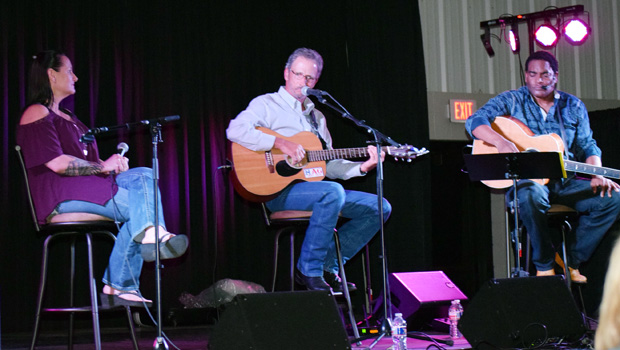
Country music star children perform in Bowie
-
 100th Birthday4 years ago
Looking back at the 1958 Centennial edition of The Bowie News
-
NEWS3 years ago
Sheriff’s office called out to infant’s death